
Five million manat eco-friendly factory drives Aghdam post-conflict revival

Qabil Ashirov
Read moreThe rebirth of a region long scarred by conflict is never merely a matter of rebuilding bricks and mortar; it is a profound reinvention of its economic soul. In Azerbaijan’s liberated territories, particularly within the nascent industrial ecosystem of Aghdam, this reinvention is unfolding with remarkable strategic clarity. The recent addition of a multi-million manat investment focused on plastic recycling and high-pressure polyethylene pipe manufacturing signals something far greater than local industrial growth. It represents a paradigm shift where post-conflict reconstruction directly intersects with the modern imperatives of the circular economy and sustainable development.
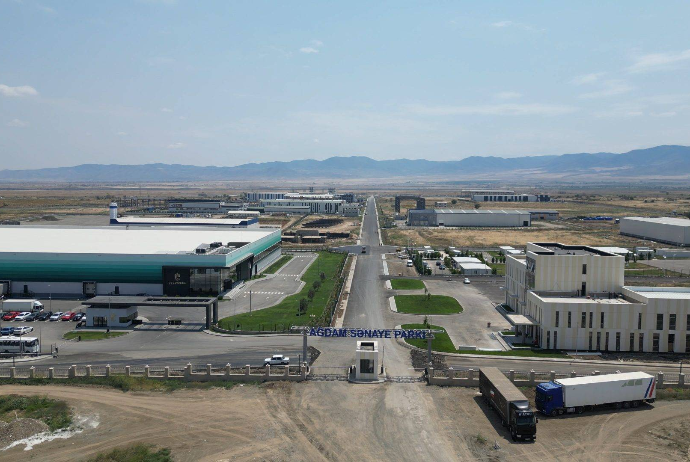
For nearly three decades, Aghdam stood as a silent testament to devastation, often referred to by international observers as a ghost town. Today, however, the heavy silence has been replaced by the rhythmic hum of construction and production. The establishment and rapid expansion of the Aghdam Industrial Park serve as the cornerstone of the state’s regional economic strategy. By attracting dozens of economic zones and millions in private and public capital, the region is transitioning from a symbol of historical loss into an engine of future prosperity. The integration of advanced manufacturing—specifically targeting recycling alongside high-demand infrastructure components—proves that the revitalization of these lands is designed not just for immediate resettlement, but for long-term ecological and economic viability.
At the heart of this specific industrial endeavor lies a brilliant dual-purpose logic. The liberated territories are currently the site of one of the largest comprehensive infrastructure undertakings in Eurasia. Thousands of kilometers of roads, smart villages, agricultural complexes, and modern urban centers are being built from the ground up. Such monumental construction demands an enormous volume of durable materials, particularly high-pressure pipes and corrugated conduits for water management, telecommunications, and gas distribution. By manufacturing these vital components domestically within Aghdam, the region significantly reduces logistical costs, minimizes carbon footprints associated with transportation, and builds a self-sustaining loop of supply and demand.
Furthermore, the inclusion of a plastic recycling facility within this manufacturing matrix introduces a sophisticated layer of circular economics to the region. Post-conflict zones inherently generate substantial waste during clearing and initial rebuilding phases. Simultaneously, as population centers return, municipal waste will inevitably scale. By establishing robust recycling capabilities at the very genesis of Aghdam’s new urban identity, planners are preventing the accumulation of environmental liabilities. Processing plastic waste into raw inputs for high-value industrial manufacturing turns an environmental hazard into a localized economic asset. This is a crucial blueprint for modern state-building: integrating environmental stewardship directly into the primary industrial blueprint rather than treating it as a retroactive luxury.
The numbers emanating from the Aghdam Industrial Park speak to a broader macroeconomic success story. Ranking as the second largest industrial park in the country by resident count, it reflects immense investor confidence. With over 172 million manat already injected into various projects and hundreds of jobs created, the park is rapidly reversing the demographic displacement of the past. Providing stable, high-skilled industrial employment to returning internally displaced persons (IDPs) is the ultimate anchor for sustainable repatriation. A community cannot truly heal or persist without robust economic foundations, and these manufacturing hubs offer the dignified, forward-looking livelihoods necessary to sustain the newly built smart cities.
It is also vital to recognize the broader geo-economic implications of Aghdam’s industrial rise. The products rolling off the lines of these newly established facilities are not destined solely for local consumption. The strategic positioning of the industrial park allows for seamless integration into national and international supply chains, facilitating the export of Karabakh-made goods to regional markets. This transforms the liberated territories from a fiscal recipient dependent on state subsidies into a net contributor to national GDP and non-oil export diversification. The narrative of Aghdam is shifting globally from one of tragedy to one of high-tech resilience and industrial competence.
Ultimately, the ongoing industrial transformation in Aghdam demonstrates that Azerbaijan is not merely restoring what was lost; it is leapfrogging traditional development phases to construct a highly sophisticated, green industrial frontier. By embracing the circular economy through waste recycling and pairing it with critical infrastructure manufacturing, this unsung industrial hub is charting a course for responsible, innovative regional development. The revival of the liberated lands is setting a global benchmark for how post-conflict recovery can be synthesized with the global transition toward sustainability, ensuring that the future of Karabakh is as clean and resilient as it is prosperous.
Here we are to serve you with news right now. It does not cost much, but worth your attention.
Choose to support open, independent, quality journalism and subscribe on a monthly basis.
By subscribing to our online newspaper, you can have full digital access to all news, analysis, and much more.
You can also follow AzerNEWS on Twitter @AzerNewsAz or Facebook @AzerNewsNewspaper
Thank you!