
Baku regulates social media use to strengthen child protection

Ulviyya Poladova
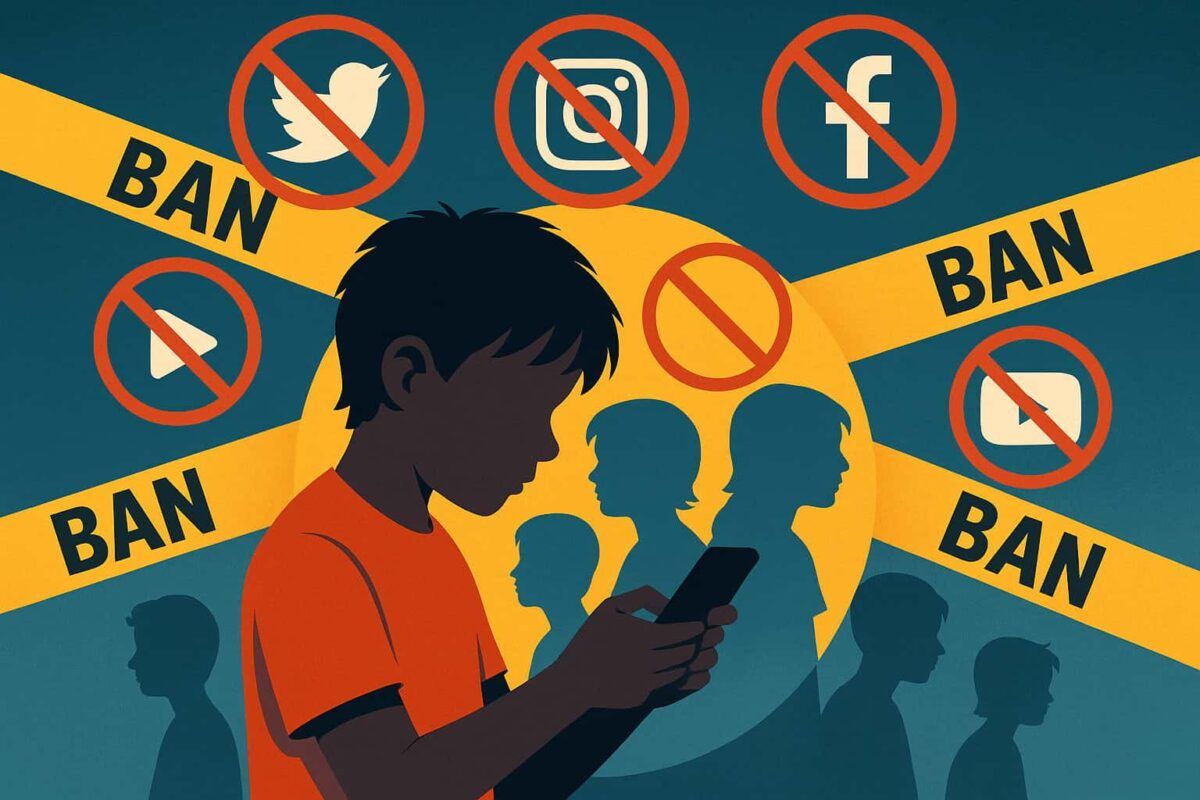
Read moreAustralia’s first-of-its-kind ban on social media use for children under the age of 16 has sparked growing concern about the impact of social media on teenagers’ mental health and overall well-being. Since the legislation was approved in 2024, several other countries have begun introducing or considering similar measures.
These initiatives reflect increasing concern among policymakers, researchers, and civil society groups about the link between children’s well-being and social media activity. Various studies suggest associations between heavy platform use and higher levels of depression, anxiety, negative body image perceptions, and reduced self-esteem. Some lawmakers also point to broader trends such as rising feelings of loneliness and hopelessness among young people. However, there is still uncertainty about whether such bans will effectively reduce excessive social media use among minors.
Globally, one survey found that 65% of people support banning children under the age of 14 from using social media. This included majorities in 29 out of 30 countries surveyed, with Germany as the sole outlier.
In response to the growing influence of digital platforms in everyday life, Azerbaijan is advancing legislative amendments aimed at regulating children’s access to social media and defining clearer responsibilities for platform operators. The proposed framework focuses on establishing age-based restrictions, strengthening oversight mechanisms, and ensuring compliance with national legal requirements in the digital environment.
At the core of the legislation is the recognition that social media has become deeply integrated into communication, education, and entertainment, but also carries risks for minors. These risks include exposure to harmful and age-inappropriate content, online harassment, manipulative behavior, and other forms of psychological and social pressure that can affect children’s development. The law therefore introduces a structured approach in which children under the age of 16 are not permitted to register on social media platforms, while individuals aged 16 to 18 may access such platforms only with the consent of a legal guardian.
The policy also places responsibility on both digital platforms and users to ensure compliance with the new requirements. Platforms are expected to implement age verification systems and enforce restrictions where necessary, while parents and guardians are assigned an active role in supervising and authorizing access for minors within the permitted age range.
In line with this approach, age restrictions have long been applied in various areas to safeguard children’s rights and well-being. These measures include limitations on the sale of cigarettes, alcohol, and weapons, as well as access to pornographic content. Such restrictions are designed to protect children’s health and overall welfare.
Building on this foundation, Azerbaijan’s 2018 "Law on Protection of Children from Harmful Information" established measures to protect children from harmful content and to ensure their right to age-appropriate information, in accordance with Article 94, Part I, Clause 1 of the Constitution of the Republic of Azerbaijan. This legal framework set clear standards for regulating children’s access to information and shaped the relationships surrounding these issues.
It should be noted that in February President Ilham Aliyev has signed a decree on measures to protect children from harmful content and influences in the digital environment.
The rationale behind these measures is closely tied to broader societal concerns regarding increased screen time, reduced physical activity, and the potential psychological effects of prolonged exposure to digital environments. Observations from various contexts suggest that excessive engagement with social media can contribute to attention issues, social withdrawal, and emotional stress, particularly among younger users who may be more vulnerable to online influence. The legislative response is therefore positioned as a regulatory adjustment to these evolving conditions rather than a restriction on digital access as a whole.
The introduction of age-based controls also reflects a wider international trend in digital governance. Several countries have begun to develop or implement similar frameworks, including Australia, which has adopted a nationwide restriction for users under 16, as well as European states such as France and Norway, which are moving toward comparable regulatory models. Other jurisdictions, including the United Kingdom and Denmark, are actively considering variations of age limits or usage controls. These developments indicate a growing policy shift toward formalizing children’s access to digital platforms through legal mechanisms.
Within this context, Azerbaijan’s approach aligns with a broader regulatory movement that seeks to define clearer boundaries for minors in online spaces. The legislation is structured around a phased implementation process, including the identification of regulated platforms, the development of technical age verification systems, and a transition period prior to full enforcement. During this time, authorities are expected to coordinate with stakeholders to establish operational guidelines and ensure readiness for compliance.
The policy also draws on existing national legislation concerning the protection of minors from harmful information. Azerbaijan has previously adopted legal measures restricting children’s access to certain categories of content and products, and the current initiative extends this regulatory logic into the digital domain. The framework is intended to be consistent with international legal standards while adapted to domestic social and institutional conditions.
From a governance perspective, the legislation introduces a shared responsibility model involving the state, platform operators, and families. Regulatory enforcement mechanisms, including administrative penalties for non-compliance, are designed to ensure adherence by service providers.
A number of studies indicate a link between addiction to digital platforms and an increase in depressive and anxiety disorders, lower self-esteem, and distorted body image. Additional concerns arise from feelings of loneliness and hopelessness, which are increasingly observed among adolescents. These factors create a public demand for government intervention.
As a result, global practice shows a gradual shift from discussions to concrete legislative measures. In some cases, this involves age verification and parental consent, while in others, it entails complete bans or restricted access under certain conditions. Despite differences in approaches, the overall direction is the same: governments aim to reduce the negative impact of the digital environment on minors.
Special attention is given to the risks associated with online games and interactive services, which have become widely popular among children and adolescents.
Many advocate for even stricter restrictions to protect minors, as social networks contribute to the rise of cyberbullying and the spread of harmful content.
Overall, the proposed amendments represent a shift toward more structured oversight of children’s participation in digital environments. The focus is placed on establishing legal clarity, improving platform accountability, and integrating age-based safeguards into the broader regulatory system governing information technologies.
Here we are to serve you with news right now. It does not cost much, but worth your attention.
Choose to support open, independent, quality journalism and subscribe on a monthly basis.
By subscribing to our online newspaper, you can have full digital access to all news, analysis, and much more.
You can also follow AzerNEWS on Twitter @AzerNewsAz or Facebook @AzerNewsNewspaper
Thank you!