
More than 58 countries still affected by landmine contamination, UN reports

Ulviyya Poladova
Read moreCountries must comply with international laws restricting the use of anti-personnel landmines, which continue to kill and injure civilians long after conflicts have ended.
This was stated in a report published by the United Nations Office of the High Commissioner for Human Rights (OHCHR).
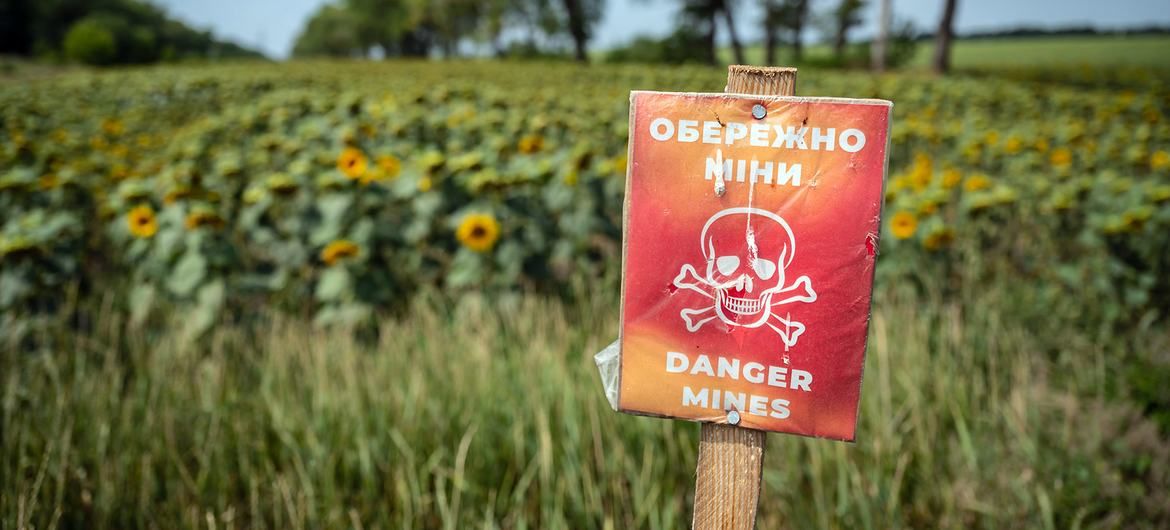
The report states that at least 58 countries and territories remain contaminated by anti-personnel mines, which are designed to explode when triggered by human contact. In some areas, these mines and other unexploded ordnance have remained in place since the two World Wars, while millions of mines continue to be held in national stockpiles.
UN High Commissioner for Human Rights Volker Türk said it is deeply alarming that anti-personnel mines continue to kill and maim people nearly three decades after the adoption of the Anti-Personnel Mine Ban Convention.
"Nearly 30 years after the adoption of the Anti-Personnel Mine Ban Convention, it is profoundly disturbing that these explosive weapons continue to kill and injure people decades later," Türk said. He stressed the need for states to intensify efforts to end the production, use and transfer of such weapons and to accelerate the clearance of mines already in the ground.
According to the report, anti-personnel mines continue to affect civil, political, economic, social and cultural rights and are still being used today, including by non-state actors. Recent figures show that at least 1,945 people were killed and 4,325 injured by landmines and explosive remnants of war in 2024. The highest casualty rates were recorded in Myanmar, Syria, Afghanistan, Ukraine, Nigeria, Mali, Yemen and Burkina Faso. Approximately 90 percent of all recorded victims were civilians, while more than 40 percent were children.
Civilians have suffered amputations, blindness, hearing loss and other severe injuries after stepping on or coming into contact with mines. Children are particularly vulnerable, often experiencing more serious physical trauma and higher mortality rates than adults.
Mine contamination also turns large areas into inaccessible zones, preventing civilians from accessing essential services, obstructing humanitarian aid and forcing displacement. It threatens food security by making agricultural land unsafe to use and contributes to economic hardship in affected communities.
In addition, mines placed near schools and residential areas expose children to significant risks and disrupt access to education.
The report warns that contamination from anti-personnel mines and other explosive remnants of war can hinder economic development for decades and delay post-conflict recovery efforts.
Currently, 162 states are parties to the Anti-Personnel Mine Ban Convention, also known as the Ottawa Convention, which was opened for signature in Canada’s capital in December 1997.
However, the UN noted that many countries, including some permanent members of the Security Council and other states with significant mine stockpiles, have not joined the treaty. Furthermore, Estonia, Finland, Latvia, Lithuania and Poland have recently withdrawn from the convention, while Ukraine, a state party to the treaty, has announced the suspension of its implementation.
Image: Viacheslav Ratynskyi / FAO
Here we are to serve you with news right now. It does not cost much, but worth your attention.
Choose to support open, independent, quality journalism and subscribe on a monthly basis.
By subscribing to our online newspaper, you can have full digital access to all news, analysis, and much more.
You can also follow AzerNEWS on Twitter @AzerNewsAz or Facebook @AzerNewsNewspaper
Thank you!