
Erdoğan unveils Türkiye’s 5G vision, promises nationwide coverage in two years
By News Centre
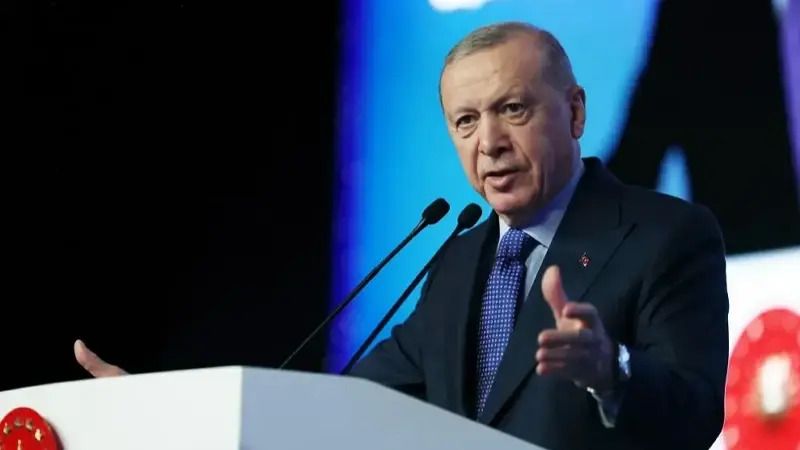
President Recep Tayyip Erdoğan has officially launched Türkiye’s transition to next-generation communication infrastructure under the vision of “Strong Türkiye in Communication with 5G,” framing the technology not merely as a leap in connectivity but as a cornerstone of national security and digital sovereignty.
Speaking at the Presidential Complex, Erdoğan emphasized that 5G represents more than a technological upgrade. “It is a strategic issue of national security,” he said, stressing the importance of data protection, cybersecurity, and digital independence in an era defined by information flows and technological competition. The rollout, which will initially rely on 60 percent domestically produced components, is expected to cover all of Türkiye within two years.
Erdoğan noted that sovereignty in the modern world can no longer be understood solely in geographic terms. As global competition intensifies, digital capabilities—particularly the ability to collect, process, and secure data—have become decisive factors in determining a country’s strength and influence. Recent conflicts in regions such as Gaza, Lebanon, and Iran, he argued, have underscored the growing importance of cybersecurity.
“In the age of data, political stability, economic independence, military deterrence, and digital sovereignty are inseparable,” Erdoğan said. “If you can protect your borders but not your airspace, or your airspace but not your cyber domain, then your sovereignty remains incomplete.” He added that geopolitical power in the digital age will increasingly belong to those who control and manage data.
Against this backdrop, Erdoğan described 5G—alongside data centers, cloud infrastructure, artificial intelligence, and cybersecurity capacity—as an integral component of Türkiye’s national security architecture. He said the country has spent the past two decades laying the groundwork for this transformation through sustained investment in digital infrastructure.
The scale of that expansion is significant. Türkiye’s fiber-optic network has grown from 81,000 kilometers in 2002 to 657,000 kilometers as of the third quarter of 2025. Broadband internet subscriptions have surged from just 3,000 to 98 million, while mobile subscribers have reached nearly 100 million. Today, more than 55 million citizens use secure internet services, and mobile and fixed networks handle approximately 82 billion minutes of voice traffic. With an average monthly mobile usage of 494 minutes, Türkiye ranks first in Europe.
Institutionally, the government has also strengthened its cybersecurity framework. The establishment of a dedicated Cybersecurity Presidency last year marked a significant step in safeguarding communication systems and critical infrastructure. Law enforcement agencies and intelligence services are also actively developing and implementing contingency plans to counter cyber threats.
Erdoğan indicated that concerns over foreign-based messaging and communication platforms—particularly in the wake of the Gaza conflict—have prompted closer scrutiny. Additional measures, he said, will be introduced to further secure data belonging to state institutions.
Reflecting on Türkiye’s broader technological trajectory, Erdoğan contrasted the present with the past, when the country struggled to keep pace with global innovation. He criticized earlier periods of political and ideological distraction that, in his view, hindered technological progress. Today, however, Türkiye has emerged as both a producer and exporter of advanced technologies.
One of the most notable milestones in this transformation was the launch of Türksat 6A, Türkiye’s first domestically produced communication satellite, in 2024. The satellite entered service in 2025, placing Türkiye among a select group of countries capable of developing their own space-based communication systems.
Erdoğan also highlighted the growing prominence of Türkiye’s technology ecosystem, particularly its youth-driven innovation culture. Initiatives such as TEKNOFEST, he said, have helped foster a new generation of engineers and entrepreneurs who are increasingly visible on the global stage.
Turning to the specifics of 5G, Erdoğan outlined the technology’s three defining features: high speed, low latency, and massive connectivity. With data transfer rates of up to 2 gigabits per second—roughly ten times faster than previous generations—5G promises a dramatic increase in communication speed. Latency, currently around 30–40 milliseconds in existing networks, is expected to drop to as low as 1 millisecond, enabling near-instantaneous data transmission.
Equally transformative is the system’s capacity to support millions of connected devices per square kilometer. This capability will significantly enhance the efficiency of the Internet of Things (IoT), allowing vast networks of devices—from industrial sensors to household appliances—to communicate seamlessly and in real time.
Another key advantage of 5G lies in its cloud-based, software-driven architecture, which makes networks more flexible, scalable, and responsive to changing demands. This will enable the creation of virtual networks tailored to specific sectors, including healthcare, manufacturing, logistics, and security.
For consumers, the impact will be immediately noticeable. Internet speeds are expected to reach at least 1 gigabit per second, while fixed wireless access will provide near-fiber performance in areas where traditional infrastructure is unavailable. More stable and uninterrupted connectivity will become the norm, whether at home, at work, or on the move.
For institutions and businesses, 5G will open new possibilities in operational efficiency. Dedicated, low-latency networks can be deployed within campuses or industrial facilities, allowing data to be processed closer to its source. This “edge computing” capability will significantly reduce response times and improve decision-making processes.
The most profound transformation, however, is expected to occur in the production sector. With the integration of smart sensors, robotic systems, and real-time data analytics, industries will enter a new phase of digitalization. Equipment failures can be predicted before they occur, production lines can be optimized continuously, and overall productivity can reach unprecedented levels.
Türkiye’s 5G rollout has been years in the making. Preparations began in 2016, with initial tests conducted in 2018. By 2019, pilot deployments were underway in key locations, including the Turkish Grand National Assembly, major stadiums, and large-scale public events. Today, the infrastructure has been extended across both urban and rural areas, laying the foundation for nationwide coverage.
The first phase of deployment will focus on the centers of all 81 provinces, with full nationwide availability targeted within two years. Erdoğan reiterated the government’s commitment to maximizing the use of domestic technologies, noting that the share of locally produced components in the network will increase over time.
As Türkiye embarks on this ambitious transition, Erdoğan framed 5G not just as a technological milestone but as a defining element of the country’s future. In a world where power is increasingly measured in data and connectivity, he suggested, the ability to control and secure digital infrastructure will be as critical as traditional measures of strength.
“With 5G,” Erdoğan said, “we are not only accelerating communication—we are reshaping our entire digital ecosystem and strengthening the foundations of a new, more resilient Türkiye.”
Here we are to serve you with news right now. It does not cost much, but worth your attention.
Choose to support open, independent, quality journalism and subscribe on a monthly basis.
By subscribing to our online newspaper, you can have full digital access to all news, analysis, and much more.
You can also follow AzerNEWS on Twitter @AzerNewsAz or Facebook @AzerNewsNewspaper
Thank you!