
Azerbaijan's non-oil exports set to top $4.2 billion as industry expands

Qabil Ashirov
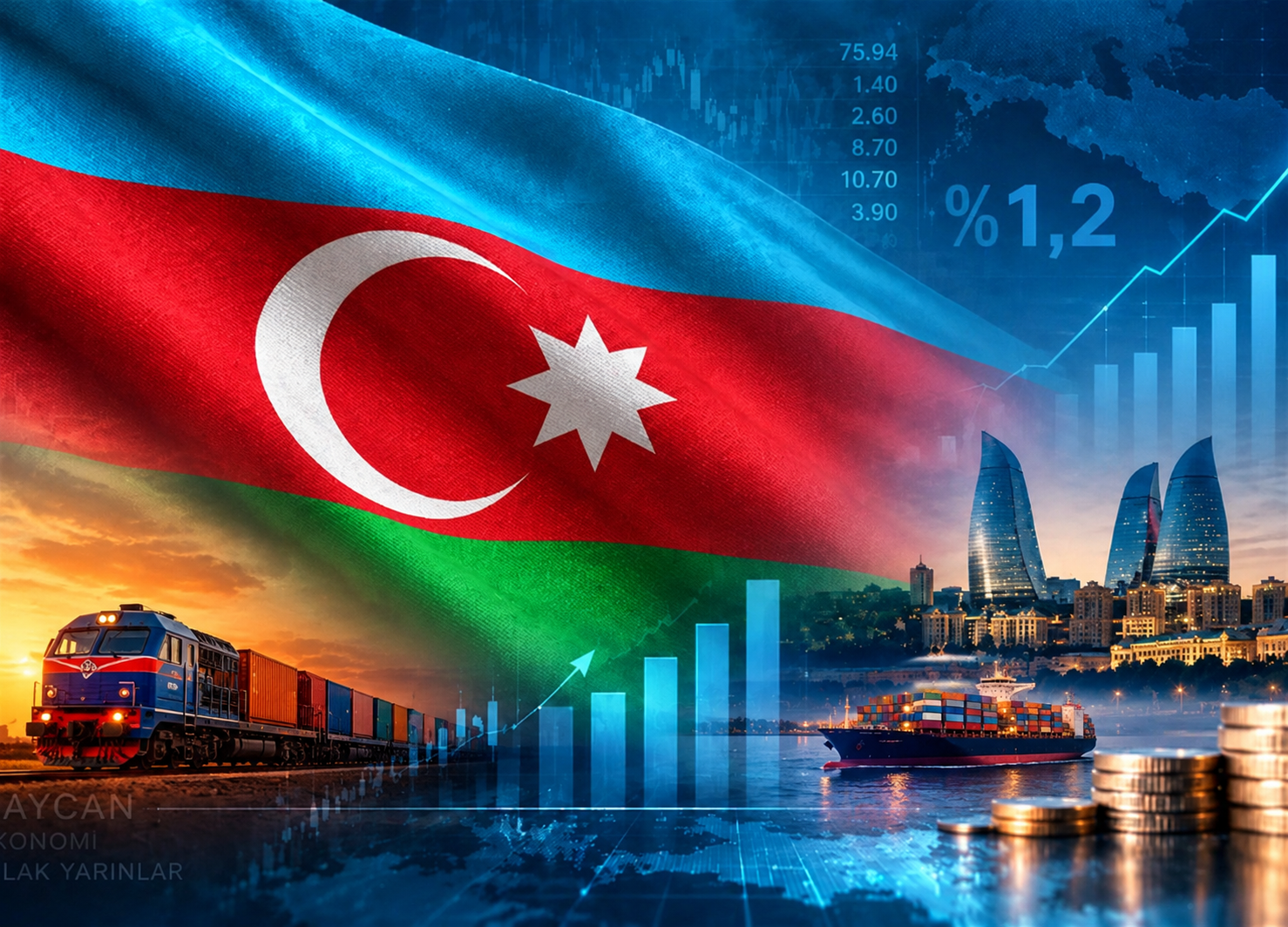
Read moreAzerbaijan is approaching an important milestone in its economic diversification strategy, with non-oil and gas merchandise exports expected to exceed $4.2 billion in 2026, representing 2.5 times the level recorded in 2018. The significance of this development reflects an evolving economic model in which manufacturing, agricultural processing, industrial investment and international market access are becoming increasingly important components of national economic policy.
The numbers reveal where this transformation is taking place. During the first 10 months of 2026, Azerbaijan's non-oil and gas exports, excluding gold transactions conducted by the State Oil Fund, increased by more than 20%, reaching $3.6 billion. Industrial products accounted for 61% of the total, equivalent to approximately $2.2 billion. Industrial manufacturing is increasingly shaping the country's export profile, creating opportunities for a broader productive economy.
For Azerbaijan, the strategic value of industrial exports lies in their potential to generate interconnected economic activity. Aluminium, steel, textiles, chemicals and processed agricultural products create demand for engineering, logistics, electricity, packaging, financial services and skilled labour. Their contribution therefore extends beyond the customs value of exported goods. A growing manufacturing sector can stimulate domestic supply chains, increase business activity and create additional employment opportunities across multiple regions.
The government's latest support package reflects an understanding of these economic connections. Business borrowers operating outside Baku and the Absheron Peninsula receive subsidies covering 50% of their loan interest expenses. The maximum loan guarantee coverage has increased from 20% to 50%, improving access to financing for companies seeking to expand production. Exporters can also receive compensation covering up to 70% of transportation expenses, while micro, small and medium-sized enterprises benefit from partial compensation for customs clearance costs.
These incentives address several important constraints simultaneously. Manufacturing requires investment in equipment, infrastructure, working capital and distribution networks. Export-oriented businesses also face transportation expenses and financing requirements that directly influence their international competitiveness. By sharing part of these costs, the government is attempting to encourage private capital to move into productive activities with export potential.
Location is an important part of this proposition. Azerbaijan sits at the intersection of the South Caucasus, Central Asia and the wider European market, while its transport infrastructure connects the Caspian basin with Black Sea destinations. The Middle Corridor offers an additional commercial dimension, particularly for manufacturers seeking alternative routes between Asian production centres and European consumers. Combining industrial capacity with transport connectivity could gradually strengthen Azerbaijan's position in regional supply chains.
The next challenge concerns the quality and geographical reach of export growth. A $4.2 billion export base creates a foundation for further expansion, while the long-term objective should be to establish internationally competitive Azerbaijani brands across multiple industries. This requires investment in production technology, product certification, research, workforce training and energy efficiency. Access to new markets will also depend on meeting international standards and developing reliable commercial partnerships.
Industrial zones already account for more than 23% of Azerbaijan's non-oil industrial exports, according to the Economy Ministry. Their contribution illustrates the importance of concentrated infrastructure, investment incentives and business-oriented regulation. Expanding this model could help attract additional manufacturing projects, particularly in metal processing, chemicals, food production and other industries with established regional demand.
The broader economic implications deserve equal attention. A stronger non-oil export sector can generate additional foreign currency earnings, broaden the country's economic relationships and strengthen the revenue base of private businesses. It can also create a more diversified employment structure, with industrial enterprises supporting demand for technical specialists, engineers, transport operators and professional service providers.
Azerbaijan's projected $4.2 billion export milestone therefore represents a strategic economic opportunity. The 2.5-fold expansion since 2018 provides measurable evidence of progress, while the next stage will depend on productivity, investment quality and the ability of domestic manufacturers to compete internationally. The ultimate objective is to turn export growth into a durable industrial ecosystem, giving Azerbaijan a wider range of economic engines and a stronger position in regional and global trade.
Here we are to serve you with news right now. It does not cost much, but worth your attention.
Choose to support open, independent, quality journalism and subscribe on a monthly basis.
By subscribing to our online newspaper, you can have full digital access to all news, analysis, and much more.
You can also follow AzerNEWS on Twitter @AzerNewsAz or Facebook @AzerNewsNewspaper
Thank you!