
Armenia's diaspora loses grip as Yerevan embraces new South Caucasus reality

Ulviyya Poladova
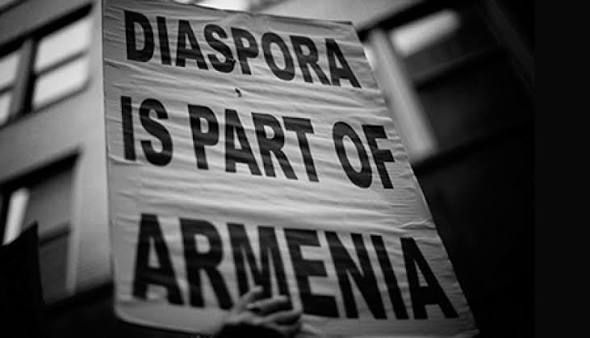
Read moreArmenia’s recent adoption of a law restricting diaspora members’ interference, influence, and campaigning activity in its elections is not especially surprising. What is striking, however, is how a country that for years could prolong conflict largely due to the determined efforts of diaspora organisations now intends to structure relations with its neighbours without that same diaspora activism and support. Today, Armenia extends a hand of peace toward both of its eastern and western neighbours, Azerbaijan and Türkiye, and signals readiness for cooperation. Against this backdrop, a state that for roughly a century maintained hostility toward those neighbours appears to have little remaining need for accusatory narratives or for the propaganda sustained by diaspora structures.
Following the latest elections, Prime Minister Nikol Pashinyan’s renewed mandate sends a hard message to the Armenian lobby and diaspora organisations active in Canada, the United States, Lebanon, Russia and European countries, including France. Until the last few years, the Pashinyan administration often turned a blind eye to groups abroad that attacked Azerbaijan and persistently criticised Pashinyan’s own decisions.
It should be noted that the relationship between Armenia and the Armenian diaspora has undergone significant changes in the aftermath of the Second Karabakh War, which ended in 2020. The conflict not only reshaped the political landscape of the South Caucasus but also exposed growing disagreements between Armenia’s government and influential diaspora communities abroad.
Now, diaspora activism senses that it stands on the full threshold of decline. Yet calling this a collapse is premature. When speaking of the diaspora, the relevant supporters are not the Civil Contract party or weakened opposition parties inside Armenia. The real backing and financing come from influential figures within the U.S. Congress and the French Parliament.
With that in mind, a central question emerges: Will the diaspora groupings that once exerted strong influence over decision-making in Yerevan kneel before shifting geopolitical interests, or will they adapt and continue the struggle in another form? For now, Yerevan is taking serious steps to insulate domestic electoral processes from external impacts. What remains unclear is what additional measures will follow against diaspora activity overall.
Armenia’s leadership understands that speaking the language of external powers does not work in the region anymore. On both sides, hard obstacles and impassable ridges have strained Armenia’s economy and regional connections as well as drained its strength. The losses of the last thirty years are not being assigned to the diaspora organisations that, with hollow messaging, push the public toward aggression. Instead, the cumulative failures land squarely in Pashinyan’s ledger of accountability, where time is pressing.
In this evolving moment, Pashinyan may succeed in breaking the will of the diaspora at home. Over time, such organisations can indeed be crushed or sidelined. The history shows this is hardly abnormal. Yet abroad, the diaspora networks continue to receive funding. For those well-resourced groups, a pivot toward hybrid warfare tactics aimed at shaping Armenia’s internal environment becomes, in all likelihood, an unavoidable next step. The state’s pursuit of peace with Azerbaijan and Türkiye reduces the space for accusatory politics and weakens the narrative foundations that once sustained diaspora-led confrontation. But it also tests whether a government in Armenia can protect its internal decision-making while powerful external constituencies adjust their strategies to preserve influence.
Nevertheless, the victory of Nikol Pashinyan in the June 2026 elections marked a definitive fracture in the century-old relationship between the Armenian state and its global diaspora. For decades, organizations like the Armenian National Committee of America (ANCA) cultivated a narrative of perpetual victimhood, leveraging the Karabakh conflict to maintain relevance in Washington and beyond. Today, the Armenian government considers the traditional diaspora agenda not as a "second army", but as the main obstacle to national sovereignty and regional stability.
The core of the current tension lies in a fundamental disagreement over what constitutes Armenian "success." For ANCA, for instance, success was measured by legislative clout or by securing symbolic resolutions in the U.S. Congress. However, as Prime Minister Pashinyan has argued, these "successes" often led to the international isolation of Armenia and kept the country in a state of dependency.
By acknowledging Karabakh as part of Azerbaijan and pursuing a peace treaty, Pashinyan effectively dismantled the ideological foundation upon which the diaspora’s lobbying machine was built. The diaspora utilized the conflict as a tool for mobilization and fundraising.
If the Armenian diaspora truly has Armenia's best interests at heart, why does it not invest the billions of dollars under its control into the country's development? Why is the diaspora's influence in the U.S. Congress not used to attract investment and promote economic growth, but instead to lobby for resolutions that contribute to Armenia's international isolation and fuel tensions in the South Caucasus?
One possible answer is that parts of the diaspora benefit from maintaining Armenia's image as a perpetual victim rather than supporting the country's transformation into a strong, sovereign, and economically self-sufficient state.
The diaspora's preference for "symbolic identity politics" over concrete solutions for security and economic development has created a visible gap between the lived reality of citizens in Yerevan and the aspirations of "activists" abroad.
Despite the restrictions introduced by the Armenian government, the diaspora is still likely to find ways to preserve its influence. Even if formal mechanisms of political involvement are limited, it would be unrealistic to expect the diaspora's role to disappear entirely. Instead, its methods of engagement are likely to adapt.
Diaspora organizations may increasingly rely on indirect channels, including academic institutions, media platforms, civil society organizations, and policy research centers. These mechanisms are widely used around the world to shape public opinion and influence political discourse without direct participation in electoral campaigns. As a result, while legal restrictions may reduce overt political involvement, they are unlikely to eliminate the diaspora's ability to influence developments in Armenia altogether.
Currently, the Armenian government is trying to strengthen the principle that political legitimacy should come primarily from citizens living in Armenia, and not from external actors.
Ultimately, the effectiveness of the new legislation will depend not only on its provisions but also on how consistently it is enforced. While the law may reduce direct intervention in Armenia's electoral process, it is unlikely to eliminate the diaspora's broader influence on the country's political and social landscape, given the deep historical, cultural, and financial ties that connect diaspora communities with Armenia.
The coming period will therefore hinge on two intertwined dynamics. First is the durability of Armenia’s commitment to normalising relations with its neighbours without the crutch of diaspora propaganda. Second is the state’s capacity to keep elections and core institutions shielded from transnational political pressure that, for years, set the tone in Yerevan. As these threads tighten, Armenia faces a compressed timeline and high costs. The country’s leadership recognises that progress in the South Caucasus cannot be brokered in the idiom of distant capitals. It must be built on pragmatic choices that ease economic exhaustion, move beyond sterile rhetoric, and finally detach policy from the external agendas that prolonged conflict while eroding Armenia’s own resilience.
Here we are to serve you with news right now. It does not cost much, but worth your attention.
Choose to support open, independent, quality journalism and subscribe on a monthly basis.
By subscribing to our online newspaper, you can have full digital access to all news, analysis, and much more.
You can also follow AzerNEWS on Twitter @AzerNewsAz or Facebook @AzerNewsNewspaper
Thank you!