
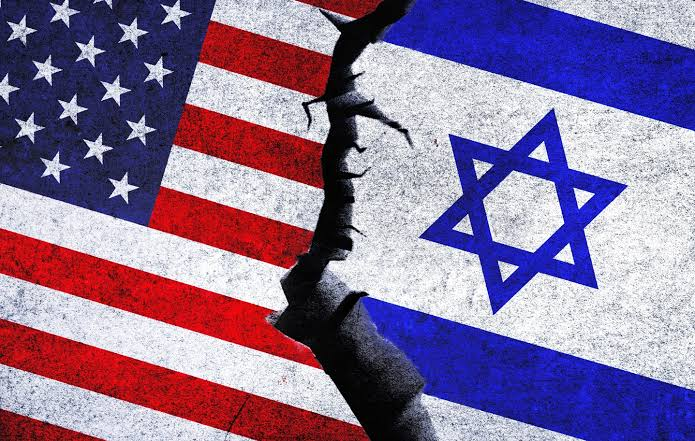
Is US-Israel special relationship entering colder era?
Akbar Novruz
Read moreThe US and Iran reached a 14-point preliminary framework deal aimed at ending hostilities, lifting a US naval blockade, and reopening the Strait of Hormuz. The interim memorandum of understanding establishes a 60-day ceasefire and nuclear negotiation period. Perhaps the details are quite satiric, some would say.
It has sparked intense satire and public debate. The latest diplomatic memorandum of understanding, reportedly driven by U.S. President Donald Trump, has drawn international mockery for allegedly handing Tehran massive reconstruction funds and paying huge sums to reopen the Strait of Hormuz, all after sparking a brief but costly war.
This kind of dissatisfaction is visible among high-level politicians as well. Especially from the Israeli side. For example, Israeli National Security Minister Itamar Ben-Gvir has stated that Israel does not consider itself bound by an agreement proposed by US President Donald Trump and will continue to make national security decisions independently
Amidst these furious debates. U.S. public opinion is also undergoing a dramatic shift, apparently. Polls show that Americans view Palestinians more sympathetically than they do Israelis, something that has never happened before. Less than half of Americans believe supporting Israel is in their national interest. Prominent U.S. lawmakers are now openly criticizing the country’s bipartisan policies toward Israel.
U.S. President Donald Trump also criticized Israel's conduct in Lebanon, saying the conflict with Hezbollah has dragged on for too long and resulted in excessive civilian casualties. He also stressed that Israeli Prime Minister Benjamin Netanyahu must act more responsibly regarding Lebanon.
"Without the United States, there would be no Israel. Without me, there would be no Israel," Trump said, arguing that no previous U.S. president had been willing to take the steps he had in support of Israel.
AzerNEWS presents its interview with Geopolitical analyst Irina Tsukerman, president of Scarab Rising, Inc., regarding the matter:
Maybe, the U.S.-Israel "special relationship" is not over, but it is undergoing a significant and historic evolution from a deeply personal, unconditional alliance into a more conditional, transactional partnership. But, can it end with some-what of a cold period of relationship amid this significant transitions?
A colder phase in U.S.-Israeli relations is already taking shape and is likely to become one of the defining features of the post-crisis environment. The controversy surrounding the reported framework with Iran has accelerated trends that were developing long before the latest confrontation. The debate has exposed growing unease in Tel Aviv regarding Washington's broader approach to regional security, Iran policy, and the use of diplomacy as a tool for managing strategic threats.
Within Israel's political and security establishment, there is increasing concern that recent American policy choices place greater emphasis on short-term stabilization than on the long-term degradation of Iranian capabilities. The reported framework has intensified those concerns because it is widely perceived by critics as providing Tehran with economic opportunities, political legitimacy, and recovery time following a period of military pressure. The financial dimensions of the proposal have become particularly controversial because they create the impression that Iran is receiving substantial benefits while many of the underlying security questions remain unresolved.
The atmosphere surrounding bilateral discussions has already become more contentious. Senior Israeli officials are speaking more openly about preserving independent decision-making authority. Statements from figures such as Ben-Gvir reflect a broader sentiment within parts of the Israeli political system that national security policy cannot become subordinate to diplomatic arrangements negotiated elsewhere. This sentiment extends beyond any single political faction and touches upon longstanding assumptions regarding Israeli strategic autonomy.
Changes within the American political environment are also contributing to this shift. Public debates surrounding Israel, Gaza, Iran, and U.S. involvement in the Middle East have become more polarized. Political leaders are operating within a landscape where support for Israel is increasingly scrutinized, debated, and conditioned by domestic political considerations. Israeli policymakers are paying close attention to these developments because they directly influence the amount of political capital American administrations are willing to expend on Israel's behalf.
The practical result is likely to be a relationship characterized by more frequent disputes, greater public disagreement, intensified negotiations over military and diplomatic issues, and a stronger emphasis on narrowly defined national interests. Defense cooperation, intelligence sharing, and technological collaboration remain deeply embedded, yet the political atmosphere surrounding those relationships is becoming more guarded and less instinctively aligned.
This evolution reflects a broader transformation in how both governments view the regional environment. Strategic coordination continues, yet it increasingly occurs alongside visible disagreements regarding Iran, proxy threats, military operations, and diplomatic priorities. The emergence of a colder political climate therefore appears less like a temporary disruption and more like a new operating environment for the alliance.
How can Washington realistically enforce the deal if Tel Aviv continues independent operations against Hezbollah?
Washington faces significant practical limitations in attempting to enforce a framework that relies upon Israeli restraint toward Hezbollah. Israeli security institutions evaluate Hezbollah through the lens of immediate military capabilities, intelligence assessments, weapons development, force deployments, and operational readiness. Those assessments continue regardless of diplomatic developments occurring elsewhere in the region.
Hezbollah remains one of the most heavily armed non-state actors in the world. Its missile infrastructure, military command structure, intelligence apparatus, and logistical networks continue to occupy a central place within Israeli security planning. Israeli decision-makers are unlikely to suspend monitoring or response planning during a sixty-day negotiation period simply because broader diplomatic discussions are underway.
American officials retain substantial influence through military cooperation, intelligence coordination, diplomatic engagement, and defense assistance. These tools provide opportunities to encourage restraint, communicate concerns, and shape political calculations. Their effectiveness depends heavily upon Israeli perceptions of the threat environment at any given moment. Intelligence indicating weapons transfers, force mobilizations, missile deployments, or preparations for hostile activity would place enormous pressure on Israeli leaders to act regardless of diplomatic considerations.
Proxy warfare creates additional complications. Security incidents rarely emerge within a clear and uncontested framework of attribution. Drone attacks, cyber operations, maritime disruptions, intelligence activities, and covert actions frequently occur within environments characterized by uncertainty and competing narratives. Governments often respond according to threat assessments rather than waiting for complete diplomatic consensus regarding responsibility.
Israeli political leaders also operate within a domestic environment that places considerable importance on maintaining military freedom of action. Security officials, opposition figures, and much of the public expect the government to preserve the ability to respond to perceived threats. Any appearance that operational decisions are being constrained by external diplomatic arrangements would generate significant political resistance.
Questions surrounding weapons transfers, military infrastructure, intelligence operations, force deployments, and proxy coordination could repeatedly generate tensions during the negotiation period. Each of these issues carries direct security implications from the Israeli perspective. Their persistence ensures that diplomatic frameworks and military realities remain closely intertwined throughout the process.
Washington therefore possesses influence, leverage, and diplomatic tools. Sustained control over Israeli operational decision-making remains a far more difficult proposition. The framework's durability depends heavily upon the security environment remaining sufficiently stable to prevent Israeli leaders from concluding that military intervention has become necessary.
Does this tight 60-day negotiation deadline incentivize regional actors opposed to the deal to accelerate asymmetric operations in order to collapse the framework before a permanent treaty can be finalized?
The sixty-day timeline creates a highly favorable environment for actors seeking to undermine the framework. Short diplomatic windows concentrate political expectations, intensify media attention, and elevate the importance of every security incident. These conditions increase the strategic value of disruption for groups and institutions that view the agreement unfavorably.
Asymmetric actors frequently pursue political effects rather than military victories. Their objectives often involve generating uncertainty, eroding confidence, exposing vulnerabilities, and creating pressure on decision-makers. A limited cyberattack, maritime incident, drone strike, assassination attempt, sabotage operation, or proxy confrontation can achieve those objectives without requiring large-scale military escalation.
The regional landscape contains numerous organizations, networks, factions, and power centers capable of influencing events during the negotiation period. Some view diplomatic accommodation with suspicion. Others benefit from continued instability. Certain actors possess institutional interests tied to ongoing confrontation. The existence of these incentives ensures that the framework will operate within a highly contested environment.
The reported structure of the agreement increases the stakes surrounding the negotiation period. Discussions involving reconstruction funding, sanctions relief, maritime access, and broader economic normalization create powerful political and financial incentives. Critics argue that these incentives are being introduced before enduring mechanisms of verification and accountability have been firmly established. Such perceptions inevitably intensify efforts by opponents to shape outcomes before the diplomatic process reaches a more permanent stage.
The compressed timetable also places negotiators under constant pressure to demonstrate progress. Political leaders become increasingly invested in preserving momentum and protecting the appearance of forward movement. This environment amplifies the impact of disruptive events because even relatively small incidents can trigger outsized political consequences.
Regional security challenges remain deeply interconnected. Developments involving Hezbollah, Iraqi militias, Houthi operations, maritime security, intelligence activities, and nuclear-related disputes all possess the capacity to influence broader perceptions of the framework's viability. Instability in any one area can generate repercussions throughout the negotiating process.
The sixty-day period therefore represents an exceptionally sensitive phase. Opponents of the framework understand that diplomatic arrangements are often most vulnerable before permanent mechanisms are finalized. The incentive to exploit that vulnerability is substantial and likely to shape regional behavior throughout the negotiation period.
Finally, what are your expectations and expressions in regards to the current dynamic of the dispute between, US, Israel-Iran?
The current dispute appears increasingly centered on the political consequences of the recent confrontation rather than on the resolution of the underlying strategic issues. Military operations have altered calculations across the region, yet the core questions surrounding Iran's nuclear ambitions, missile capabilities, proxy networks, regional influence, and long-term security posture remain active and unresolved.
The reported framework has generated intense skepticism because it appears to grant Tehran access to significant political and economic opportunities at a moment when many observers believe sustained pressure was producing meaningful strategic effects. Reconstruction assistance, sanctions relief discussions, maritime reopening arrangements, and broader normalization efforts have become focal points of criticism. The perception that Iran may emerge from the crisis with tangible benefits has fueled concerns throughout much of the region.
Many critics view the framework as an attempt to transform a temporary reduction in hostilities into a diplomatic success story before difficult questions regarding verification, compliance, proxy activity, and enforcement have been addressed. Those concerns are particularly pronounced because previous negotiations with Iran have repeatedly encountered disputes over implementation, interpretation, transparency, and long-term commitments.
Israeli officials are likely to remain deeply skeptical throughout the process. Security planners continue to focus on military capabilities rather than diplomatic declarations. Missile production, weapons transfers, intelligence operations, proxy infrastructure, and nuclear-related activities remain central concerns within Israeli strategic thinking. Those concerns are unlikely to diminish simply because negotiations are underway.
Iran's leadership enters the negotiations having preserved regime continuity and retained its position as a central regional actor. Participation in the negotiations itself carries political value for Tehran. Economic relief, expanded commercial opportunities, and reduced international pressure would provide additional incentives to maintain engagement while preserving as much strategic flexibility as possible.
Washington appears committed to demonstrating that diplomacy can deliver stability after a period of confrontation. The administration has invested significant political capital in presenting the framework as a pathway toward de-escalation, maritime security, and broader regional calm. The success of that effort depends heavily upon developments that remain outside direct American control, including proxy activity, regional security incidents, intelligence revelations, and decisions taken by actors across multiple theaters.
The dispute therefore remains highly fluid. Diplomatic activity is advancing alongside persistent strategic mistrust, unresolved security concerns, competing regional agendas, and widespread skepticism regarding the framework's long-term viability. The central challenge facing the agreement is not the drafting of documents or the scheduling of negotiations. The central challenge is the enduring reality that the strategic drivers of the confrontation remain embedded throughout the regional security environment.
Here we are to serve you with news right now. It does not cost much, but worth your attention.
Choose to support open, independent, quality journalism and subscribe on a monthly basis.
By subscribing to our online newspaper, you can have full digital access to all news, analysis, and much more.
You can also follow AzerNEWS on Twitter @AzerNewsAz or Facebook @AzerNewsNewspaper
Thank you!