
What can IsDB summit in Baku achieve beyond dialogue?
by Qaiser Nawab | AzerNEWS | Guest columnist
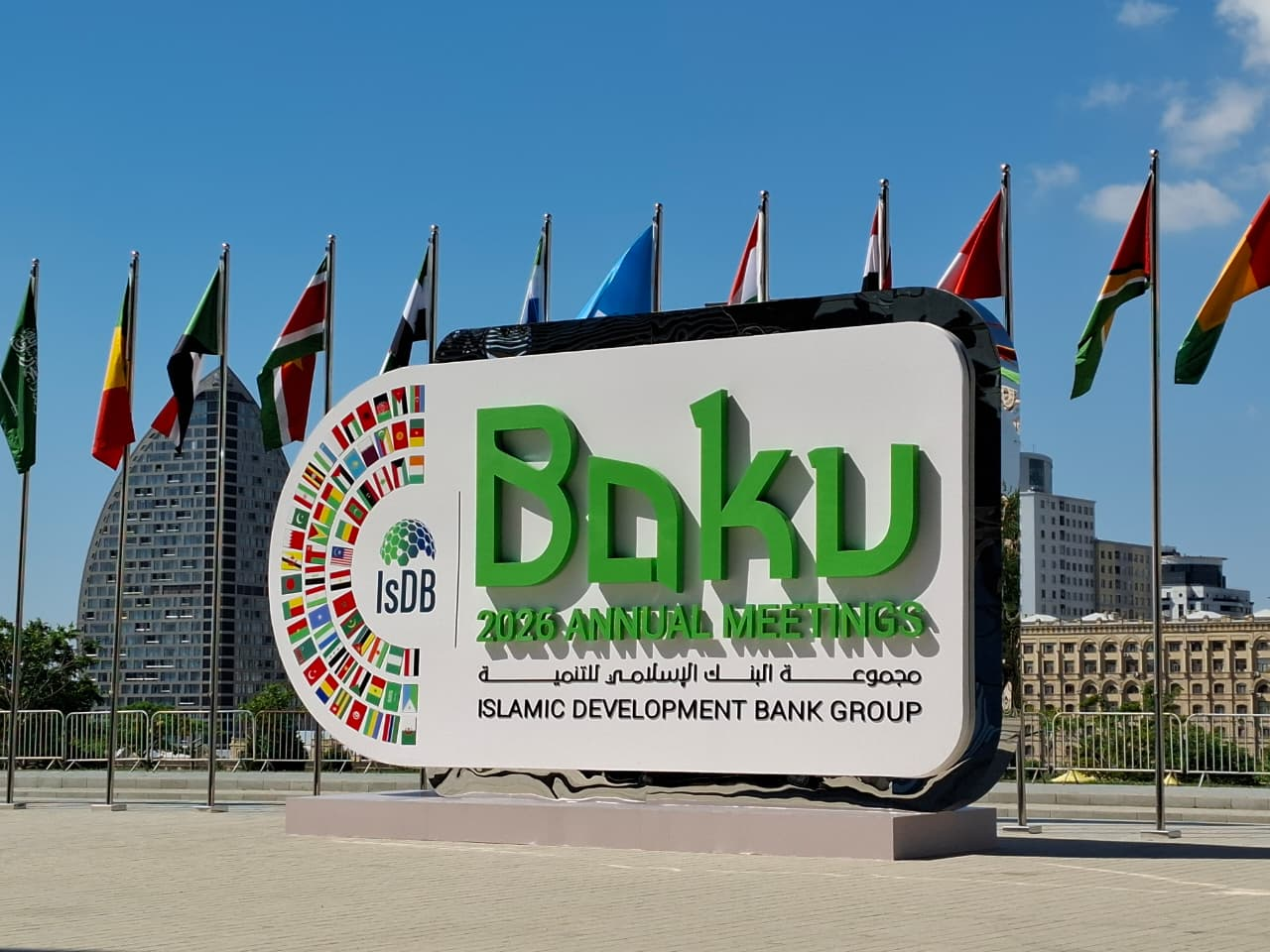
This week, Baku once again takes its place at the center of the global development conversation. The Annual Meetings of the Islamic Development Bank (IsDB) Group have officially commenced in the Azerbaijani capital under the patronage of President Ilham Aliyev, bringing together policymakers, development experts, and financial leaders from the institution's fifty-seven member countries and beyond. It is the second time Azerbaijan has hosted the Group's flagship gathering, the first being in 2010, and the return after sixteen years is no small symbol of how far the country and the wider region have travelled.
The theme chosen for this year's meetings, “Regional Integration for Sustainable Prosperity,” could not be more timely. We are living through a period in which the old certainties of global trade are being rewritten, supply chains are being reconsidered, and developing economies are searching for partners rather than patrons. In that environment, regional integration is not an abstract ideal. It is a practical answer to a practical problem: how do nations that share geography, history, and ambition pool their strengths to face challenges none of them can solve alone?
Meeting place between East and West
Azerbaijan's role as host is fitting. Positioned at the crossroads of Europe and Asia, the country has steadily emerged as a connector between East and West, a hub where corridors of trade, energy, and dialogue intersect. The Middle Corridor, the Trans-Caspian route linking Central Asia and the Caucasus to European markets, is perhaps the clearest example of regional integration creating tangible value. By offering an alternative path for goods to move between continents, it reduces dependence on any single route and strengthens the resilience of every economy along its length.
That the IsDB, a AAA-rated multilateral institution serving the Global South, has chosen to convene here sends a message of confidence in the region as an engine of future growth. When such an institution gathers in Baku, it acknowledges that the answers to many of tomorrow's development questions will be written not only in the established financial capitals, but in the rising hubs that link Central Asia, the Caucasus, the Middle East, and South Asia together.
Where vision must meet delivery
Yet we must be honest about where the real test lies. High-level forums produce communiques and photographs with ease; what they produce far less often is bankable projects that change lives. The measure of these meetings will not be the eloquence of the speeches but whether they mobilize Islamic finance and blended capital toward the things that matter most: climate-resilient infrastructure, food and energy security, and the small and medium enterprises that create the majority of jobs across the developing world.
This is where connectivity and finance must move in step. From the perspective of sustainable development, infrastructure without financing is a blueprint left on a shelf, and financing without connectivity is capital that never reaches the people who need it. The work of institutions like the IsDB and the broader agenda of sustainable, connectivity-driven development are therefore natural partners. Both seek to close the infrastructure gap that holds back so many emerging economies, and both understand that prosperity shared across borders is more durable than prosperity hoarded behind them.
It is striking, too, that these conversations are unfolding at a moment when global investment in clean energy has begun to outpace investment in fossil fuels. Azerbaijan, long known for its hydrocarbon wealth, has signaled its own intent to be part of the energy transition rather than a bystander to it. For a region rich in both conventional resources and renewable potential, the path forward is not a choice between the two but a managed journey from one to the other, financed responsibly and delivered at a pace that protects livelihoods.
My hope, as someone who has long advocated for connectivity and sustainable development across the Global South, is that the world remembers what these meetings are ultimately for. They matter most not in the halls of Baku this week, but in the months that follow, when the partnerships forged here either translate into roads, grids, ports, and enterprises, or quietly fade. Regional integration succeeds when it is felt by a farmer who can finally bring goods to a wider market, by a young entrepreneur who can access capital, by a family whose region grows more secure because its neighbours have become its partners.
Azerbaijan has opened its doors and offered a platform. The responsibility now rests with all of us, governments, financiers, and advocates alike, to ensure that the spirit of “Regional Integration for Sustainable Prosperity” outlives the closing ceremony. If we succeed, Baku will be remembered not merely as the place where the conversation was held, but as the place where it began to bear fruit.
---------
Qaiser Nawab is Chairman of the Belt and Road Initiative for Sustainable Development (BRISD), an international platform focused on fostering cooperation and innovation across Asia, Africa, and Latin America
---------
The views and opinions expressed by guest columnists in their articles may differ from those of the editorial board and do not necessarily reflect its views.
Here we are to serve you with news right now. It does not cost much, but worth your attention.
Choose to support open, independent, quality journalism and subscribe on a monthly basis.
By subscribing to our online newspaper, you can have full digital access to all news, analysis, and much more.
You can also follow AzerNEWS on Twitter @AzerNewsAz or Facebook @AzerNewsNewspaper
Thank you!