
Without a mediator in sight, Azerbaijan and Armenia walk into a new chapter

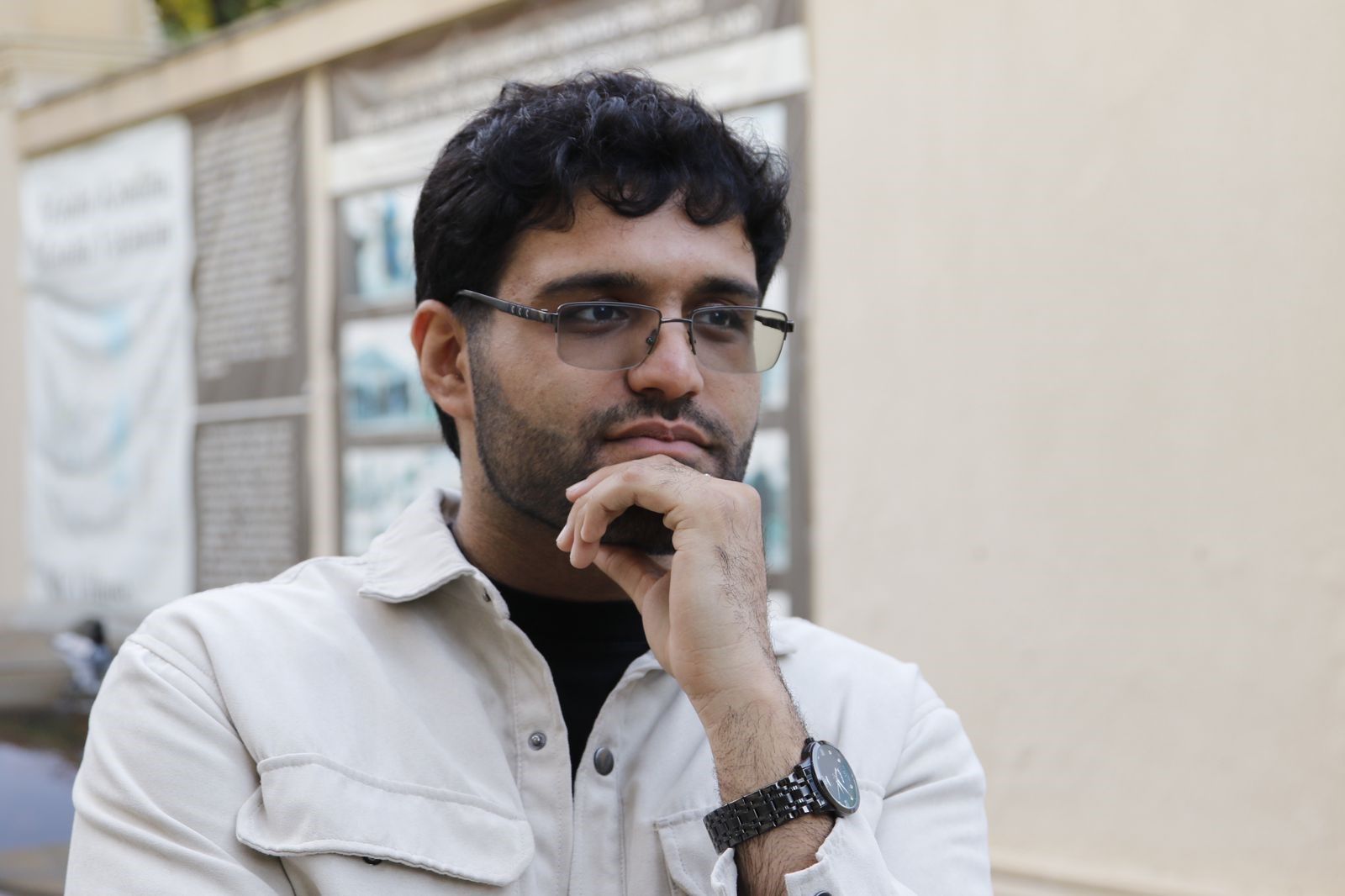
Akbar Novruz
Read moreHikmet Hajiyev, Azerbaijani Presidential Aide, has made his inaugural working visit to Armenia, where he met with Armen Grigoryan, the Secretary of the Armenian Security Council. This visit is notable as it is only the second time a senior Azerbaijani official has set foot in Armenia since the peace agreement was initialed in August 2025. In a joint statement released by both parties on Sunday, they outlined discussions focused on the peace agenda between Armenia and Azerbaijan, as well as shared perspectives on fostering trust between the civil societies of both nations.
The statement emphasized the significance of ongoing bilateral dialogue in promoting enduring peace and stability in the region. The meeting took place in Dilijan, a resort town located in Armenia’s Tavush Province, where the two delegates also enjoyed a stroll, a video of which has been shared online. They also confirmed that their next meeting is scheduled to occur in Azerbaijan.

It was made sure a video of him and Armenian Security Council secretary Armen Grigoryan walking through the resort town reached the internet before the official statement did. This included two senior diplomats, a mountainous street, and no security fanfare. It was definitely a move directed as much for the benefit of the domestic audience and the Kremlin as it was for the international community.
The stage in bigger picture
This is only the second such visit by a top Azerbaijani diplomat since then, and the first ever by one with the stature of Hajiyev, who was seen as one of President Ilham Aliyev’s closest foreign policy advisers and a principal decision-maker on the peace file. The joint declaration issued after their discussion talked about "continuous dialogue" and confidence-building between civil societies. But what really counted in this case was where it took place.
The selection of Dilijan city, only a stone's throw away from the enclave villages in Gazakh (Barkhudarly, Sofulu, Yukhari Eskipara) which Azerbaijan is trying to recover, for these talks is by no means accidental. For a peace delegation to hold its discussions so near disputed border regions can only mean one thing: that the border was becoming a transition zone rather than a confrontation line.
As regards to the election in Armenia, Pashinyan’s Civil Contract Party has managed to win the parliamentary elections recently held, having won 49.81%. It has managed to outdo the Russian-supported opposition, which had only managed to secure about 33%, showing Baku that it could now start making its move without further ado. The meeting was scheduled just a few days after the elections. The two parties agreed that their next meeting would be in Azerbaijan, which could never have happened some three years back. However, the future of proposed changes to Armenia’s constitution is still in question, as the party did not obtain the necessary constitutional majority, which perhaps remains the most crucial obstacle for the finalization of the peace deal.
The final results of the elections gave the ruling Civil Contract party 64 seats in parliament, Strong Armenia 29, and the Armenia Alliance 12 seats. With this specific distribution of seats, it is virtually impossible for Prime Minister Nikol Pashinyan's party to change the constitution or call a referendum on its own.
According to Article 202 of the Constitution of Armenia, the National Assembly cannot unilaterally change the constitution or even call a public referendum to change it without a supermajority. For a parliament with 105 seats, a two-thirds supermajority requires at least 70 seats. Because Civil Contract only has 64 seats, they fall 6 seats short of the required threshold. The remaining 41 seats are held entirely by opposition blocks (Strong Armenia Alliance with 29 seats and the Armenia Alliance with 12 seats), who are deeply opposed to these changes.
But is there any alternative path?
As much as it seems impossible, but it is more of a near-zero probability. Pashinyan's government would have to convince at least 6 MPs from the opposition alliances to defect or cross party lines to vote in favor of holding a constitutional referendum to the public. The Armenian constitution allows a draft amendment to be initiated if 200,000 citizens sign a petition. However, even if a popular initiative bypasses the initial parliamentary draft stage, the final decision to officially send that draft to a referendum still requires the final approval of the parliament by that same two-thirds majority.
Civil Contract would also look for possible 'wiggle rooms' as it may try to grab certain vote percentages from opposition parties, as it reportedly claims opposition party members were trying to buy votes. But it is more of a back-and-forth situation where the opposition has also brought lawsuits against the ruling party.
As the results stand, the ruling party enjoys a comfortable governing majority to pass regular laws, but they do not possess the constitutional majority needed to independently initiate a referendum or amend the constitution to move the peace treaty forward.
So, with that being said, as much as the official Baku presumably would utilize this as an obstacle, at the same time, it will see this as a great opportunity in terms of moving forward in certain points of the peace deal; regional connectivity projects [a.k.a. TRIPP], economic cooperation, and enhancing diplomatic relations that could ultimately contribute to long-term stability between one another. Hajiyev's visit in that matter acknowledges it.
"The bitter" obstacle
Domestic issues put aside, there is also the other problem, which in the grand scheme of things is the most head-aching one. Enter Russia!
Moscow's gas pricing leverage, its railway concession over Armenian infrastructure until 2038, and its demonstrated willingness to use export bans as political pressure, all exercised aggressively before last week's election, remain instruments that a future government in Yerevan could find itself in a never-ending gut-wrenching situation. The balance act, as described by Pashinyan, between strengthening relations with the West without breaking the economic bonds with Russia, is a thin line to tread.
Nevertheless, the region is quite familiar with this matter, as the Kremlin used the same technique against Georgia back in the early 2000s. Russia's diverse choice of leverage gives it much bigger flexibility to exert influence, and South Caucasus' unity will be tested when it happens. Azerbaijan, including Türkiye, has a great opportunity to make the breathing room as much as possible. But, maybe with its concession over Armenian railways, the Kremlin could potentially enter the regional dynamics in a more humane and non-hostile way.
Sunday’s discussion proved that, at this time, both governments were determined enough to keep walking down that road. A walk around Dilijan does not equate to a peace agreement. Yet, it is an action that the region of the South Caucasus had not witnessed for the last three decades of war, diplomacy, and failed summits between the two warring nations.
Here we are to serve you with news right now. It does not cost much, but worth your attention.
Choose to support open, independent, quality journalism and subscribe on a monthly basis.
By subscribing to our online newspaper, you can have full digital access to all news, analysis, and much more.
You can also follow AzerNEWS on Twitter @AzerNewsAz or Facebook @AzerNewsNewspaper
Thank you!