
SOCAR’s growing role in Germany’s energy future goes beyond expectations

Qabil Ashirov
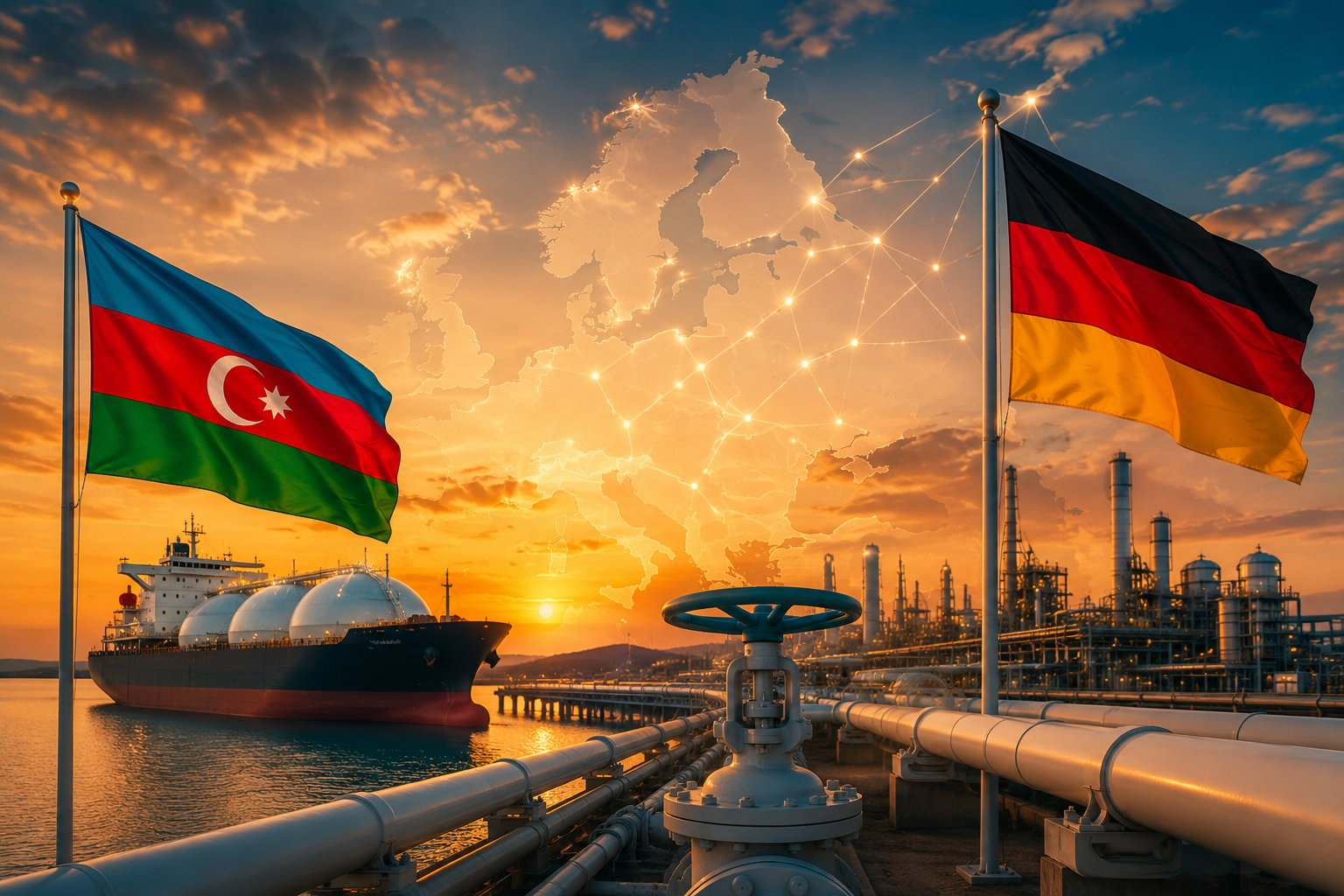
Read moreThe recent disclosure by Germany’s Ambassador to Azerbaijan, Ralf Horlemann, regarding the 10-year, two-billion-cubic-meter annual gas agreement between German corporations and SOCAR offers a fascinating case study in contemporary energy geopolitics and economics. At first glance, the deal might seem logistically puzzling, even paradoxical, given that not a single molecule of this gas will physically flow into a German pipeline due to the sheer lack of direct transport infrastructure between Baku and Berlin. However, dismissing this arrangement as a mere paper exercise misses the profound strategic brilliance embedded within it. This agreement is a masterful display of modern energy diplomacy, showcasing how financial engineering and physical reality can converge to stabilize a continent while elevating a Caspian nation into a pivotal guarantor of Western economic security. For Azerbaijan, this development marks a definitive transition from a regional energy player to an indispensable architect of European systemic stability.
To truly appreciate the value of this agreement, one must dissect the mechanics of the European energy grid, which operates less like a series of isolated national containers and more like an interconnected pool. The utilization of swap arrangements—where Azerbaijan’s gas physically enters Italy via the Trans Adriatic Pipeline, allowing German firms to trade those volumes and draw equivalent energy from geographically closer North Sea or European hubs—demonstrates a sophisticated maturity in global trading. This arrangement shatters the traditional, rigid notion that energy security requires direct physical ownership of a pipeline from source to consumer. By injecting two billion cubic meters of gas into the southern periphery of the continent, the agreement effectively lowers the overall pressure on the entire European network. In a market where supply margins dictate consumer prices, this additional volume functions as a critical buffer against volatility. It is a testament to the fact that in the modern world, liquidity and contractual flexibility are just as potent as steel infrastructure. For the European Union, which has spent recent years frantically diversifying away from monopolistic supply structures, having German capital actively underwriting Caspian production is an unmitigated triumph for regional resilience.
For Azerbaijan, the implications of this ten-year commitment extend far beyond the immediate financial balance sheets, though the economic windfalls are undeniably substantial. A decade-long guaranteed purchase agreement provides the state and its national oil company, SOCAR, with a highly predictable, long-term stream of hard currency. This financial predictability is paramount for a nation navigating the complexities of post-conflict reconstruction in the Karabakh region and embarking on large-scale domestic modernization. Yet, the deeper value lies in the profound geopolitical leverage this deal affords Baku. By binding its energy resources to the economic engine of Europe—Germany—and the primary southern gateway—Italy—Azerbaijan has secured a prominent seat at the table of European strategic planning. When German industries rely on contracts signed in Baku to balance their broader commercial books, Azerbaijan ceases to be a distant, peripheral partner; it becomes a core stakeholder in the economic continuity of the West. This integration creates a mutual dependency where Western Europe has a vested, material interest in the geopolitical stability and security of the South Caucasus.
Furthermore, this deal fundamentally recalibrates the institutional reputation of SOCAR and the wider Azerbaijani energy sector. Participating in complex, multi-party swap operations alongside elite European conglomerates elevates SOCAR from a conventional upstream extraction entity into a sophisticated global trading powerhouse. It signals to the international financial community that Azerbaijan possesses the legal, corporate, and logistical acumen to execute high-level financial maneuvers on the world stage. This vote of confidence from Germany will undoubtedly reverberate through global markets, acting as a powerful catalyst for future foreign direct investment. As Azerbaijan looks toward its own horizon of economic diversification, particularly in transitioning into a regional hub for green hydrogen and renewable solar and wind energy, the trust established through these long-term fossil fuel contracts will serve as the foundational bedrock for future clean energy partnerships. Ultimately, this agreement proves that the true measure of a nation’s energy power is not merely the volume of resources resting beneath its soil, but its capacity to intelligently integrate those resources into the global web of commerce, turning geographic distance into strategic advantage.
Here we are to serve you with news right now. It does not cost much, but worth your attention.
Choose to support open, independent, quality journalism and subscribe on a monthly basis.
By subscribing to our online newspaper, you can have full digital access to all news, analysis, and much more.
You can also follow AzerNEWS on Twitter @AzerNewsAz or Facebook @AzerNewsNewspaper
Thank you!