
Global wellness boom leaves Azerbaijan’s spa wealth untapped - healing waters, missing strategy
Akbar Novruz
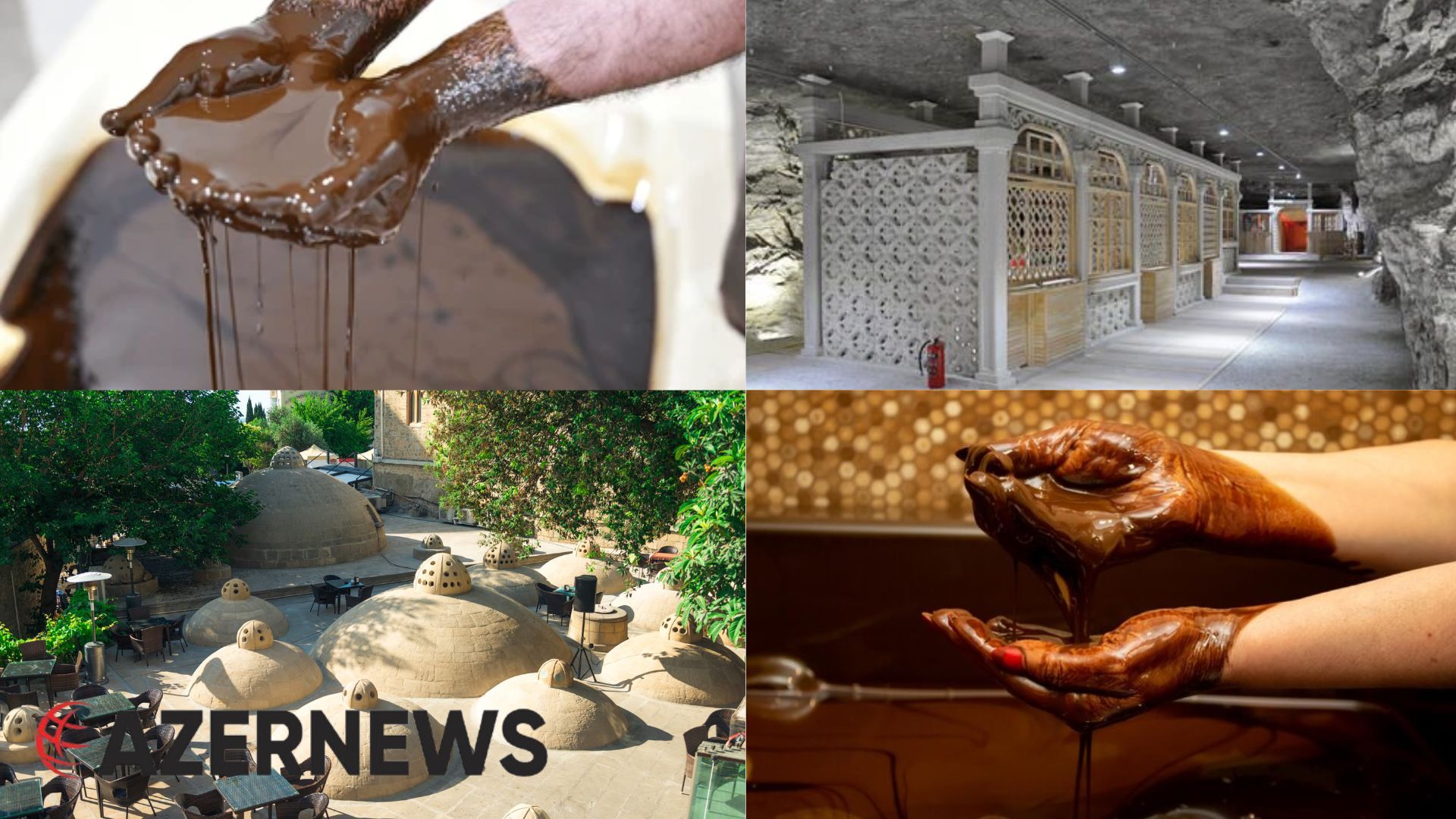
Read moreAzerbaijan boasts a wealth of natural therapeutic resources, including crude oil baths in Naftalan and 300 mineral springs in Lachin. However, the country is largely unnoticed in the global health tourism market, which is valued at hundreds of billions of dollars. Experts warn that the opportunity to capitalize on this market is closing rapidly.
Somewhere in the spa towns of Türkiye, a Russian retiree is soaking in a mineral pool. In Budapest, a German tourist browses brochures for thermal cures. In Georgia, a diaspora family has booked a sanatorium stay combining mountain air with cutting-edge diagnostics. And in Azerbaijan, a country sitting on one of the most extraordinary concentrations of natural healing resources on earth, the phone is barely ringing.
This is the central paradox facing Azerbaijan's health tourism sector: enormous natural endowment, negligible international profile. The country possesses Naftalan crude oil, unique in the world for its therapeutic application in treating skin and joint conditions; more than 900 mud volcanoes; hundreds of mineral springs; salt caves; and climatic microzones spanning subtropical lowlands and high alpine air. Yet most of this remains either entirely unbranded, or known only to a dwindling clientele of post-Soviet regulars.
Azerbaijan's healing waters are world-class. So why does almost nobody know about them?
"Azerbaijan has a vast array of natural healing resources, from Naftalan oil to over 900 mud volcanoes - yet most of them are not part of any national tourism product. We haven't told our story properly," - says Ruslan Guliyev, Chairman, Azerbaijan Health and Thermal Tourism Support Association.
The comparison that haunts Azerbaijani policymakers most is Türkiye. A generation ago, Turkey's health tourism sector was similarly underdeveloped. Today, it is a global juggernaut. In 2023, the country recorded revenues of $3.1 billion from health tourism, welcoming approximately 1.65 million patients. The government has set a target of $20 billion by 2028, a figure that would place it among the world's leading medical destinations.

What Türkiye did was not miraculous, perhaps. JCI-accredited hospitals, state incentives, a coordinated national brand, and a relentless digital presence combined to make health tourism not a side note but a pillar of national economic strategy. Hair transplants, cosmetic surgery and dental tourism became internationally synonymous with Turkish expertise. The lesson for Baku is not that Azerbaijan must copy Ankara, but that targeted investment and narrative clarity can transform niche resources into substantial economic contributors.
The most consequential new chapter in Azerbaijan's health tourism story may be unfolding in its recently liberated territories. The Garabagh and East Zangezur economic regions, historically famed for natural beauty and resource richness, are now the focus of intensive reconstruction. And beneath that reconstruction lies an extraordinary therapeutic foundation.
The mineral springs of Istisu in Kalbajar, Gotursu in Zangilan, and more than 300 further sources identified across Lachin represent a concentration of balneological wealth that few countries can match. New international airports in Fuzuli, Zangilan and Lachin, alongside the already-operational Khojaly airport, are dramatically cutting travel times. The infrastructure of access, in other words, is being built. The question is whether the tourism product will follow.
"The area has the required traits. All it needs is a bold and calculated endeavour to place health tourism as a core element of sustainable economic growth," according to the DTA Report, State Tourism Agency of Azerbaijan, 2022.
There is also a fiscal dimension. Recent amendments to Azerbaijan's Tax Code now entitle foreign nationals and stateless individuals to a full VAT refund on non-cash medical payments, a meaningful competitive edge over neighbouring markets. Combined with the country's comparatively lower price base, this creates genuine value-for-money potential for international patients, if only they can be made aware of it.
What's holding Azerbaijan back
The most structurally damaging legacy, he argues, was the repurposing of health facilities in the 1990s to house internally displaced persons, an entirely understandable humanitarian necessity that nonetheless severed the link between healthcare infrastructure and tourism market development for three decades. Rebuilding that ecosystem requires not just bricks and pipes but institutional memory and market positioning that takes years to establish.
The sector's other deficiencies are catalogued in the sole comprehensive government-commissioned report available on the subject, published in 2022:
- Poor global recognition of Azerbaijan as a health tourism destination
- Fragmented infrastructure at rural therapy centres and spa facilities
- Limited digital branding and international marketing presence
- No integration with global medical tourism aggregator platforms
- Absence of international accreditation (such as JCI) at major clinics
- No unified pricing transparency or online booking infrastructure
- Lack of a quality standards framework for international medical tourists
The generational shift in consumer expectations compounds these structural problems. Younger domestic and international tourists are no longer satisfied with Soviet-style sanatorium programmes. They seek hybrid experiences combining wellness, diagnostics, recreation, and flexibility. Guliyev advocates for what he calls a "7-dən 77-yə", from 7 to 77, model of multigenerational medical clusters, integrating services for every age group under one roof. No such facility currently exists in Azerbaijan.
What would it actually take to transform Azerbaijan's health tourism sector?
Specialists and policy analysts converge on five priorities. First, the creation of a Unified Medical Tourism Council under the joint auspices of the Ministry of Health and the Tourism Board, a body with genuine coordination power across the currently fragmented ministerial landscape. Second, a serious push for JCI accreditation at major clinics, backed by state incentives to defray the cost of meeting international standards.
Third, an integrated digital platform, encompassing web and mobile, providing international patients with searchable information on procedures, clinic ratings, language support and visa facilitation. Fourth, the embedding of medical tourism into national brand campaigns such as "Experience Azerbaijan," including partnerships with influencers and agencies in key source markets: Russia, Iran, Georgia and, crucially, the Azerbaijani diaspora communities across Central Asia and Eastern Europe. And fifth, the revival and globalisation of Naftalan, Qalaaltı and Duzdağ as internationally recognised balneological destinations, developed sustainably and with cultural integrity intact.
The economics of health tourism make this investment attractive beyond the obvious revenue headline. Health tourists stay longer than leisure visitors, between 12 and 28 days on average, typically, accompanied by family members, generating substantially higher per-capita spending. And critically, health tourism is non-seasonal. It offers the revenue stability that sun-and-beach tourism, or even cultural tourism, cannot guarantee.
"Without definite action, Azerbaijan becomes a spectator in a sector where it boasts geographic, cultural, and medical advantages compared to most regional competitors," according to the Research on Azerbaijan's health tourism policy gap, 2025.
The diagnosis, then, is clear. Azerbaijan is not short of what health tourists are looking for. It is short of the institutional architecture, the international narrative, and the political will to bring those two realities together. In a region where Türkiye, Georgia, and even Jordan are actively competing for the same patients, the cost of continued inaction rises every year. The healing waters are there. The question is simply whether anyone will build the path to reach them.
Here we are to serve you with news right now. It does not cost much, but worth your attention.
Choose to support open, independent, quality journalism and subscribe on a monthly basis.
By subscribing to our online newspaper, you can have full digital access to all news, analysis, and much more.
You can also follow AzerNEWS on Twitter @AzerNewsAz or Facebook @AzerNewsNewspaper
Thank you!