
Another round of Geneva talks ends fruitless
By Sabina Idayatova
Russia and Georgia failed to agree on a declaration of non-use of
force.
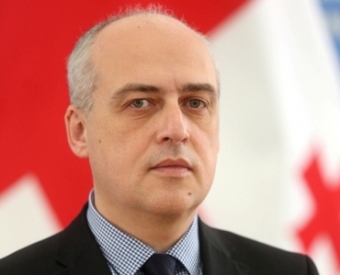
Georgian Deputy Foreign Minister David Zalkaliani made this
remark following the regular round of the Geneva talks held on
March 26-27.
"This declaration was no substitute for commitment on the part of
Russia not to use force," Zalkaliani said adding that "different
positions that each side held before the session, remain
unchanged."
Russia and Georgia have maintained no diplomatic relations since a
brief war in 2008 when Moscow crushed a Georgian assault to
reassert control over the two rebel regions -- South Ossetia and
Abkhazia -- and later recognized the breakaway regions. Georgia
announced the two unrecognized republics as occupied territories in
September 2008 and broke off relations with Moscow.
Georgian President Mikheil Saakashvili made a decision on unilateral non-use of force in late 2010 and since then Tbilisi is calling on Russia to follow this step.
"The regular round of talks which mainly addresses issues
specified by the format has ended. Firstly, it covered issues of
security and the declaration of non-use of force which was
presented by the co-chairs. Our position is principal: the
declaration will not in any case replace the obligation on the part
of Russia not to use force. Discussions also touched on security
on-site, both in the South Ossetia separatist region of Georgia and
Abkhazia. Attention was paid to the construction of the so-called
frontier military infrastructure along the administrative border.
It was noted that this factor poses a particular threat to the
movement of the population and artificially created barriers that
should be removed. Considerable attention was given to humanitarian
issues and the return of refugees," Zalkaliani said.
According to Zalkaliani, an informal informative meeting was held
at the end of the day.
The Georgian negotiators expressed concern over intensified
installation of barbed-wire fence across some parts of the South
Ossetian administrative boundary line, which, Zalkaliani said, was
negatively affecting daily life of the population living in those
areas.
In turn, Russian Deputy Foreign Minister Grigory Karasin told RIA
Novosti news agency that hopes about fruitful round [of talks],
unfortunately, have not been materialized again.
Karasin further stressed that Tbilisi's insistence on Russia's
non-use of force was "completely unacceptable" for Moscow.
The next round of Geneva talks will be held on June 25-26. The
Geneva talks were convened after the armed conflict in Georgia in
August 2008 in accordance with the ceasefire agreement of August
12.
Traditionally, the negotiations are co-chaired by representatives
from EU, UN and OSCE and involve negotiators, or as they are
formally called "participants", from Georgia, Russia and the United
States, as well as from Sokhumi and Tskhinvali.
Here we are to serve you with news right now. It does not cost much, but worth your attention.
Choose to support open, independent, quality journalism and subscribe on a monthly basis.
By subscribing to our online newspaper, you can have full digital access to all news, analysis, and much more.
You can also follow AzerNEWS on Twitter @AzerNewsAz or Facebook @AzerNewsNewspaper
Thank you!