
Astronomers map Milky Way boundaries
by Alimat Aliyeva
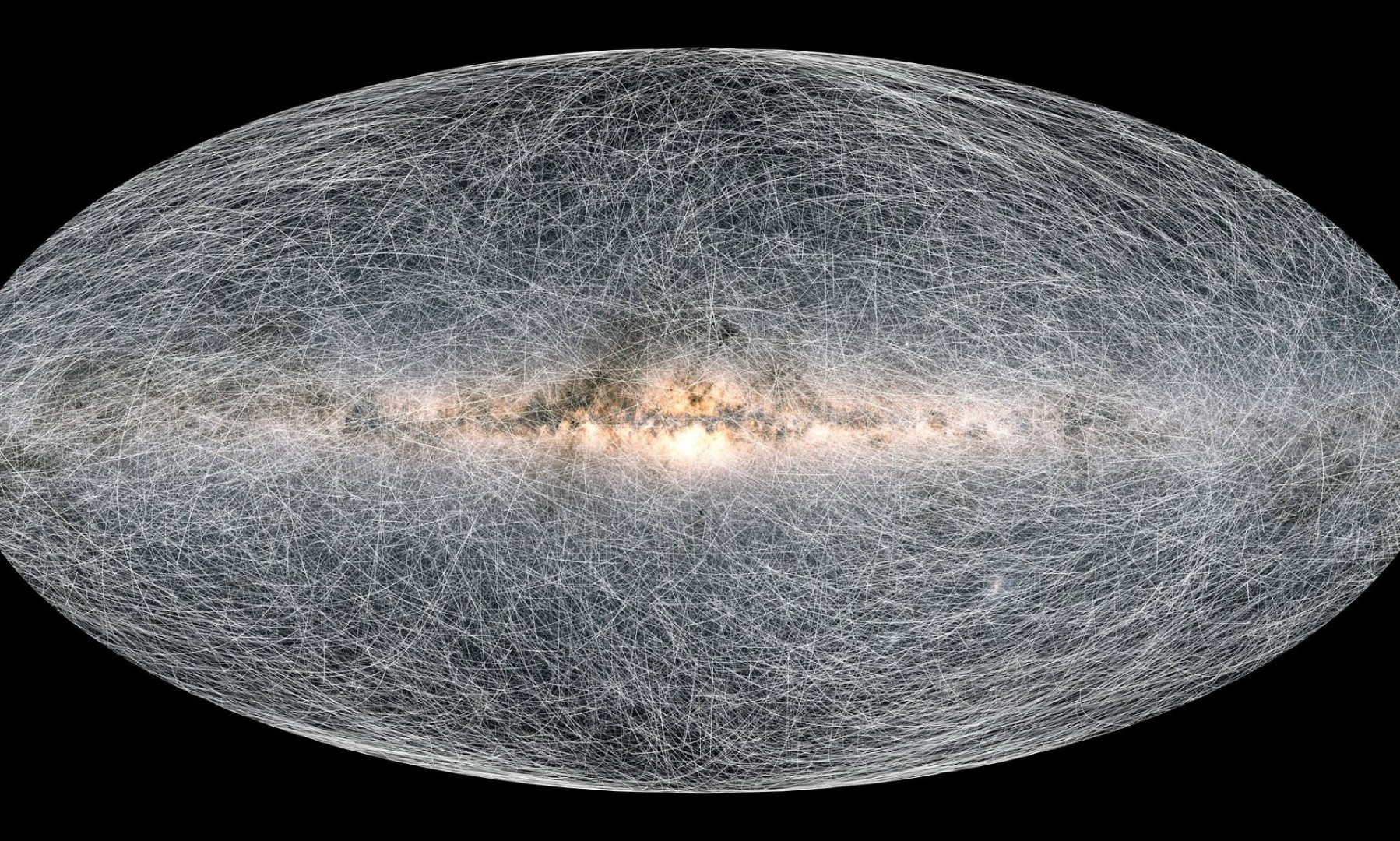
For the first time, an international team of astronomers has identified a clear boundary of the Milky Way’s star-forming disk by analyzing the ages of more than 100,000 stars. The study shows that active star formation in our galaxy is largely confined to a radius of about 40,000 light-years from the galactic center, AzerNEWS reports.
To determine this limit, the researchers combined precise age measurements of bright giant stars with advanced computer simulations of galactic evolution. Their analysis revealed a distinctive U-shaped pattern in stellar ages: moving away from the center, stars initially appear younger, but beyond roughly 35,000–40,000 light-years, this trend reverses, and older stars dominate instead of newly formed ones.
“The extent of the Milky Way’s star-forming disk has long been an open question in galactic archaeology. By mapping stellar ages across the disk, we now have a clear quantitative answer,” said lead author Carl Fiteni of the University of Insubria (Italy).
According to the team, the presence of stars beyond this boundary is explained by a process known as radial migration. Over time, stars can drift away from their birthplaces due to gravitational interactions with the spiral arms of the galaxy. This slow movement helps explain why older stars are found in the outer regions of the disk.
Co-author Professor Victor P. Debattista of the University of Central Lancashire (UK) emphasized that stars in the outer disk still move in nearly circular orbits, which strongly suggests they originally formed within the galactic disk rather than being captured from outside.
The reason star formation sharply declines beyond a certain radius is still debated. Possible explanations include the influence of the Milky Way’s central bar, which can redistribute gas and limit star formation in the outskirts, as well as the warped structure of the outer disk, which may create less favorable conditions for new stars to form.
An interesting takeaway from this research is that galaxies like the Milky Way are not static systems. They are dynamic, evolving structures where stars constantly “travel” over billions of years. In fact, our own Sun is believed to have slowly migrated within the galaxy over cosmic time, meaning its current position is not necessarily where it formed.
Here we are to serve you with news right now. It does not cost much, but worth your attention.
Choose to support open, independent, quality journalism and subscribe on a monthly basis.
By subscribing to our online newspaper, you can have full digital access to all news, analysis, and much more.
You can also follow AzerNEWS on Twitter @AzerNewsAz or Facebook @AzerNewsNewspaper
Thank you!