
Bayraktar maps Türkiye’s energy future from Akkuyu to artificial intelligence
By News Centre
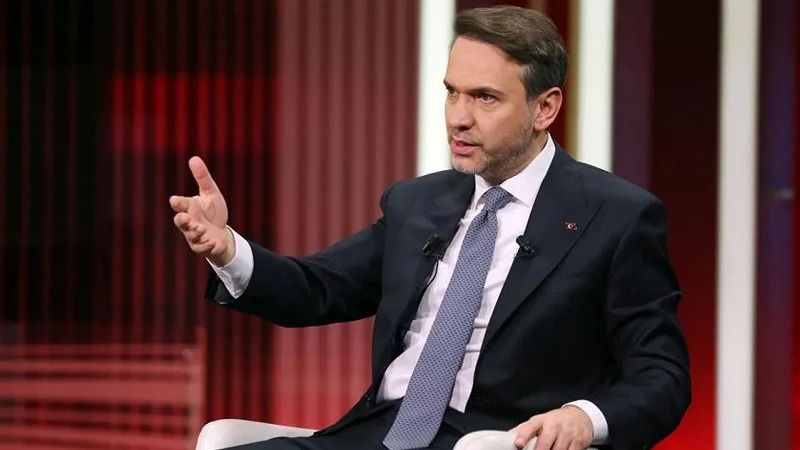
Minister of Energy and Natural Resources Alparslan Bayraktar and Chairman of the Zero Waste Foundation Samed Ağırbaş met with the managers of digital news portals at an event hosted by the Zero Waste Foundation. During the discussion program held the previous day, Minister Bayraktar shared his assessments on ongoing work, geopolitical developments, and current issues.
Key remarks by Minister Alparslan Bayraktar:
A few weeks ago, we signed a cooperation protocol with the Zero Waste Foundation here, and we are rapidly turning it into concrete projects. In the energy sector, Türkiye is dealing with three fundamental issues.
First is rising demand. Türkiye is a growing economy with an increasing population. We are entering a period where electricity demand will rise significantly. Global trends are pushing us in this direction. Electric vehicles are entering our lives. We are moving toward a more electrified Türkiye and world. Our first task is to meet this rising demand.
The second issue is energy imports. As demand rises, imports also increase. This creates a burden on our economy.
The third issue is the 2053 net-zero emissions target announced by our President. This represents a world in which everything is changing. The Zero Waste initiative, under the leadership of First Lady Emine Erdoğan, has become a global brand and was adopted by the United Nations. Behind it lies the global sustainability movement, and there is a need for global action. The Paris Agreement is one pillar of this.
In energy, we are dealing with these three major challenges. There is one solution that addresses all three: energy efficiency. We need a Türkiye that uses energy efficiently across its entire economy. Just as Zero Waste has become a global brand, under the patronage of Emine Erdoğan and in cooperation with the Zero Waste Foundation, we aim to elevate energy efficiency first in Türkiye and then globally in a short time.
We need to mobilize 86 million people. We must increase awareness. This is an issue from age 7 to 70. On April 23, we met with children and I told them: go home and tell your families to turn off lights when not needed. We must build this awareness from a young age and spread it across the country. We believe awareness-raising is the most effective path, and we signed a strong protocol with the Zero Waste Foundation. On June 5–7, we will host energy ministers at the Zero Waste Forum in Türkiye. Possibly in September, we will take this issue to a global summit level.
Türkiye has many projects in place, but the cheapest energy source is saving energy. It also improves supply security and reduces emissions when not consumed. What matters is mobilizing this awareness nationwide as a form of collective effort. We believe Emine Erdoğan’s leadership will help raise nationwide awareness.
The UAE announced its withdrawal from OPEC+. The world is undergoing a major breaking point in energy markets. There is a significant supply disruption globally—something we did not even see during the pandemic. Countries may pursue different strategies or alignments outside OPEC+. We are analyzing these developments and will see their effects.
OPEC previously aimed to limit production and keep prices high. Market stabilization is something we expect in terms of pricing, but we must wait to see how this develops. Around 11 million barrels per day have effectively exited the global system.
The incident involving Doruk Mining is important. As a government, we have done everything necessary. Yet we face unfair criticism that the Ministry of Energy did not support them. Wherever Doruk Mining operated in Türkiye, problems followed—unpaid workers, severance issues, and delayed payments. We intervene, but this company has made it a habit. We have introduced many incentives to sustain coal mining.
The opposition blocked regulations for coal fields in Yeniköy, which would have left 3,000 miners unemployed. Of course, we also need environmental protection, but employment comes first for those families.
We provide purchase incentives until 2029 for electricity produced from domestic coal plants. We have parliamentary authority for this. If there is any “favoritism” being claimed, then we are supporting 30,000 mining workers—what is the objection? However, plants with unpaid workers, no filters, or tax debts cannot benefit. Even then, some companies still do not pay workers. I will not issue new licenses to such companies. They actually want protests in front of the Ministry so they can pressure the government into continuing subsidies. That will not happen.
Türkiye’s energy policy is long-term, with results seen over 10, 20, or 30 years. We have a plan extending to 2050, updated every five years. The world is entering the age of artificial intelligence, which will be transformative. We are entering a fully electrified world, and Türkiye must redesign its next 30 years around this.
We are electrifying everything. Türkiye has 34 million vehicles and consumes 27 million tons of diesel annually. The world is facing a diesel crisis. We aim to expand a 63% localized electricity market and place electrification at the center of our energy architecture.
We need investments in renewables, energy efficiency, and electricity transmission infrastructure worth tens of billions of dollars. We also aim to strengthen electricity grids, gas, and oil pipelines in the region.
We proposed extending the Iraq–Türkiye oil pipeline to Basra, which could have allowed 1.5 million barrels per day to flow through Türkiye. We also aim to transport Qatari gas via Syria or Iraq to Türkiye and Europe, bring Turkmen gas via the Caspian, and develop electricity interconnections via Saudi Arabia–Jordan–Syria–Türkiye.
Our new energy architecture is based on connectivity. We aim for zero-carbon energy supply. By 2035, we expect 6–8 million electric vehicles. Transportation will be heavily electrified.
We are not abandoning oil and gas. Türkiye still needs around 2 million barrels per day, and this demand is increasing. Electrification will reduce it partially, but not eliminate it.
We are entering a new phase of the National Energy and Mining Policy, now in its 10th year. Türkiye Petroleum Corporation will play a more active role abroad. We are present in Somalia, Libya, Pakistan, Central Asia, and exploring projects in Venezuela. We aim for 1 million barrels per day production.
We remain committed to the Mediterranean. After nine offshore drillings, we have not yet found a discovery like the Black Sea gas field. Our focus is increasing Black Sea production, where we see great potential.
We are also working on a natural gas pipeline project to Northern Cyprus. The State Pipeline Company (BOTAŞ) is conducting engineering studies. If successful, any discovered gas could be delivered to Türkiye.
At Akkuyu Nuclear Power Plant, we have no issues with Russia. Some delays in equipment and financing were resolved with the support of the Russian government and President Vladimir Putin. Financing for the first two reactors has been secured. Russia remains engaged, and we are also exploring alternatives for the Sinop nuclear project with China, South Korea, and Canada.
On rare earth elements, we initially worked with China, but China restricted technology exports. We continue to seek technological alternatives. Türkiye is preparing a Critical Minerals Strategy, which will soon be announced. A committee will be formed involving ministries and institutions to map critical raw materials and their transformation into final products.
We have joint work in Syria in mining and oil. In northeastern Syria, we have expressed interest in certain fields. Recently, we signed offshore cooperation agreements with Exxon, Chevron, BP, Shell, and Total. We are also close to signing another major agreement with BP.
We manage a portfolio approach to allocate resources efficiently.
If the Strait of Hormuz crisis continues and oil averages $100 per barrel, it could add $13.6 billion in costs by year-end. At $125, this could reach $24 billion. Due to this crisis, there is also an estimated 600 billion TL tax shortfall from the fuel price equalization mechanism.
Here we are to serve you with news right now. It does not cost much, but worth your attention.
Choose to support open, independent, quality journalism and subscribe on a monthly basis.
By subscribing to our online newspaper, you can have full digital access to all news, analysis, and much more.
You can also follow AzerNEWS on Twitter @AzerNewsAz or Facebook @AzerNewsNewspaper
Thank you!