
Azerbaijani official frames TAP expansion as Europe’s interest
Akbar Novruz
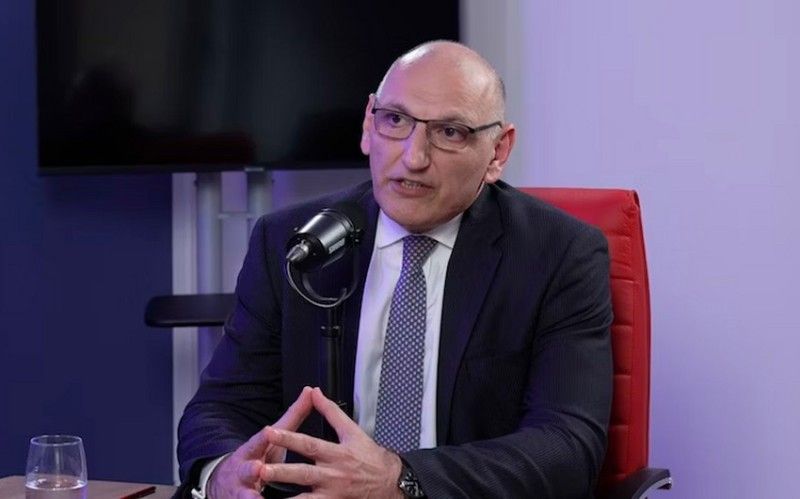
Read moreRepresentative of the President of Azerbaijan, Elchin Amirbayov, provided his country’s stance on the issue of energy collaboration with Europe in an interview with the Italian paper La Repubblica.
The conversation covered several topics related to energy, including the capacity of the Southern Gas Corridor, regional connectivity, and Azerbaijan’s reliability as a source of energy. According to Amirbayov, the current situation is no longer about two countries, but involves the entire European Union.
AzerNEWS presents the interview:
In 2025, Italy was the main European destination for Azerbaijani oil and natural gas, and on May 5, Prime Minister Meloni will travel to Baku specifically to discuss supplies. Do you plan to increase them also in light of the blockage of the Strait of Hormuz and Europe’s gradual reduction of its dependence on Russian hydrocarbons?
“Our two countries have been linked since 2020 by a multidimensional strategic partnership. This visit demonstrates that. We believe there is significant potential to strengthen our cooperation in many sectors, starting with energy, where Italy is our main partner. In 2025, Azerbaijan supplied 9.5 billion cubic meters of natural gas to Italy, which is also the main destination for our crude oil exports, out of a total of 12.5 billion to 10 EU member states—53% more than in 2021. Despite market volatility and geopolitical turbulence, Azerbaijan remains a reliable and responsible supplier.”
Would Azerbaijan be able to increase gas exports to Italy even without upgrades to the Trans Adriatic Pipeline (TAP)? Would a doubling not be necessary?
“The current capacity of the Southern Gas Corridor (SGC), of which TAP is part, is fully booked. It is no longer just a bilateral issue with Italy. It concerns the overall European energy architecture. A first expansion is already underway: since last January, TAP has added 1.2 billion cubic meters of annual capacity, of which one billion cubic meters is destined for Italy. However, any further increase in exported gas volumes will require additional upstream investments in development and pipeline capacity. These would be in the EU’s strategic interest, as they would strengthen diversification, improve long-term supply security, and reduce Europe’s vulnerability to external shocks.”
Last January, on the sidelines of the sixth meeting of the Italy–Azerbaijan Intergovernmental Commission, it was decided to adopt an Action Plan for the development of the bilateral economic partnership. Is there already a roadmap? And which areas will it cover?
“The Intergovernmental Commission provides strategic guidance. The adoption of an Action Plan will serve as a compass for the development of the economic partnership between Italy and Azerbaijan. The plan envisages 65 events over the 2026–2027 period in 18 priority areas, including energy, green transition, digitalization, investment, transport, industry, agriculture, science, education, and culture. The roadmap is already in place—it is concrete and far-reaching.”
Italy is your leading trading partner and also a transit country for your gas exports to Germany and Austria. What was the objective of your visit here?
“The goal is to contribute to the active and regular bilateral political dialogue between our countries and to exchange views with our counterparts on key issues on our bilateral, regional, and multilateral agenda, including Azerbaijan’s relations with the EU and NATO. We will also share our assessment of the current state and prospects of the peace and normalization process with Armenia, as 2026 could prove to be a decisive year for formalizing peace and leaving the previous conflict behind de jure. Prime Minister Meloni’s important visit to Azerbaijan lends further prestige to this opportunity to discuss various issues of common interest to our countries.”
You also held meetings at the Vatican. What developments are there in your relations with the Holy See?
“Our relations with the Holy See continue to follow an upward trajectory, both in substance and scope. They are based on mutual respect and on a steadfast and shared commitment to deepening intercultural dialogue and interreligious understanding. High-level political dialogue between our states is ongoing and of excellent quality. This is due above all to the Heydar Aliyev Foundation of Azerbaijan, which for over 15 years has continued its fruitful and multidimensional engagement with the Holy See and its religious, scientific, and academic institutions. We are proud of our modest contribution to conservation and restoration projects of religious and cultural sites in the Vatican, including St. Peter’s Basilica, the Vatican Museums, the Vatican Apostolic Library, and the catacombs. Cooperation is currently expanding into fields such as science, archival work, and healthcare. Another significant reflection of current dynamics is the construction in Baku of a second Catholic church dedicated to St. John Paul II, scheduled for completion in 2027. Taken together, all these elements testify to Azerbaijan’s continued commitment to multiculturalism, religious tolerance, and dialogue among civilizations, and reflect a diplomacy grounded in respect, empathy, and responsibility.”
Your country has close security ties with Israel, but at the same time Iran hosts a large community of ethnic Azerbaijanis and provides key routes connecting you to your exclave of Nakhchivan. Is the war on your borders affecting your strategic relations with these two countries?
“No, Azerbaijan maintains important relations with both Israel and Iran, and our approach remains measured and balanced. We firmly support de-escalation and diplomatic engagement and hope that the ceasefire will be further consolidated, thereby minimizing, among other things, the risk of the conflict spreading to the South Caucasus.”
Are there possible repercussions for the TRIPP project (Trump Route for International Peace and Prosperity), promoted by U.S. President Donald Trump, which would connect you to the exclave of Nakhchivan through Armenian territory?
“This is a matter of real concern, as further escalation could undermine the political climate and the practical conditions necessary for the implementation of ambitious regional connectivity and energy security projects. As part of the broader Zangezur corridor, which connects both Azerbaijan with Armenia and Asia with Europe, the implementation of TRIPP is crucial for strengthening the current spirit of peace in the South Caucasus, and we hope that ongoing uncertainty will not lead to serious delays.”
Here we are to serve you with news right now. It does not cost much, but worth your attention.
Choose to support open, independent, quality journalism and subscribe on a monthly basis.
By subscribing to our online newspaper, you can have full digital access to all news, analysis, and much more.
You can also follow AzerNEWS on Twitter @AzerNewsAz or Facebook @AzerNewsNewspaper
Thank you!