
Int'l Dance Day bridges cultures through rhythm and movement [PHOTOS]
![Int'l Dance Day bridges cultures through rhythm and movement [PHOTOS]](https://www.azernews.az/media/2026/04/29/danceday.jpg)

Laman Ismayilova
Read moreInternational Dance Day, observed every year on April 29, is a global celebration dedicated to one of humanity's oldest and most expressive art forms, AzerNEWS reports.
Established in 1982 by the Dance Committee of the International Theatre Institute (ITI), UNESCO's main partner for the performing arts, the day aims to highlight the cultural, emotional, and social significance of dance across the world.
The date was chosen in honor of Jean-Georges Noverre (1727–1810), the influential French ballet master, theorist, and reformer widely regarded as the "father of modern ballet." His groundbreaking ideas transformed dance from a purely technical performance into a narrative art form capable of expressing deep human emotion and storytelling. By linking the celebration to his birthday, International Dance Day also pays tribute to his lasting legacy in shaping the development of global dance culture.
At its core, the day serves as a reminder of dance's universal language, one that transcends borders, cultures, and generations. It encourages people everywhere, whether professional dancers, students, or enthusiasts, to recognize dance as a powerful medium of expression, communication, and unity.
Azerbaijan joins this worldwide celebration each year with great enthusiasm, reflecting its own deep-rooted and vibrant dance traditions. Dance in Azerbaijan is not merely performance art; it is an essential part of national identity, history, and cultural memory. The country’s folk dances, shaped over centuries, embody the spirit, lifestyle, and emotional world of its people.
Archaeological evidence, such as the ancient rock carvings of Gobustan, clearly demonstrates that dance has long been part of Azerbaijan's cultural landscape. These engravings depict rhythmic movement scenes, proving that the foundations of Azerbaijani dance date back to prehistoric times.
Over the centuries, a rich and diverse repertoire of national dances has developed, each with its own character, rhythm, and symbolic meaning. Well-known examples include "Uzundara", "Terekeme", "Yalli", "Jangi", "Shalakho", "Vagzali", "Turaji", "Qaitagi", and many others.
Azerbaijani dances are often distinguished by their clear structural composition and expressive movement language. Traditionally, they are divided into three parts: a circular entrance, a calm and controlled middle section with restrained movement, and a final dynamic segment marked by emotional intensity and rhythmic acceleration. This progression creates a visual narrative that gradually builds energy and expression.
Many traditional dances are named after elements of nature or animals, such as gazelle, poppy (lale), or violet (benevshe), symbolizing grace, beauty, and harmony with the natural world. The musical accompaniment typically follows 6/8 or 3/4 time signatures, contributing to the distinct rhythmic identity of Azerbaijani choreography.
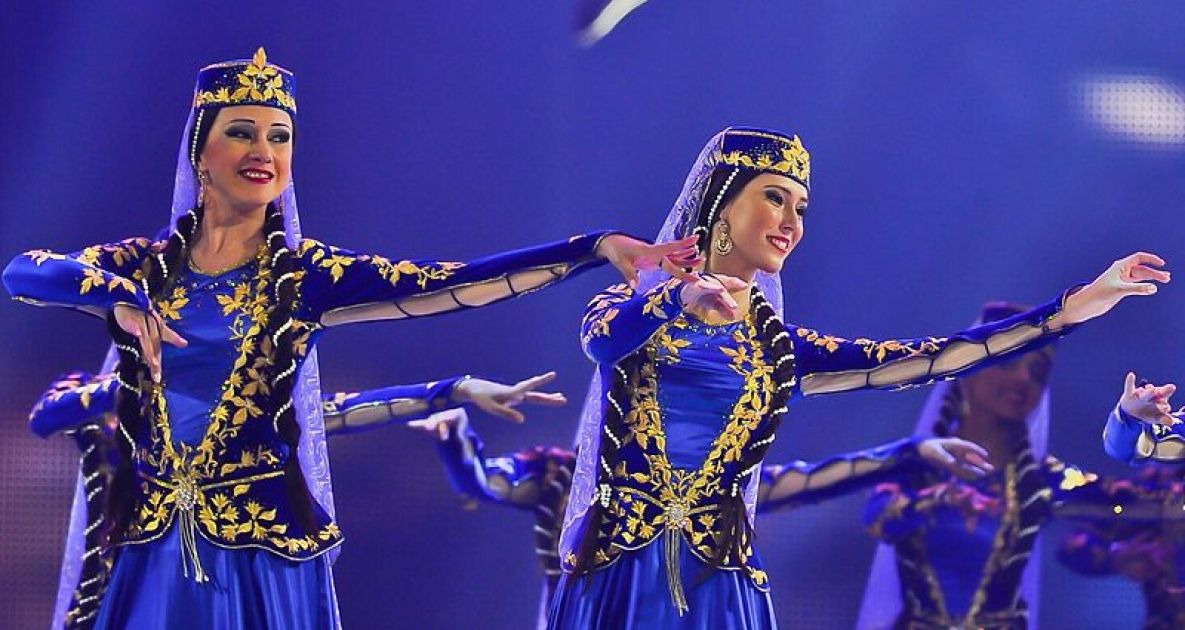
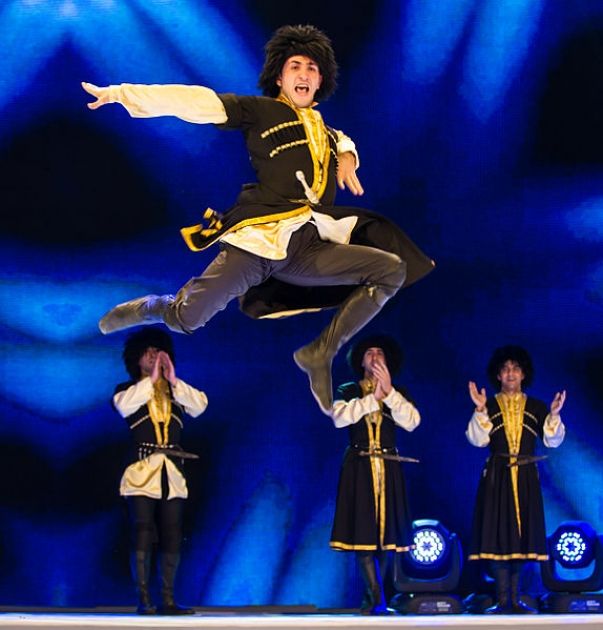
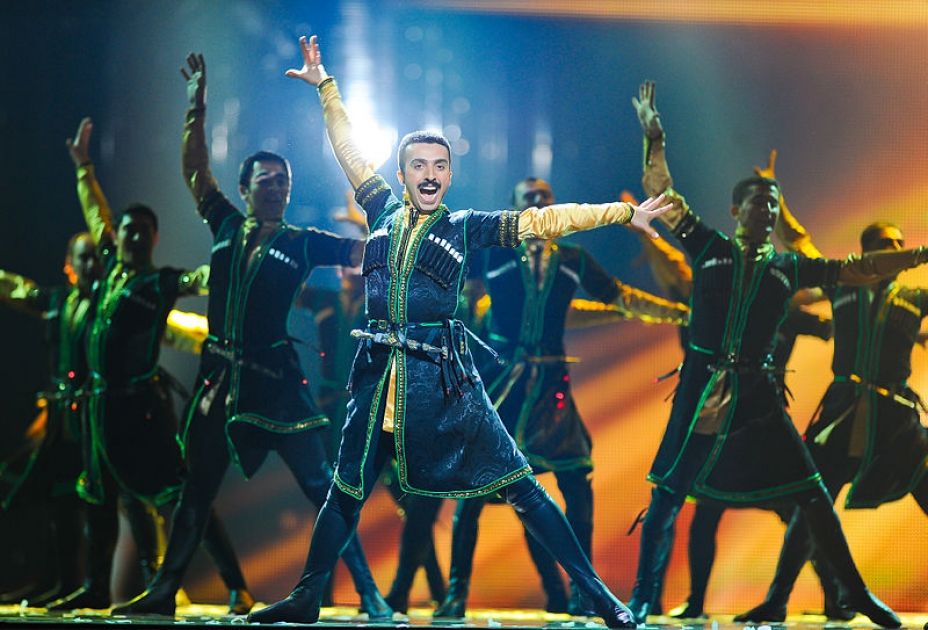
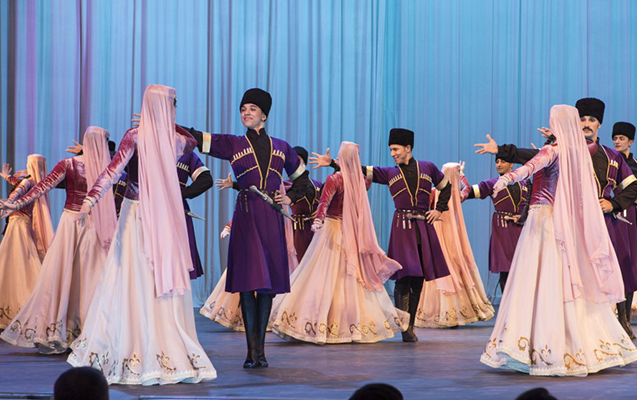
There is also a clear stylistic distinction between male and female dances. Women's dances are characterized by elegance, softness, and fluid plasticity, with refined upper-body movements and expressive gestures of the hands, shoulders, and facial expressions. In contrast, male dances emphasize strength, agility, and technical footwork, often featuring fast turns, jumps, and dynamic changes in stance that convey energy and heroism.
Over time, many outstanding artists and choreographers have played a key role in preserving and developing this art form. Figures such as Amina Dilbazi, Afag Malikova, Roza Khalilova, Tarana Muradova, Tamilla Mammadova, Boyukaga Mammadov, Kamil Dadashov, and Boyukaga Atababayev have contributed significantly to enriching Azerbaijani dance with new artistic nuances while maintaining its traditional essence.
In recent years, Azerbaijani dance has also gained international recognition. In 2023, UNESCO adopted a report on "Yalli (Kochari, Tenzere)," traditional group dances of Nakhchivan, further emphasizing the cultural value of this heritage. These collective dances, performed in circles or lines, symbolize unity, cooperation, and shared identity.
Today, International Dance Day in Azerbaijan is marked by concerts, performances, and cultural events that bring together professional ensembles, young performers, and folk groups.
Azerbaijan has long acted as a living connection between history and modern life.
International Dance Day highlights this enduring tradition, emphasizing that movement goes beyond performance; it embodies cultural heritage, personal identity, and a language that unites people everywhere.
Here we are to serve you with news right now. It does not cost much, but worth your attention.
Choose to support open, independent, quality journalism and subscribe on a monthly basis.
By subscribing to our online newspaper, you can have full digital access to all news, analysis, and much more.
You can also follow AzerNEWS on Twitter @AzerNewsAz or Facebook @AzerNewsNewspaper
Thank you!