
Tehran searches for new 'peace table' as talks in Islamabad stall
Akbar Novruz
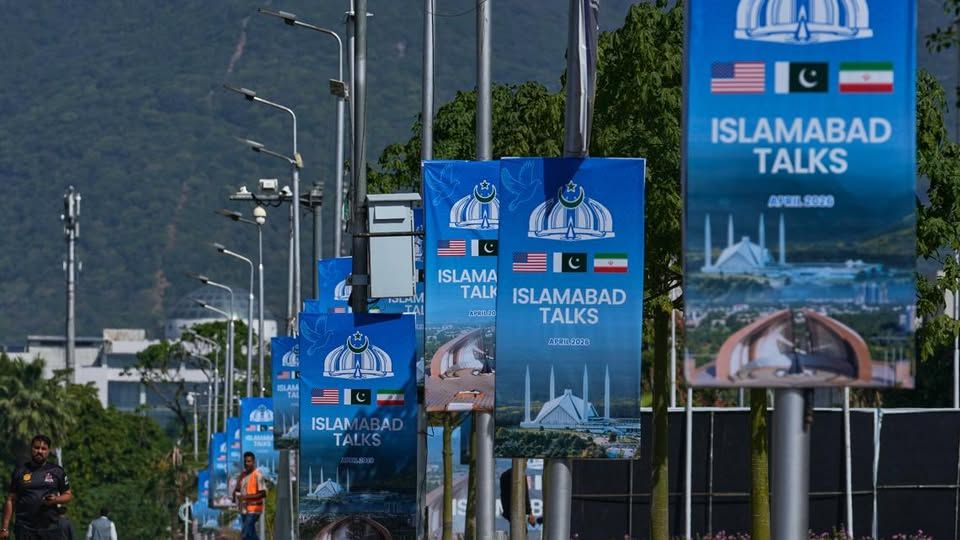
Read moreOn Saturday morning, Donald Trump posted three sentences on Truth Social that effectively suspended the most important diplomatic effort of 2026. The proposed trip of Steve Witkoff and Jared Kushner to Islamabad, marking the second phase of negotiations between the US and Iran that Pakistan had secretly arranged over the last few days, was no longer on. "All they need to do is give me a ring if they wish to negotiate!!!", tweeted the president, in his usual style. He further said that Iran had provided "much, but not enough." The ceasefire agreement, now three weeks old, was still technically in place.
It is not a single problem, but rather a combination of problems that has stalled the Islamabad process at this point of uncertainty. The ceasefire that took place on 8 April, which had been arranged in highly unusual circumstances when the Pakistani Army Chief, Asim Munir, called Vance and Araghchi directly, was never really meant to be a long-term solution, but rather just a respite from hostilities. The discussions held for over 21 hours in Islamabad between 11-12 April have, in Washington's own words, resulted in agreements on "most points", and total deadlock on the one point that mattered most of all.
The issue of uranium has been at the heart of this dispute since its inception. The United States and Israel want no enrichment or decommissioning of the nuclear program in Iran. On the other hand, Iran argues that it has an inalienable right to pursue a civilian program as per the Nuclear Non-Proliferation Treaty. It also says that its enrichment process, which has been pushed up to 60%, as indicated by the IAEA, well above the 3.67% limit set in the 2015 nuclear agreement, is only for civilian purposes.
Under the 2015 JCPOA, Iran agreed to cap enrichment at 3.67% and its stockpile at 300kg. By June 2025, the IAEA had verified more than 400kg enriched to 60% purity. The US has called for Iran’s enrichment capability to be reduced to zero. In April, the Iranian stance was that the country had an inherent right to enrich uranium, but the quantity and quality were negotiable.
What has made the nuclear track problematic in the past week is not only the content but also the politics inside the Iranian negotiation delegation. "The parliamentarian and former mayor of Tehran, Mohammad Bagher Qalibaf, who headed the Iranian delegation of more than 70 members to Islamabad along with Iran's foreign minister, Abbas Araghchi, has apparently quit the mission," the Institute for the Study of War notes. There was a clash between Qalibaf and the commander of the Revolutionary Guards Corps, Ahmad Vahidi, where Qalibaf supports negotiations while Vahidi does not want to take part in the talks. "No delegation from Iran has been sent to Islamabad," according to Iranian TV.
Two states within Iran
The fact that Qalibaf is stepping down is important because there is more to his leaving than just a practical impact. He does not hold a minor position. He was a commander in the IRGC before, and now he is the mayor of Tehran and the parliament speaker as well as a likely future presidential candidate. Hence, Qalibaf stepping down is not a resignation from someone with a minor position but rather a signal from someone who has enough weight to make an informed decision not to take part in something that is decided over his head. As Iranian negotiations do not go as planned, those involved face criticism while the hardliners who sabotaged them remain free of any consequences.
But the real difficulty lies in the situation, which Trump, not incorrectly, characterized as "tremendous infighting and confusion" among Iran's leadership. The foreign policy of Iran is not determined by its foreign minister; rather, it is determined via negotiations between the elected government, the IRGC, the networks controlled by Khamenei's system, and the ideological bodies which do not even belong to the government structure. Those present in Islamabad are not the ultimate decision makers; those who make the ultimate decisions have not attended the conference in Islamabad and have not yet revealed their terms of agreement.
As Trump puts it, nobody knows who is in charge, including them. If they want to talk, all they have to do is call!!!
Behind this nuclear issue lies the question of shipping, which itself has developed into a vicious circle. The Iranian blockade of the Strait of Hormuz, where one out of five barrels of oil or LNG used to pass before the war, is older than the ceasefire agreement and still remains untouched by it. The US government announced a counter-blockade of Iranian ports on 13 April, the very day the talks in Islamabad ended unsuccessfully. The Iranian government regards the US decision for a counter-blockade as a violation of the ceasefire agreement, whereas for the US, it is Iran’s closure of Hormuz that violates it.
The practical implications of this situation, on the other hand, are worldwide and worsening. The Iranians have managed to hijack commercial ships while American forces have been boarding oil tankers, the latest being the M/T Tifani in the Indian Ocean. The Gulf countries, through which the exportation of their oil must pass through the Strait of Hormuz, are opposed to an Iranian imposition of any toll system for the use of the Strait, which the Iranians have presented as an alternative to re-opening the Strait. All of the above countries are vulnerable to the closing of the Strait.
Did talks in Islamabad stall, and if yes, what comes next?
Against this backdrop, Pakistan's continued mediation deserves genuine recognition. As much as it has a favorable position as a 'peace table', Islamabad lacks any form of allegiance to either side, has no influence whatsoever over the United States government, and shares a 900-kilometer border with Iran that renders it highly susceptible to any flare-up of the dispute. Shehbaz Sharif, Pakistan's prime minister, spent the entire day on Saturday on the phone with Pezeshkian. Pakistan's foreign minister, Ishaq Dar, has had behind-the-scenes talks with the US acting ambassador as well as the Chinese envoy in Pakistan. Araghchi, who left Islamabad on Saturday to travel to Oman and later to Russia, where he met Putin in St. Petersburg, will reportedly be back in Islamabad on Sunday.
Now, with Araghchi visiting Russia today, it creates another layer to this standoff. Russia's interest in ensuring that the situation continues implies that the advice Putin will give to his Iranian counterparts will definitely benefit Russia more than Iran. The income from oil production for Russia has doubled since the start of the crisis. There is no doubt about the interest of Russia in keeping the Americans preoccupied in the Middle East, where it can continue to sell weapons without interference, rather than focusing on Ukraine or even the Pacific Rim countries.
The statement issued by President Donald Trump over the weekend is quite definitive in some aspects, yet inconclusive in others. According to Trump, Iran had made "offers for a lot, but not enough." This statement clearly suggests that Iran is willing to negotiate further but has failed to present a specific offer. As it stands now, the ceasefire agreement remains in effect as Trump extended it on Tuesday without specifying when it will end. According to anonymous US officials who spoke with Associated Press, Trump has other options aside from an airstrike.
Iran's position is harder to read precisely because the internal divisions that Qalibaf's withdrawal symbolises are genuine. The reformists, whose voices can be heard through the perspectives of Pezeshkian and Araghchi, seem convinced that a negotiated agreement is attainable and better. However, the IRGC and the conservatives like Paydar are not in favor of such an outcome. At least, they seek conditions that the United States cannot meet.
"Pakistan has informed both sides that it is prepared to host round two whenever they feel ready to do so," the country’s foreign minister has told correspondents. Hormuz Strait is still closed, the global energy market is still being disrupted, two navies are imposing rival blockades in the same body of water, and somewhere between Trump's favourite social media platform and the hallways of Iran’s Parliament, the next set of negotiations, if any, will be painstakingly crafted.
Tehran's increased involvement in the process is likely a strong indicator that an 'agreement' will be on the table soon. The real intrigue lies in who will act as the peace table; this might lead to locations such as Moscow, Istanbul, and possibly even a surprise country.
Here we are to serve you with news right now. It does not cost much, but worth your attention.
Choose to support open, independent, quality journalism and subscribe on a monthly basis.
By subscribing to our online newspaper, you can have full digital access to all news, analysis, and much more.
You can also follow AzerNEWS on Twitter @AzerNewsAz or Facebook @AzerNewsNewspaper
Thank you!