
Azerbaijan confronts missing links in its non-oil economy

Akbar Novruz
Read moreIn a country where almost 90% of its exports remain in the form of hydrocarbons, the presence of a small Azerbaijan company’s jams and dried fruit products among the stock items in Baku supermarkets may look like a mere afterthought. Nothing could be further from the truth. This project, whereby the Economic Council of Azerbaijan has decided to lease shelf space in six Baku supermarket chains for the placement of 140 different products made by small-scale producers through the KOBIA scheme, provides an insight into an issue which Azerbaijan’s Economic Council deliberated on during their April 20 meeting: Why do small food manufacturers face difficulties getting their products onto the shelves of Baku supermarkets despite the nation’s agricultural capabilities and growing export figures?
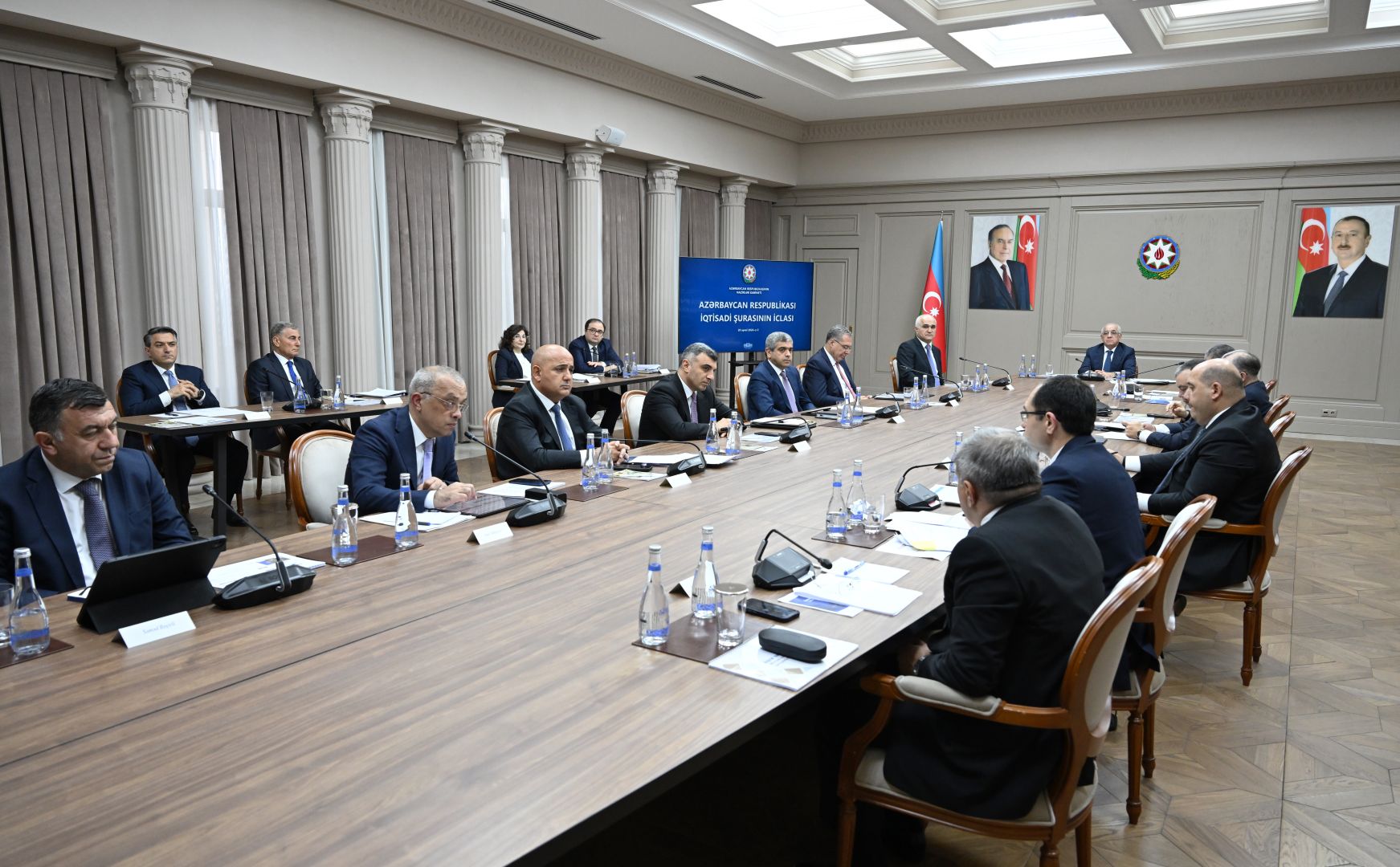
With the Prime Minister, Ali Asadov, presiding over the session, which had an informative report prepared by Agriculture Minister, Majnun Mammadov, the conference took place amid some moderate macroeconomic weakness. During the period January to March, 2026, the country’s GDP fell by 0.3 percent – its oil and gas economy shrinking by 1.2 percent while its non-oil economy grew by only 0.2 percent. Azerbaijan’s sovereign reserves, amounting to about $85 billion, offer enough insurance for this situation.
The problem lies in the fact that this economic downturn occurred right at the time when Azerbaijan needed to demonstrate progress regarding its diversification story, which, according to Oliver Wyman’s $150 billion GDP prediction by 2035, should have been expected.
2025 numbers:
- 52.7%: Non-oil share of GDP, marking the first time it has
exceeded 50%.
- 8.6%: Non-oil GDP growth rate, despite a 7.3% decline in the oil
sector.
-$3.3 billion: Non-oil exports from January to November 2025, a
7.3% increase year-on-year.
- 34%: Proportion of the employed population working in agriculture
and agro-processing.
In terms of export performance excluding oil, 2025 could well go down in history as a good year for Azerbaijan. Exports of agriculture and agro-industries from the country amounted to $1.03 billion in the first ten months of the year, with a growth rate of 19.1%. What is even more important is the nature of the growth: sugar export went up by 54.4%, fruits and vegetables 24.3%, chemical products 39%, and foods in general 19.8%. These numbers cannot be considered a mere coincidence but reflect a clear trend toward export diversification.
Rationalisation of the institutional framework that facilitates this progress has likewise been achieved. During the first half of 2026, KOBIA and AZPROMO have been consolidated by presidential order into a single Agency for the Development of Small and Medium Enterprises, Investment and Export Promotion, thus avoiding redundancies and bringing the government apparatus for SME development under one roof in a structure with 370 jobs. This comes after many years of dual track management of institutions, which, although functional on their own, have resulted in redundancies and disjointed interaction with their corporate customers. It is more appropriate for Azerbaijan's development stage.
The constraints identified by the Economic Council on April 20th are no different from those highlighted consistently over the past few years. The reason why it is important to enumerate these constraints is that they are not cyclical, but structural issues that cannot be fixed by the next quarter.
Structural constraints on small producers vs current policy responses to counter it
- Post-Soviet land fragmentation has resulted in most farms operating as 2–5 acre plots, which hinders economies of scale that could lower unit costs. Additionally, irrigation water shortages and a slow transition to more intensive agricultural technologies have led to increased production costs across the sector. Small producers are further burdened by cold storage being dominated by large logistics operators, who charge prohibitive fees. Major retail chains favor annual contracts with large suppliers, making it administratively and economically unviable for them to engage in one-off purchases of smaller quantities, such as 200kg. Compounding these challenges, the draft "Internal Trade" law, aimed at regulating supplier-retailer relations and curbing retail monopoly margins, has been under development for five years without enactment. The low procurement prices and rural wages create detrimental incentives, driving the population away from rural areas and into cities.
- KOBIA is making significant strides in enhancing market access for small producers through various initiatives. It has rented shelf space in six Baku supermarket chains, allowing 140 product lines from small producers to reach consumers. The KOB Fest exhibition-fairs are taking place across ten regions, alongside the introduction of KOB Bazar in the Binagadi district in 2025, providing consumers with direct access to regional producers. Additionally, in 2024, KOBIA supported 550 SMEs through retail sales mechanisms and launched pilot farm consolidation schemes covering 10,000 hectares across 12 districts to tackle fragmentation. A $100 million EBRD-backed program was initiated to modernize food processing and packaging infrastructure, and the merger of KOBIA with AZPROMO is expected to create a unified support structure, streamlining engagement with SMEs.
This aspect requires special focus because the major supermarkets in Azerbaijan operate under conditions of a "weakly competitive environment," and they earn high margins despite low costs for procurement of products from both large processors and small producers. Big processors manage to cope with this situation since they benefit from reduced unit costs. Small producers are not able to do this due to the lack of cost advantages gained from economies of scale. Therefore, small producers are automatically excluded from participation in retail trade operations, not based on product quality but on the nature of the economic relations that have never been regulated before. The delay in adopting the Internal Trade Law by five years may serve as evidence of the dominance of vested interests over policy intentions.
| Products | Export growth [2025] |
Value | Market |
| Sugar | +54.4% | Largest single-category gainer | Russia, CIS, Middle East |
| Chemical products | +39% | Growing share of non-oil exports | Europe, Türkiye |
| Fruits & vegetables | +24.3% | $769.7mn agricultural exports | Russia, Gulf, Eastern Europe |
| Food products (total) | +19.8% | $962.1mn – Jan-Oct 2025 | Diversifying toward new markets |
| Cotton yarn | +8.8% | Part of textile diversification | Türkiye, Europe |
| Total non-oil exports | +7.3% | $3.3bn Jan-Nov 2025 | 24 countries via AZPROMO support |
The April 20 meeting included instructions to “responsible institutions,” which, in Azerbaijani government terminology, generally precedes the implementation of a set of practical steps, not just high-level recommendations. According to both the meeting’s agenda and previous government initiatives, it is likely that further actions will cover three main issues. Firstly, an extension of the KOBIA shelf space program from its current six points in Baku to other cities, a low-cost measure aimed at addressing the market access problem of small producers. Secondly, quick progress in the farm consolidation pilot programs, possibly expanding it from the current level of ten thousand hectares to other regions. Lastly, but more importantly, progress in the Internal Trade law issue.
The Karabakh element introduces a fresh perspective into the conversation on agriculture that did not exist two years ago. The liberated lands, which have been partly resettled through the "Great Return" initiative, account for about 11,600 sq.km of agricultural land, most of which was fertile prior to the occupation period. In total, KOBIA has received around 1,500 requests from businesspeople looking to set up their businesses in the liberated lands, 70% of which are from local SMEs. With its Green Energy Zone status, new transport corridors, and fertile agricultural lands in Karabakh's lowlands, Azerbaijan has a real chance to build a processing agro-industry cluster from scratch, devoid of the complications brought about by fragmented land ownership and Soviet-era infrastructure that hinder the development of the non-oil economy.
The sector that is the most important in terms of political sensitivity, other than the oil sector, is agriculture; as 34 percent of the total workforce is engaged in this sector, it is also more relevant in relation to the rural population. However, the issue related to the structure of the deficit in manufacturing in the economy of Azerbaijan is a difficult challenge in the long run. Manufacturing contributes 5.8 percent to GDP, and manufactures contribute merely 4 percent of merchandise export (oil and gas exports make up approximately 90%). Industrial policy on the part of the government has led to the creation of industrial parks and economic zones, with 11 such parks operational currently; the Central Bank of Azerbaijan has pointed out the low capacity of Azerbaijani SMEs "to create added value" which clearly means that these enterprises lack manufacturing capabilities and mostly involve themselves in trading and services.
The elements are in place. Azerbaijan's $85 billion sovereign wealth fund and foreign exchange reserves give the country room for investment. The cooperation agreement with the EBRD, the World Bank irrigation project, and the IFC SME loans are multilateral financing mechanisms. The numbers of non-oil exports show the private sector is ready to deliver once the conditions are right. What the message of the April 20 meeting shows, and what the outcomes of this meeting will either prove or disprove, is whether the government is willing to go beyond the program initiatives to the reforms, beginning with regulating retail trade, which will enable the small and medium Azerbaijani producers to be more competitive.
Here we are to serve you with news right now. It does not cost much, but worth your attention.
Choose to support open, independent, quality journalism and subscribe on a monthly basis.
By subscribing to our online newspaper, you can have full digital access to all news, analysis, and much more.
You can also follow AzerNEWS on Twitter @AzerNewsAz or Facebook @AzerNewsNewspaper
Thank you!