
Road through Baku: Why Azerbaijan is one of most realistic platforms for Russia-Ukraine dialogue [COMMENTARY]
![Road through Baku: Why Azerbaijan is one of most realistic platforms for Russia-Ukraine dialogue [COMMENTARY]](https://www.azernews.az/media/2026/04/28/peace_venue.png)
Akbar Novruz
Read moreAs the Russian-Ukrainian conflict drags on without any breakthrough, diplomatic endeavors have begun shifting from grand peace congresses to smaller forums. The recent exchanges facilitated by the U.S. and the UAE, as well as increased attempts by Türkiye to resume talks, underscore the reality of today's fragmented international system, where it is often medium-sized powers rather than superpowers that facilitate dialogue.
In addition, years of unsuccessful or stagnant attempts, from the Minsk process to various informal talks, have shown that established forms of mediation fail to yield sustainable results within this particular conflict.
Against this backdrop, attention is slowly shifting toward alternative venues and intermediaries, states that combine neutrality, access, and trust.
It is in this evolving diplomatic context that Azerbaijan is increasingly being discussed as a potential platform for dialogue.
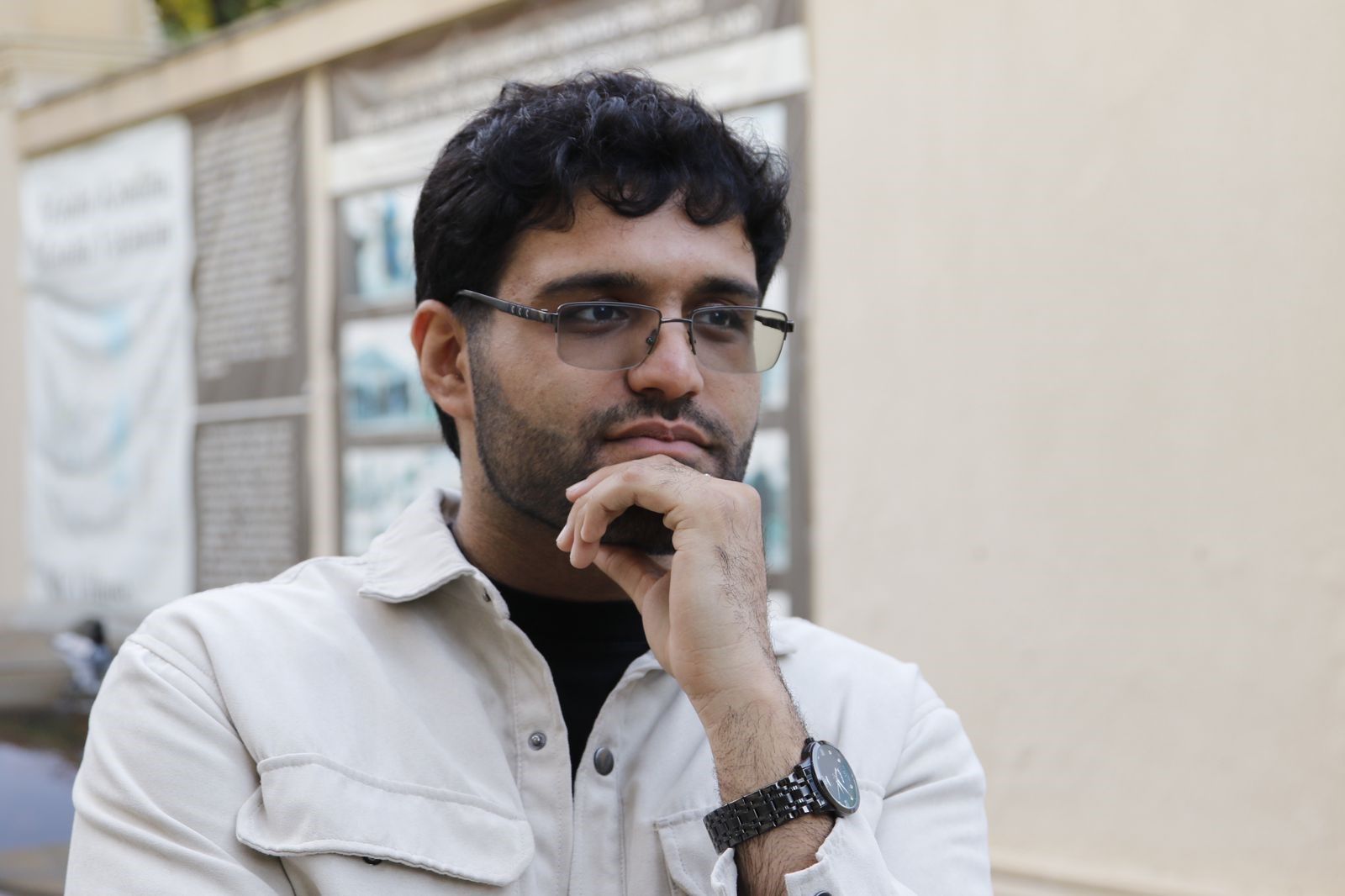
Speaking to AzerNEWS, Athar Mahmood, an independent author, international relations analyst, and regional geopolitics expert, as well as a lecturer and center director at Azerbaijan University of Languages, shared his perspective on why Baku could play a meaningful role in facilitating future negotiations.
"Wars usually begin on the battlefield, but they end around a negotiating table. The conflict between Russia and Ukraine, which has reshaped Europe’s security architecture, is no exception. As the search for outcomes on the battlefield continues, the question of where diplomatic off-ramps might emerge becomes increasingly urgent. The answer is often sought in the capitals of major powers, yet sometimes the most suitable venue is a quieter, more pragmatic, and more trusted regional actor. In the South Caucasus, that country is Azerbaijan. Over the past two decades, Azerbaijan has presented itself not only as an energy exporter but also as a state capable of balancing complex relationships. Baku possesses one of the rare political channels able to function simultaneously with Moscow, Kyiv, Ankara, and European capitals. This is no accident; it is the product of a carefully developed multi-vector foreign policy pursued over many years. Azerbaijan’s advantage is first visible on the map. The country lies close to Russia’s southern borders, is linked to transport corridors reaching the Black Sea region, and serves as a bridge between Europe and Asia. Throughout history, the Caucasus has been a crossroads of empires, trade routes and geopolitical rivalry. Today, that same geography could become an advantage for dialogue. Since the late 19th century, Baku has developed as a meeting point of political and economic centers; during the rise of the oil industry, the city became a hub connecting the Russian Empire, Europe, Central Asia, and the Middle East."
According to him, Baku's balanced relations with Moscow and Kyiv strengthen credibility:
"Azerbaijan’s relations with Russia are built neither on dependency nor open confrontation. Rather, they reflect a realist model based on managing mutual interests. In energy, security, trade, and regional stability, regular dialogue exists between Baku and Moscow. President Ilham Aliyev has maintained functional relations with the Russian leadership for years while preserving Azerbaijan’s sovereign decision-making line. Such balance is a rare political skill in the post-Soviet space. At the same time, Azerbaijan has sustained stable relations with Ukraine. The two countries have longstanding ties in energy, trade, education, and diaspora affairs. Baku has repeatedly supported Ukraine’s territorial integrity and upheld a position grounded in international law. During the war, Azerbaijan’s humanitarian assistance to Ukraine and support for energy infrastructure were positively received in Kyiv. This has strengthened Baku’s standing as an actor capable of speaking not only to one side, but to both. Diplomatic mediation is not only about relations with two capitals; a mediator must also be able to work with other key regional powers. Here too, Azerbaijan holds notable advantages. President Recep Tayyip Erdoğan’s close strategic relationship with Baku has turned the Ankara-Baku axis into one of the region’s strongest political partnerships. Cooperation with Georgia in transport and energy, expanding ties with Kazakhstan and other Central Asian states through the Middle Corridor, and an energy partnership with the European Union have all increased Azerbaijan’s diplomatic weight."
The expert suggests that post-war diplomacy with Armenia offers a working model:
"One of President Ilham Aliyev’s most visible examples of regional diplomacy has been the management of the post-war Armenia-Azerbaijan normalization process. After 2020, during an exceptionally delicate period, Baku succeeded in turning military realities into a political agenda. Border delimitation, the reopening of communications routes, encouragement of direct bilateral talks, and a reduction of dependence on outside mediators all contributed to the emergence of a new regional order. The intensification of bilateral dialogue in recent years suggests that President Aliyev has favored strategic patience and coordination over emotional rhetoric. Azerbaijan has also accumulated substantial experience in hosting international events. The Non-Aligned Movement Summit, various energy forums, and multilateral meetings have demonstrated Baku’s logistical, security, and organizational capabilities. History shows that peace processes often take place not in “perfect capitals,” but in trusted intermediary venues. The Dayton Accords were signed in Ohio, while several rounds of Iranian nuclear talks were held in Vienna. In recent weeks, high-level contacts between the United States and Iran in Islamabad once again illustrated that parties often prefer neutral platforms they consider politically reliable."
Analyst concludes by saying, incremental diplomacy may be the most realistic path forward:
"As the Russia-Ukraine war drags on, maximalist positions may not soften immediately. Yet the need for negotiations is growing in areas such as prisoner exchanges, energy security, humanitarian corridors, ceasefire mechanisms, and phased confidence-building measures. A grand final settlement may appear distant, but incremental diplomacy is a far more realistic scenario. Azerbaijan is particularly well suited for this kind of phased diplomacy: close enough, independent enough, and trusted enough. This argument about Azerbaijan’s role is not romanticism; it is grounded in geopolitical reality. Baku can speak with Moscow, maintain ties with Kyiv, work with Ankara and Europe, and sits at the center of regional energy and transport arteries. Peace does not always begin with the dictates of great powers. Sometimes it begins with the patient diplomacy of middle powers. If a new venue is sought for the next serious round of Russia-Ukraine dialogue, Baku increasingly looks like the logical choice."
Here we are to serve you with news right now. It does not cost much, but worth your attention.
Choose to support open, independent, quality journalism and subscribe on a monthly basis.
By subscribing to our online newspaper, you can have full digital access to all news, analysis, and much more.
You can also follow AzerNEWS on Twitter @AzerNewsAz or Facebook @AzerNewsNewspaper
Thank you!