
Kazakhstan’s Ecological Summit signals new regional identity
By Raza Syed | AzerNEWS
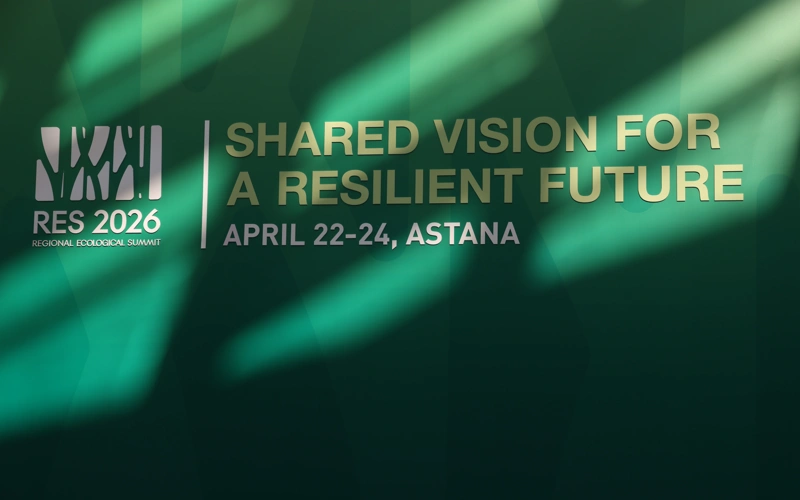
In the evolving story of global climate diplomacy, April 2026 may come to be seen as a defining moment for Central Asia. For three days, the capital of Astana became the focal point of an unprecedented convergence of political leadership, scientific engagement, and environmental urgency during the Regional Ecological Summit 2026. What emerged was not simply another international gathering, but a clear shift in regional identity, from fragmented ecological vulnerability toward a shared vision of resilience and cooperation.
Convened under the leadership of Kassym-Jomart Tokayev and supported by the United Nations, the summit positioned Kazakhstan not merely as host, but as a central architect of environmental coordination across Central Asia. With thousands of delegates including heads of state, ministers, scientists, and financial institutions, Astana signaled that the region is ready to move from reactive environmental policy to proactive and collective governance.
This initiative reflects a deeper transformation in Kazakhstan’s national outlook, where environmental security is now closely tied to economic stability and geopolitical relevance. The country’s vast geography, stretching from the Caspian Sea to the Altai Mountains, places it at the intersection of ecological risk and opportunity. The long shadow of the Aral Sea disaster, along with ongoing desertification, water scarcity, and industrial emissions, has shaped a national understanding that environmental challenges are immediate and tangible.
President Tokayev has framed this reality through a forward looking doctrine centered on regional cooperation in water and climate governance, transition toward a diversified green economy, investment in renewable energy, and active participation in global climate diplomacy. The summit served as a platform where these priorities were translated into practical frameworks, linking political intent with financial and institutional mechanisms.
The urgency behind the summit is difficult to overstate. Central Asia is warming faster than the global average, while glaciers in the Tien Shan and Pamir Mountains, which sustain much of the region’s freshwater supply, are retreating rapidly. The Aral Sea has lost the vast majority of its volume, and the Caspian Sea continues to recede, placing ecosystems and economies at risk. In Kazakhstan alone, most water basins cross national borders, making environmental management inseparable from regional politics.
These pressures are not confined to environmental domains. They influence food security, economic development, and regional stability. For years, responses have been fragmented, often shaped by competing national priorities rather than shared solutions. The summit addressed this gap by creating a structured platform for coordination, elevating ecological issues to the highest political level and encouraging unified regional strategies.
At the center of this effort is a broader strategic vision advanced by President Tokayev. One of the most notable proposals was the creation of an International Water Organization under United Nations auspices, an initiative aimed at addressing the limitations of current global water governance. Alongside this, Kazakhstan reaffirmed its commitment to carbon neutrality by 2060, updated its national climate targets, and promoted initiatives such as the Taza Kazakhstan program and a regional climate investment portfolio designed to attract green financing.
What distinguished the summit from many similar gatherings was its emphasis on measurable outcomes. Agreements exceeding two billion dollars were signed, targeting renewable energy, industrial transformation, and sustainable infrastructure. A regional declaration on ecological solidarity was adopted, alongside a program of action for the coming years. New frameworks for water management, biodiversity protection, and climate adaptation were launched, supported by institutions such as the United Nations Economic Commission for Europe.
The regional implications are significant. For the first time, Central Asian states are aligning around shared environmental priorities, moving toward integrated governance rather than isolated policymaking. Mechanisms for joint water management, coordinated climate adaptation, shared research, and early warning systems were discussed and initiated. Beyond technical cooperation, the summit also helped build trust, a critical factor in a region where natural resources are deeply interconnected and politically sensitive.
Globally, the summit carries broader meaning. At a time when climate governance is often fragmented, Kazakhstan has demonstrated a model of regional cooperation that balances environmental responsibility with development needs. As noted by António Guterres, such initiatives highlight that sustainable development remains central to peace and shared prosperity. By amplifying the voice of landlocked and developing regions, Central Asia is positioning itself as an active participant in shaping global climate discourse rather than a passive recipient of it.
The potential long term impact is considerable. Improved water governance could reduce regional tensions, while investment in renewable energy and green technologies may help diversify economies that have long depended on traditional sectors. Enhanced environmental cooperation also has direct social benefits, including better public health, greater resilience to climate shocks, and increased engagement from younger generations.
Encouragingly, there are already signs that coordinated action can yield results. Partial recovery in parts of the Aral basin demonstrates that environmental restoration is possible when policies align across borders. Such examples provide a measure of optimism in a region often associated with ecological decline.
From a journalistic perspective, the Regional Ecological Summit 2026 represents a defining moment for Kazakhstan. It reflects a level of political confidence and diplomatic maturity that positions the country as a constructive force in international environmental affairs. Rather than responding passively to global challenges, Kazakhstan is actively shaping the agenda, promoting cooperation, and offering practical solutions.
As delegates departed Astana, the summit left behind more than agreements and declarations. It established a direction. Central Asia is beginning to move away from fragmented responses toward a more unified ecological strategy, grounded in shared responsibility and mutual interest.
The significance of this moment lies not only in what was achieved, but in what it represents. Environmental challenges remain complex and pressing, but they also offer an opportunity for collaboration and innovation. In convening this summit, Kazakhstan has shown that regional leadership can translate vulnerability into strength and uncertainty into strategy.
If momentum is sustained, the Regional Ecological Summit 2026 may be remembered as the point at which Central Asia found a collective voice on environmental issues and stepped forward as a meaningful contributor to global climate solutions. In a world often divided by competing priorities, such a vision is not only timely, it is also essential.
---------
Note: This article follows the Regional Eco‑G Summit 2026 in Astana and draws on insights shared at a London event hosted by the British‑Kazakh Society, where summit participants offered their reflections on the outcomes and significance of the gathering.
---------
The views and opinions expressed by guest columnists in their articles may differ from those of the editorial board and do not necessarily reflect its views.
Here we are to serve you with news right now. It does not cost much, but worth your attention.
Choose to support open, independent, quality journalism and subscribe on a monthly basis.
By subscribing to our online newspaper, you can have full digital access to all news, analysis, and much more.
You can also follow AzerNEWS on Twitter @AzerNewsAz or Facebook @AzerNewsNewspaper
Thank you!