
NASA postpones crewed lunar landing to 2028, adds new Artemis mission
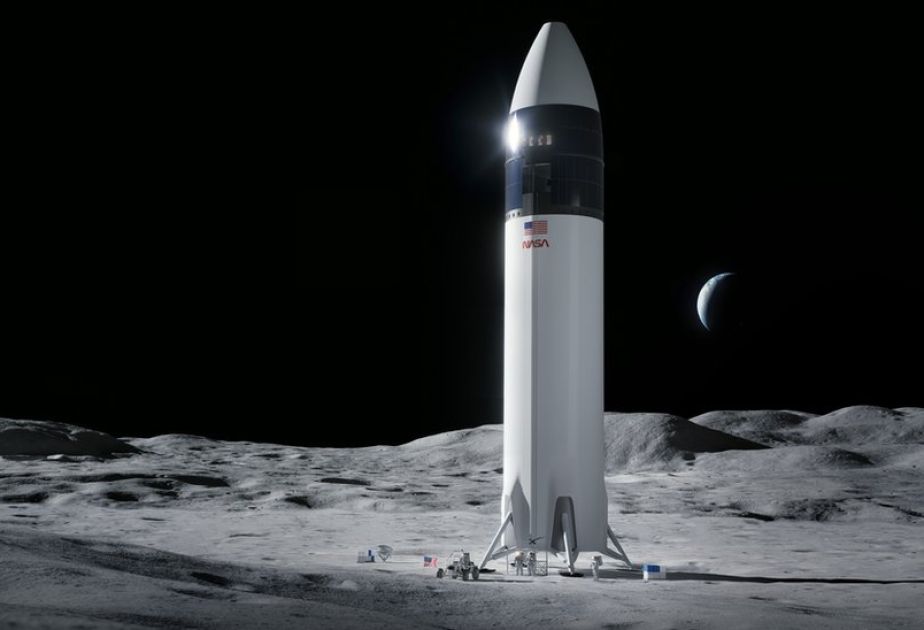
NASA on Friday announced adjustments to its Artemis lunar exploration program, adding a mission ahead of its planned crewed moon landing and postponing the landing to 2028 from 2027,AzerNEWS reports, citing Azertag.
Under the revised plan, the Artemis III mission will focus on testing systems and operational capabilities in low Earth orbit in 2027, in preparation for the Artemis IV lunar landing mission in 2028, NASA said in a news release.
The Artemis III mission is expected to include a rendezvous and docking with one or both commercial lunar landers being developed by SpaceX and Blue Origin, in-space tests of the docked vehicles, integrated checkout of life support, communications, and propulsion systems, as well as tests of the new Extravehicular Activity suits, according to NASA.
"Standardizing vehicle configuration, increasing flight rate and progressing through objectives in a logical, phased approach, is how we achieved the near-impossible in 1969 and it is how we will do it again," said NASA Administrator Jared Isaacman.
NASA recently completed two key wet dress rehearsals for the Artemis II crewed lunar mission and identified technical issues.
Following the rehearsals, NASA rolled the Space Launch System rocket and Orion spacecraft for the Artemis II mission back to the Vehicle Assembly Building from the launch pad for troubleshooting.
Teams have begun addressing a helium issue discovered on the Interim Cryogenic Propulsion Stage and are preparing several actions, including replacing batteries in the flight termination system and conducting end-to-end testing to meet range safety requirements.
NASA on Thursday also announced new leaders for two key human spaceflight roles. Joel Montalbano will serve as the acting associate administrator for the Space Operations Mission Directorate at NASA Headquarters, while Dana Hutcherson will serve as the acting program manager of the Commercial Crew Program.
The agency said its newly-announced workforce directive is a key factor in enabling acceleration of the Artemis missions.
NASA plans to rebuild core competencies in the civil servant workforce including more in-house and side-by-side development work with its Artemis partners, enabling a safer, more reliable and faster launch cadence.
NASA is eyeing April for the launch of Artemis II, pending the outcome of data analysis, repair efforts and schedule assessments in the coming days and weeks.
The Artemis II mission will send four astronauts on an approximately 10-day journey around the Moon and back.
The crew consists of NASA astronauts Reid Wiseman, Victor Glover and Christina Koch, and Canadian Space Agency astronaut Jeremy Hansen.
Here we are to serve you with news right now. It does not cost much, but worth your attention.
Choose to support open, independent, quality journalism and subscribe on a monthly basis.
By subscribing to our online newspaper, you can have full digital access to all news, analysis, and much more.
You can also follow AzerNEWS on Twitter @AzerNewsAz or Facebook @AzerNewsNewspaper
Thank you!