
UN-Habitat official: Middle Corridor can reshape urban growth across region [EXCLUSIVE]
![UN-Habitat official: Middle Corridor can reshape urban growth across region [EXCLUSIVE]](https://www.azernews.az/media/2026/05/19/whatsapp_image_2026-05-19_at_120236.jpg)
Akbar Novruz
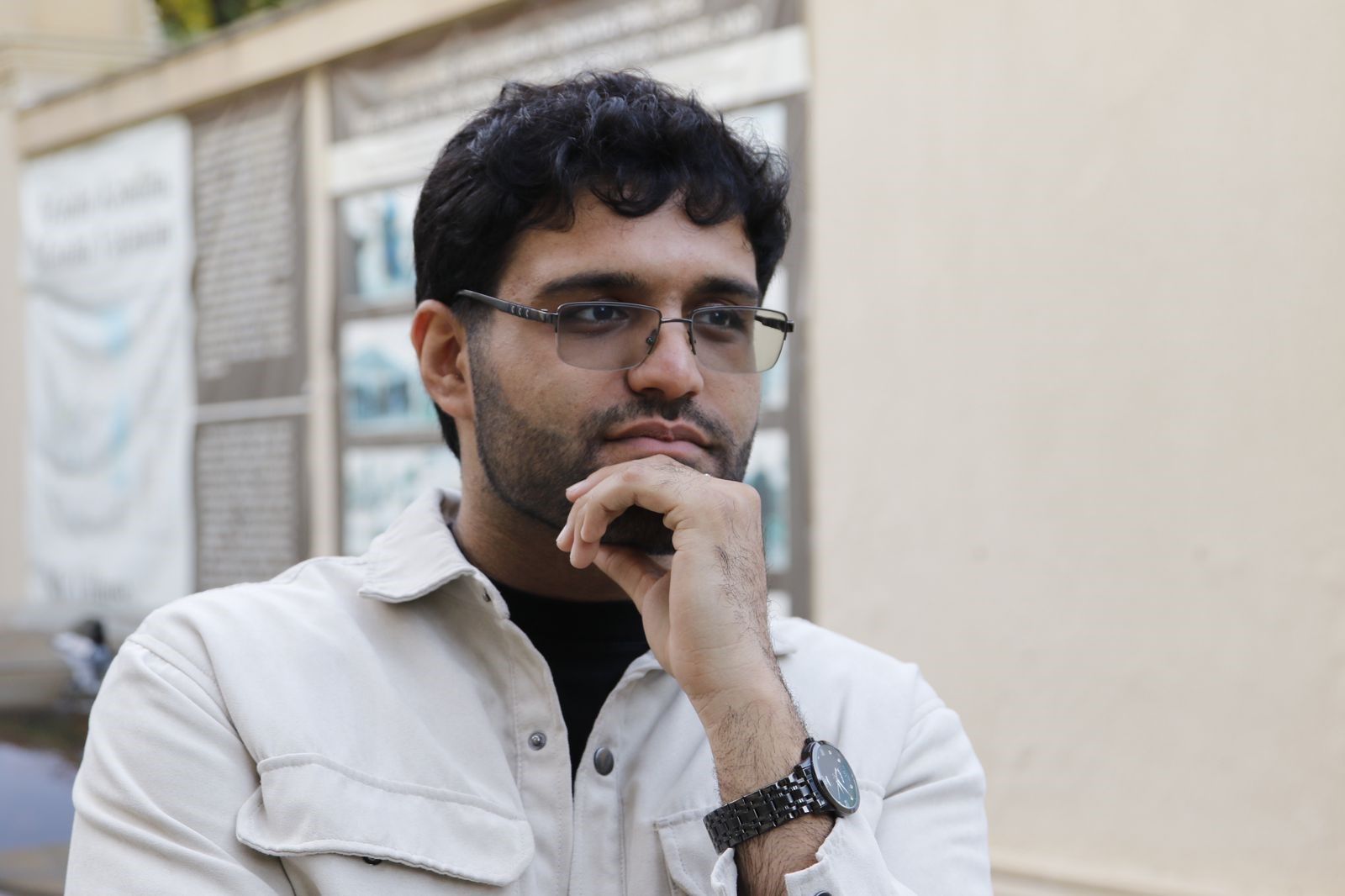
Read moreRafael Tuts has praised the organization and scale of the 13th session of the World Urban Forum 13 in Baku, describing it as the largest forum held so far and highlighting Azerbaijan’s role in bringing together global leaders and urban development experts.
Speaking to AzerNEWS on the sidelines of the event, Tuts said he was impressed by both the scale of participation and the overall organization of the forum.
“I’m very happy to be here at the 13th session of the World Urban Forum in Baku. This is the biggest session so far,” he stated. I have been privileged to attend all 13 sessions, and I’m quite impressed by the organization and by the host country, Azerbaijan, in bringing together so many participants and leaders for this forum,” Tuts added. He also praised the coordination of discussions and activities throughout the event.
“It’s truly a magnificent forum so far,” he emphasized.
Commenting on the future of urban transportation, Tuts stressed that the transition toward green mobility must remain socially inclusive and accessible to all segments of society.
According to him, governments will continue to play a key role in supporting public transportation systems during the green transition process.
“Transport systems are always going to be partially subsidized by the state,” he said.
Tuts explained that while cities are increasingly shifting toward environmentally sustainable transportation models, authorities must ensure that social considerations remain central to policymaking.
“We need to move from old-fashioned transport systems to greener options, but while doing so we must keep in mind that the social and environmental dimensions go hand in hand,” he noted.
“We should not focus only on environmental dimensions while leaving people behind. It is about coupling the green transition with making sure no one is left behind,” Tuts stressed.
According to him, affordable pricing and accessibility remain essential for maintaining inclusive mobility systems, particularly for vulnerable groups.
“That means transport prices must remain reasonable and everyone in society, especially those who need it most, must still have the possibility to use transport options,” he said.
Addressing regional connectivity initiatives such as the Middle Corridor, Tuts stated that infrastructure and logistics corridors are among the major drivers of urban growth globally.
“Absolutely. This is something we see all over the world. Corridors are one of the main drivers of urban development,” he said.
However, he warned that infrastructure expansion without proper planning could lead to uneven and unsustainable development.
“If infrastructure corridors are left unchecked and unguided, they will lead mainly to economic urban development,” Tuts noted.
According to him, economic growth along transport corridors must be balanced with social inclusion and environmental sustainability.
“We need to complement and guide that development with social and environmental dimensions so that new towns and growing cities along the corridors remain inclusive and become environmentally sustainable,” he concluded.
Here we are to serve you with news right now. It does not cost much, but worth your attention.
Choose to support open, independent, quality journalism and subscribe on a monthly basis.
By subscribing to our online newspaper, you can have full digital access to all news, analysis, and much more.
You can also follow AzerNEWS on Twitter @AzerNewsAz or Facebook @AzerNewsNewspaper
Thank you!