
Azerbaijan's $10bn reconstruction drive finds global stage at WUF13
Akbar Novruz
Read moreAzerbaijan is once again at the center of the global agenda, hosting the World Urban Forum (WUF13) in partnership with the United Nations Human Settlements Programme (UN-Habitat). Held under the motto "Housing the World: Safe and Resilient Cities and Communities," this forum will feature some of the leading urban planning experts, governmental officials, international organizations, and representatives of academia and civil society to address the key problems in relation to the issues of urbanization that the world faces today. Gathering some of the best professionals in the field of urban planning in Baku, this high-profile forum is another proof of the rising importance of Azerbaijan's institutions on an international level after the success of COP29. And having just passed its first day, it looks like Baku will do just fine.
The current 13th World Urban Forum, co-organized by the United Nations Human Settlements Programme (UN-Habitat) and the Government of Azerbaijan, has already attracted an unprecedented number of 32,225 people from 180 nations across the globe. This forum is being held at the Baku Olympic Stadium, and importantly, the WUF13 falls during the halfway review of the New Urban Agenda, which means that the findings will have a direct influence on the UN Secretary-General’s 2026 report on urbanization.
The scale of the event reflects Azerbaijan's growing institutional ambitions. President Ilham Aliyev has declared 2026 the "Year of Urban Planning and Architecture" in Azerbaijan, a declaration framing this as a bold, hopeful part of a broader national urban transformation strategy. On its first day, the forum saw Azerbaijan host a ministerial discussion on the New Urban Agenda, taking place halfway into the 20-year implementation period for the agenda, to take stock of its achievements and determine what lies ahead. Another landmark moment is set to take place during the 13th session of the World Urban Forum, where, for the very first time, there will be a Leaders’ Summit segment at the forum.
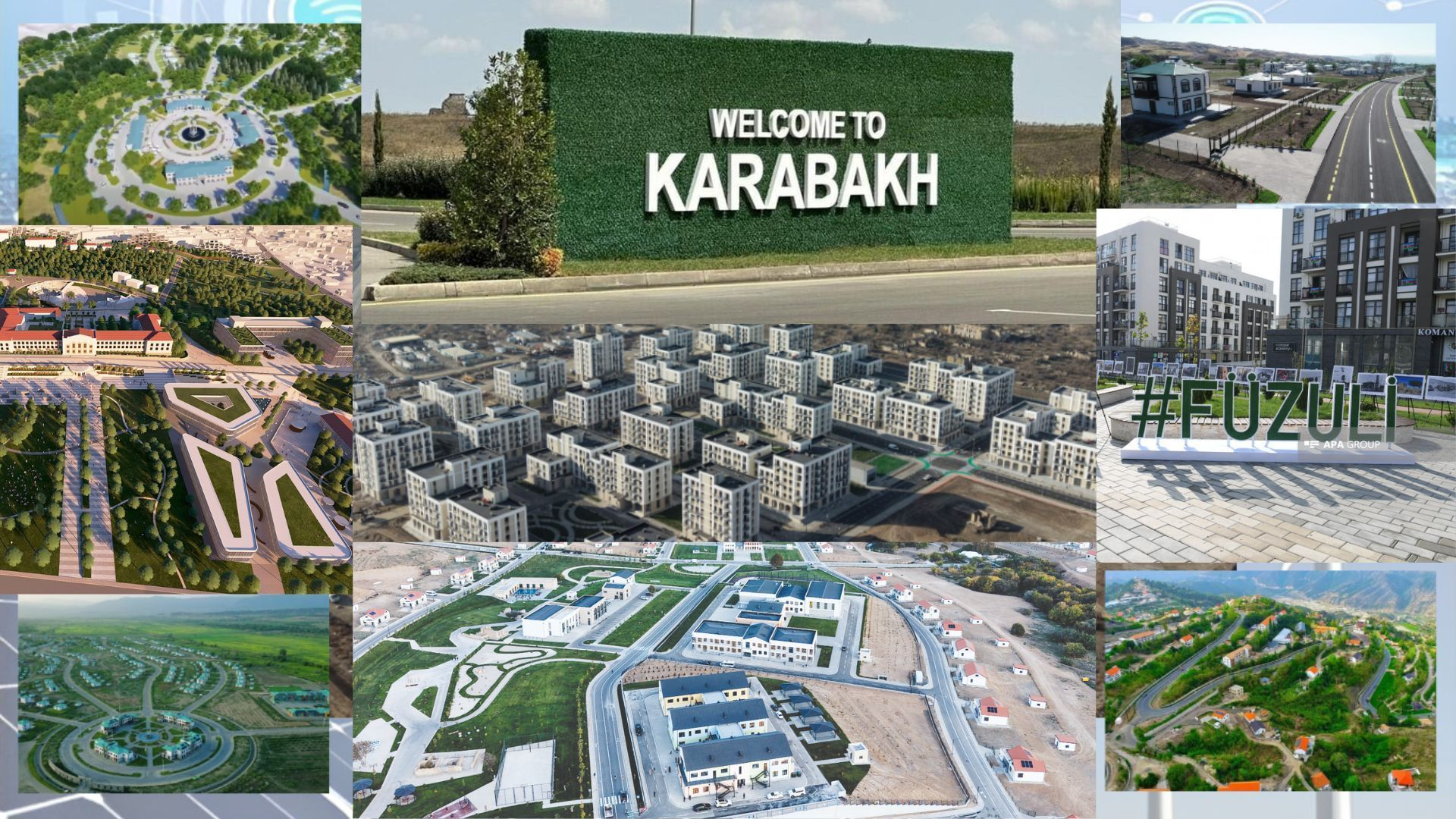
The core of the Azerbaijani delegation’s speech at WUF13 will be about the reconstruction story of their territories that have been liberated. Since 2020, more than $10.3 billion has been invested by Azerbaijan to reconstruct the Karabakh region and East Zangezur. In the WUF13 conference, Azerbaijan will present its big project for reconstruction and urbanization conducted in the territories of Karabakh and East Zangezur, such as the "smart city" and "smart village" ideas, and turning these territories into green energy zones.
The reconstruction of these territories, built from the ground up utilizing smart-city technologies, zero-emission zones, and sustainable agricultural integration, serves as a living laboratory for the ideals that WUF13 seeks to propagate. As Azerbaijan's WUF13 national coordinator, Anar Guliyev stated, "these initiatives once again demonstrate that housing and urban development are no longer merely technical matters, but issues of global strategic importance that require leadership at the highest level."
The Letter of Intent agreement made between the State Committee on Urban Planning and Architecture and UN-Habitat is beyond ordinary organizational processes; it is an attempt to create efficient operations and change the preparation process for WUF13 into an institutionalized one, thereby creating a clear path that should be followed by all future host countries for WUF. Such processes have started to be called the "WUF13 Baku Standards."
On the bilateral front, there was a signing of an accord between Abu Dhabi and Baku in early 2026 to develop the two cities specifically in terms of urban mobility and environmental technology, showing how Azerbaijan can foster such investments because of its prominence on the international stage.
The WUF13 presents a rare opportunity to disseminate real-world solutions, formulate global policies, and mobilize investments to guarantee sufficient housing for everyone, thus paving the way for green, sustainable, and inclusive urban development. It is an occasion of great significance for the Republic of Azerbaijan because this nation has made enough progress from rebuilding devastated cities to be a stakeholder in deciding the future course of global urbanization.
To gain deeper insight into the opportunities and challenges that WUF13 presents for Azerbaijan, and what the country's urban development model truly means on a global scale, AzerNEWS spoke with an expert.
Laman Nazarova, an expert on International relations and a member of the Center for Analysis of Strategic Policy and International Affairs, assumes that the event opens up new doors for urban development in the sense of international cooperation:
"On the one hand, we’re strengthening our position as a country that knows how to host global forums at a high level and bring real solutions to the table. This will definitely help attract serious investment and tech partners. On the other hand, it’s especially interesting to look at this through the lens of the OTS and the Middle Corridor. The experience of building smart cities and villages in Karabakh and East Zangezur can be a great foundation for joint projects among Turkic states. Modern infrastructure along the corridor will make it not just a transport route, but a real space for business and innovation. I think there’s huge potential here for Turkish, Kazakhstani, Uzbek, and Chinese companies. And of course, this is all connected to the Middle Corridor. Developing modern and “smart” cities and villages along the transport route will make the corridor more attractive to investors and create new value chains," she said.
The expert believes that Baku has great potential to share its experiences and encourage interested nations to foster collaboration:
"The 'Smart City' and 'Smart Village' concepts that Azerbaijan is implementing in Karabakh and East Zangezur are genuinely unique. First of all, everything is being built from scratch using modern green technologies. I mean, renewable energy, smart resource management, digital services. And second, it’s a living space that people are actually returning to. This speed and quality of implementation in post-conflict conditions make our model especially valuable. It shows how you can create a comfortable, modern environment right away, instead of just rebuilding what was there before. I think this is one of the most interesting examples in the world right now. This kind of format makes it possible to bring in international institutions like the World Bank, the Asian Development Bank, the European Union, and other organizations. When different global players join forces, reconstruction becomes much more effective. We’re showing that even after a serious conflict, you don’t just have to restore a territory but build a space for the future right from the start. It’s a great roadmap for other regions dealing with wars, disasters, or large-scale displacement. Azerbaijan is showing the world that post-conflict recovery doesn’t have to mean going back to the past. In fact, it can be a real leap forward. I genuinely believe this is an unprecedented example of a country that is looking ahead strategically, trying to strengthen not only its own position but the position of the whole region."
Here we are to serve you with news right now. It does not cost much, but worth your attention.
Choose to support open, independent, quality journalism and subscribe on a monthly basis.
By subscribing to our online newspaper, you can have full digital access to all news, analysis, and much more.
You can also follow AzerNEWS on Twitter @AzerNewsAz or Facebook @AzerNewsNewspaper
Thank you!