
US–Iran 'uneasy' ceasefire: What happened and what comes next?
Akbar Novruz
Read moreOn April 8, less than two hours before the deadline for the ultimatum issued by the United States against Iran, an interim agreement on a ceasefire for two weeks was signed. This agreement, which came into being after several weeks of military activity in the region, is aimed at temporarily halting the conflict, which could turn into a full-scale regional war.
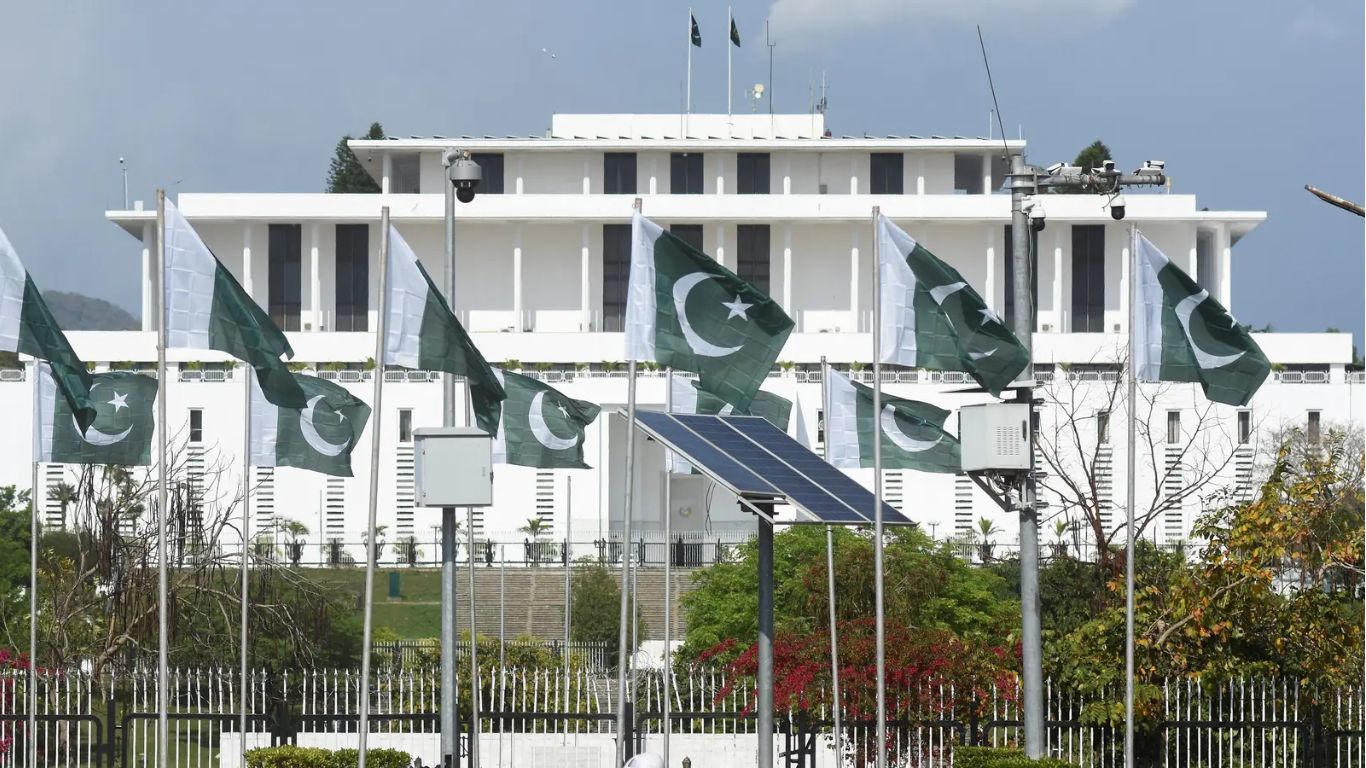
Pakistani mediation is considered a key aspect in the signing of the interim agreement. Official reports indicate that the efforts made through the diplomatic engagement campaign launched by the Prime Minister of Pakistan, Shehbaz Sharif, along with the army chief Gen. Asim Munir, have been pivotal in arriving at this compromise agreement.
However, at the very outset, it seems that the ceasefire agreement is fragile.
Questions over its durability emerged almost immediately, with reports suggesting that implementation is uneven and trust between the parties remains limited. Signals of uncertainty became more visible when an earlier social media post by Iran’s Ambassador to Pakistan, Reza Amiri Moghadam, announcing an upcoming Iranian delegation visit to Islamabad, was later deleted. The post had indicated that ceasefire talks with US representatives were scheduled in Pakistan’s capital.
Shortly after, Iranian state-linked media reported that the delegation did not travel to Islamabad as planned. Tasnim news agency, citing a source close to the diplomatic team, confirmed the absence of Iranian negotiators on the scheduled day of talks. Meanwhile, earlier reporting by the Wall Street Journal was dismissed by Iranian sources as “completely false.”
According to the same source, Tehran’s participation in negotiations is conditional:
“As long as America (The United States) does not fulfil its commitment to the ceasefire in Lebanon and the Zionist (Israel) regime continues its attacks, negotiations will be suspended.”
The result is a ceasefire that exists on paper, but remains politically contested in practice.
What can we expect from all these initiatives? How will this war continue?
In his statement to AzerNEWS, independent geopolitical risk-analyst and expert on the South Caucasus region and Iran, Alihuseyn Gulu-Zada, argues that Pakistan’s role has been both timely and strategically significant, preventing what could have become a far more destructive regional escalation:
"As has been aptly observed, the active and unprecedented role of Pakistan, and personally of Prime Minister Shehbaz Sharif, has indeed played a decisive part in securing the two-week ceasefire between the United States and Iran. At the same time, it must be noted that Islamabad’s proactive mediation efforts have effectively prevented far greater destruction, which could otherwise have resulted not only in a humanitarian catastrophe for Iran but also in profound and far-reaching negative consequences for the entire region of West Asia, including the Arab monarchies of the Gulf. Pakistan’s contribution is therefore invaluable."
Looking ahead to the supposedly planned negotiations in Islamabad, he suggests that both Washington and Tehran may now be shifting toward a more pragmatic phase of engagement:
"I believe that, overall, despite the persistent threats of breakdown, contradictions, misunderstandings, and mutual accusations, both the United States and Iran will approach the diplomatic agenda with greater seriousness and rationality. This implies that the parties have essentially passed the so-called “crisis threshold” and now clearly understand their respective positions “on the ground.” The time has come for concrete proposals “at the table.” In this context, I personally expect that both sides will be prepared to make certain compromises, and I consider that the central focus of the negotiations will not be the reopening of the Strait of Hormuz, which could simply revert to its pre-conflict operational status, but rather the issues of uranium enrichment and Iran’s missile (ballistic) programme."
He also notes that despite continued risks of breakdown, early indicators suggest limited but meaningful movement toward compromise:
"Naturally, one should not anticipate any major breakthroughs from the upcoming meeting of the American and Iranian delegations in Islamabad. It is more probable that several rounds of talks will be conducted over the course of these two weeks, yet they are expected to yield tangible progress. Certain positive signals are already discernible. For example, in his statement on the conclusion of the two-week ceasefire, U.S. President Donald Trump noted that many of the 15 points of the agreement with Iran – previously a source of contention and disagreement on the part of Tehran – have now been reconciled. He also indicated that uranium enrichment will not be permitted and that the United States is working closely with Iran on the easing of tariffs and sanctions. This constitutes only one indicator of constructive shifts. Consequently, although the risk of another negotiation collapse remains ever-present, there are nevertheless solid grounds to suppose that Washington and Tehran may finally conclude the long-awaited agreement."
A different angle is offered by Moscow-based analyst Andrew Korybko, who frames the ceasefire as a temporary pause in a much broader geopolitical confrontation with global implications. He says, the dark scenario Trump threatened, destroying Iran's power plants, bridges, and oil infrastructure, is still in the cards and cannot be ruled out:
"He threatened to destroy Iran’s power plants, bridges, and oil infrastructure, in response to which Iran threatened to destroy the Gulf’s, and this sequence could have immediately taken the region’s energy exports offline indefinitely. Afro-Eurasia would have been thrown into chaos and likely a series of never-ending resource wars Roo while the US could relatively (key qualifier) insulate itself by retreating to “Fortress America”, which refers to the US’ newly restored dominance over the Western Hemisphere upon which it can rely for resources, markets, and labor without having to deal with the Eastern Hemisphere if circumstances required it. The radical global changes that would have occurred could be described as a “Great Reset” initiated by the US out of desperation to derail China’s superpower rise. This dark scenario has been averted for now since the US hopes to end Iran’s petroyuan experiment and oil exports to China through diplomatic means, but can still be returned to if talks fail."
At the core of his analysis is the strategic importance of energy markets and global currency systems, including the reported use of yuan-based transactions in Iranian oil trade, which he argues could challenge established financial structures if expanded further:
"Regarding the petroyuan, this refers to reports that Iran had begun charging tankers in yuan for safe transit through the Strait of Hormuz, and, if true and left to become the new normal, the petrodollar - one of the pillars of the US’ global power - would be threatened. Similarly, the US sought, unofficially, to replicate Venezuela's scenario of obtaining proxy control over Iran’s energy industry to blackmail China into a lopsided trade deal during Trump’s upcoming (previously postponed) visit, thereby solidifying the restoration of its unipolar hegemony that his administration has sought to achieve. Therefore, the US is expected to, more or less, request Iran’s strategic surrender through these talks, albeit in a “face-saving” way that wouldn’t formally confirm Iran's capitulation to the US. Likewise, hardliners like those in the IRGC would literally rather die (“embrace martyrdom” as they see it) than have that happen, so the outcome of their talks is unclear. Israel also dislikes the ceasefire, so it has the same interests as its IRGC enemies do in subverting the US-Iranian talks in Islamabad. These factors, therefore, make it extraordinarily difficult to predict what’ll happen, but suffice to say, the dark scenario that Trump threatened is still in the cards and cannot be ruled out."
Here we are to serve you with news right now. It does not cost much, but worth your attention.
Choose to support open, independent, quality journalism and subscribe on a monthly basis.
By subscribing to our online newspaper, you can have full digital access to all news, analysis, and much more.
You can also follow AzerNEWS on Twitter @AzerNewsAz or Facebook @AzerNewsNewspaper
Thank you!