
China moves to fill Middle East security gap as Gulf states hedge US risk

AzerNEWS Staff
Read moreChina is stepping up efforts to shape a new security order in the Middle East as Egypt and Gulf states reassess their dependence on the US amid continuing conflict and disruption to regional trade routes.
The shift became apparent after Chinese President Xi Jinping’s visit to Cairo on September 2. Shortly after seeing Xi off at the airport, Egyptian President Abdel Fattah al-Sisi called Saudi Crown Prince Mohammed bin Salman to discuss regional security and coordination between Cairo and Riyadh.
Xi used his talks with Sisi to propose a new Middle East security architecture built around four principles: regional countries taking responsibility for their own security, comprehensive solutions to interconnected conflicts, linking security with economic development and maritime trade, and greater reliance on international law and the United Nations.
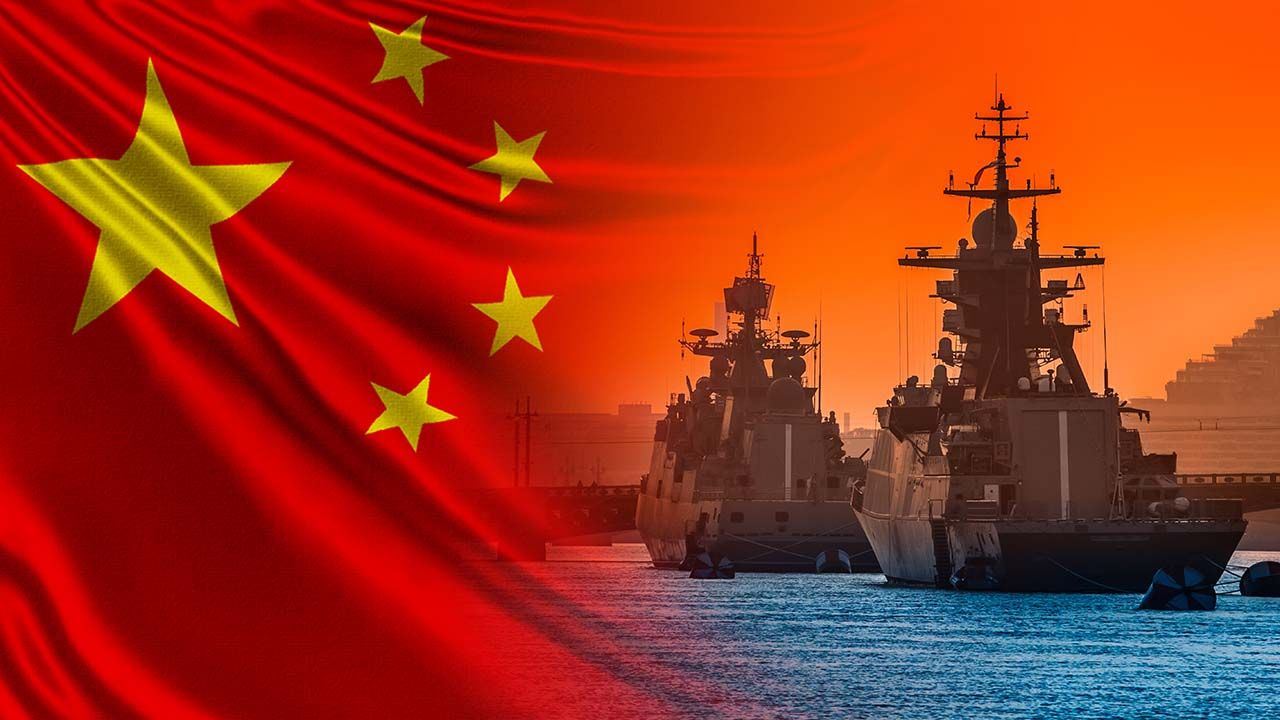
The emphasis on maritime security is particularly significant as the Strait of Hormuz and the Bab el-Mandeb remain vulnerable to disruption. China is a major trading power with a direct interest in keeping the region’s shipping lanes open, while instability around the two waterways threatens energy supplies and global trade.
Chinese Foreign Minister Wang Yi subsequently described the initiative as a Chinese solution for achieving long-term peace and stability in the region, signalling that Beijing sees the proposal as part of a broader effort to expand its diplomatic and strategic influence.
The proposal also comes as China deepens its military and technological relationship with Egypt. Chinese J-16 fighter aircraft participated in Egypt’s Eagles of Civilisation 2026 exercises, while Huawei has proposed major artificial intelligence data-centre projects in the country.
That combination of defence cooperation, technology investment and diplomacy gives Beijing an expanding presence in sectors traditionally dominated by the US and its Western allies.
China's growing role is also being tested by its relationship with Iran. Xi's encounter with Iranian President Masoud Pezeshkian on the sidelines of the Shanghai Cooperation Organisation summit was notably restrained, according to the analysis. Beijing has reportedly pressed Tehran to reopen the Strait of Hormuz and resolve disputes with Saudi Arabia.
For China, the calculation is increasingly economic as well as diplomatic. Prolonged disruption in Hormuz threatens energy flows and shipping routes that underpin Chinese trade, making regional instability a potential liability for Beijing.
At the same time, China's relationship with Saudi Arabia has expanded rapidly through investment, trade and strategic cooperation. That gives Beijing an incentive to balance its ties with Tehran against its increasingly important partnerships with Arab states.
The broader regional shift was visible at the SCO summit in Bishkek, where Turkish President Recep Tayyip Erdoğan said Türkiye was prepared to join the organisation as a full member. Such a move would give the China-led bloc a larger presence in the Middle East and could create additional space for Beijing to influence regional security arrangements.
Qatar has also signalled that its longstanding relationship with Washington may no longer be sufficient on its own. During a visit to Beijing, Qatari Prime Minister and Foreign Minister Sheikh Mohammed bin Abdulrahman Al Thani said Gulf states needed to recognise that their strategic alliance with the US, while important, was not enough by itself.
That message points to a broader change in the Gulf. Regional states are not necessarily abandoning Washington, but they are increasingly seeking additional security partnerships, diplomatic channels and economic relationships.
China's proposal nevertheless faces a formidable obstacle: the region already has competing security arrangements. One of the most important is the emerging defence relationship between Saudi Arabia, Pakistan and Türkiye, while the US retains extensive military infrastructure and partnerships across the Gulf.
Beijing's challenge will therefore be to translate its growing economic weight into a security role without becoming trapped by the region's rivalries.
For Egypt and the Gulf states, the attraction of China's approach is its emphasis on sovereignty, development, infrastructure and trade rather than dependence on a single external security provider.
For Beijing, the stakes are even higher. If China can help keep Hormuz and the Red Sea open while positioning itself as a broker between rival regional powers, it could move from being primarily an economic partner to becoming a central player in the Middle East's security architecture.
That would represent a significant shift in a region where the US has been the dominant external security power for decades.
Here we are to serve you with news right now. It does not cost much, but worth your attention.
Choose to support open, independent, quality journalism and subscribe on a monthly basis.
By subscribing to our online newspaper, you can have full digital access to all news, analysis, and much more.
You can also follow AzerNEWS on Twitter @AzerNewsAz or Facebook @AzerNewsNewspaper
Thank you!