
AIC to take measures to ensure efficiency of enterprises
By Aygul Salmanova
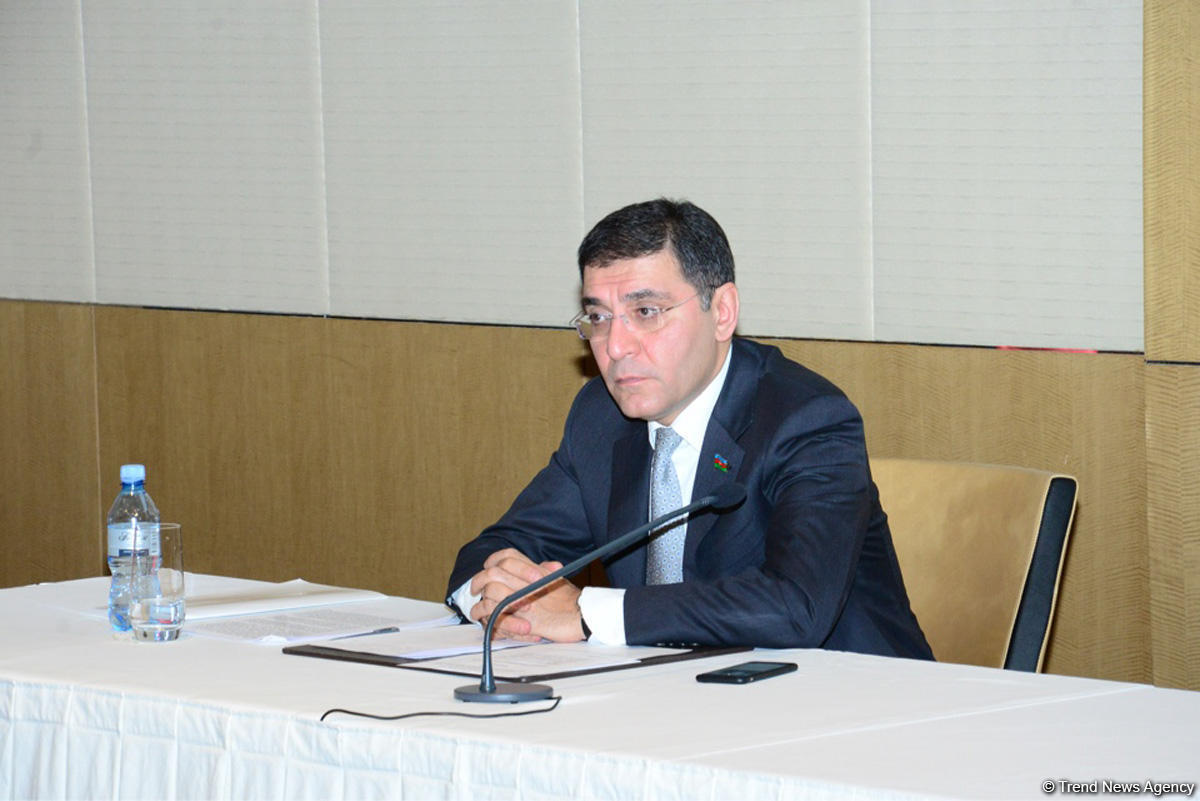
The Azerbaijan Industrial Corporation held a meeting devoted to realization of the State Program of Social and Economic Development of Regions 2014-18 on February 7.
Corporation’s CEO Kamran Nabizade stated during the meeting that AIC is taking measures to ensure the efficiency of the enterprises within the Corporation.
“In particular, work is underway to develop a strategy on the Corporation, including a strategy on the development of each AIC enterprise separately,” he emphasized.
Nabizade also noted that Azerbaijan plans to restore and restart Ganja aluminum plant in the country.
“The goal is to organize the manufacture of primary and final aluminum products,” he said. “This will make it possible to increase competitiveness of the aluminum production sphere and export potential.”
The CEO also spoke about the need to restore the activity of the Ganja Alumina Plant.
“This is necessary for the development of alunite mining in Azerbaijan’s Dashkesan region,” Nabizade said. “The plant will produce alumina and other products from the alunite ore. To do this, the plant needs to be reorganized in accordance with modern technological requirements.”
In general, it is planned to restore and reorganize activity of a dozen facilities with the use of modern technologies, he noted.
“In particular, it is planned to implement the development strategy for the reorganization of Sheki-Ipek JSC with the involvement of foreign and local consultants,” the CEO said. “We also need to reduce dependence on imports.”
He went on saying that it is necessary to improve the quality of tobacco grown in Azerbaijan, noting that the low quality of tobacco produced in the country negatively affects its final price and export volumes.
“The problem of the quality of tobacco is still on the agenda,” Nabizade said. “We must do everything necessary to ensure that this problem is solved. This adversely affects the whole sphere of tobacco growing and hinders its development.”
“We need to encourage honest producers, and apply legal measures regarding those who don’t fulfill their commitments,” he added.
He also noted that the cost per hectare to produce tobacco in Azerbaijan is higher than in neighboring countries.
“It is necessary to reduce the cost of tobacco per hectare,” he noted “The cost exceeds 2,300 manats ($1.352) in Azerbaijan, whereas in Turkey it amounts to $800.”
In turn, Fazil Rustamov, director of Intertobacco CJSC, explained the reasons for the high cost of tobacco in Azerbaijan.
“Unlike other spheres, manual labor is widely used in tobacco production, and this leads to high production costs,” Rustamov said. “In order to reduce the cost, it is necessary to mechanize a part of tobacco production, and we are working in this direction.”
While making remarks during the meeting Zakir Azimov, acting director of CTS-AGRO LLC, said that in the coming years, cotton production in Azerbaijan will increase to 100,000 tons per year.
In order to increase cotton production in Azerbaijan, first of all, it is necessary to increase the yield, he said.
“We have a goal to increase the yield to 25 centners per hectare in the next five years from the current 18 centners,” Azimov said.
The director noted that last year, the company sowed cotton in 14 regions of Azerbaijan.
“A total of 28,600 hectares of land were sown in 2017, and in the result, we received 51,200 tons of raw cotton, which is 1.8 times more than in 2016,” Azimov said. “This year we sowed 35,000 hectares of land and plan to receive 70,000 tons of cotton.”
He added that in order to achieve this result, it is necessary to carefully study the mistakes and shortcomings made last year.
“We need to take a more careful approach to the selection of lands for sowing cotton, properly and efficiently use agricultural machinery and pay special attention to the means used to combat pests,” Azimov said.
Furthermore, Hilal Ahmadov, chairman of the company’s board noted that Inter Glass, an Azerbaijani glass manufacturing company, intends to reach full production capacity.
He said that presently the company’s glass plant operates at half its capacity.
“The plant produced 36 million bottles in 2017, whereas in 2014, when operating at full capacity, the plant produced only 38 million bottles,” Ahmadov said.
--
Follow us on Twitter @AzerNewsAz
Here we are to serve you with news right now. It does not cost much, but worth your attention.
Choose to support open, independent, quality journalism and subscribe on a monthly basis.
By subscribing to our online newspaper, you can have full digital access to all news, analysis, and much more.
You can also follow AzerNEWS on Twitter @AzerNewsAz or Facebook @AzerNewsNewspaper
Thank you!