
Third Kelaghayi Festival brings tradition and art to life in Sumgait [PHOTOS]
![Third Kelaghayi Festival brings tradition and art to life in Sumgait [PHOTOS]](https://www.azernews.az/media/2026/06/03/fref.jpg)

Laman Ismayilova
Read moreThe kelaghayi, a traditional Azerbaijani silk headscarf, is one of the most refined symbols of the country's cultural heritage.
Known for its delicate craftsmanship, distinctive patterns, and deep symbolic meaning, it reflects the elegance, dignity, and inner world of Azerbaijani women.
Preserved for centuries and passed down through generations, it remains an important expression of national identity and continues to be actively promoted through cultural initiatives and festivals across the country.
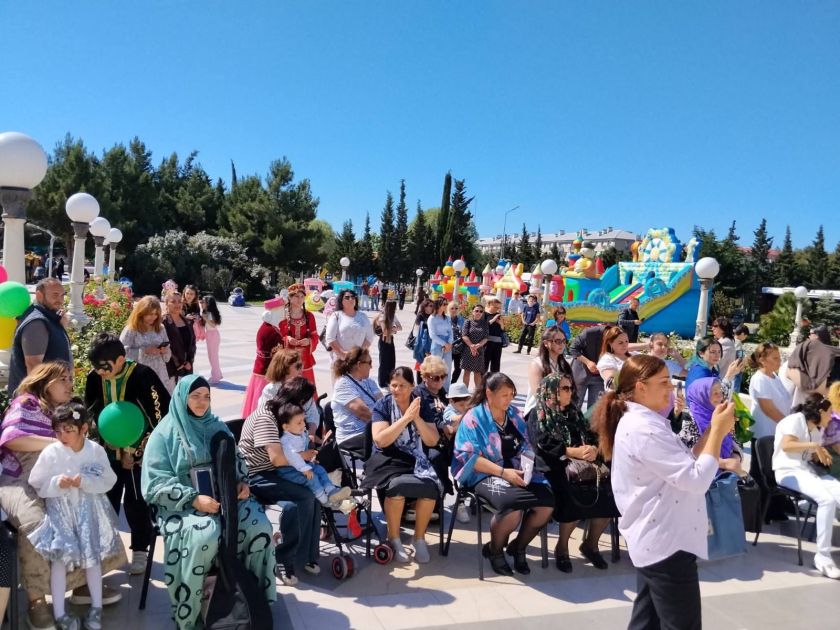
Building on this rich cultural significance, the third Kelaghayi Festival, organized within the framework of the "Year of Urban Planning and Architecture," has been held at the Heydar Aliyev Park in the city of Sumgait.
The festival was jointly organized by the Sumgait City Executive Authority, the "Mirvarid Dilbazi Poetry Assembly" Public Union, the Kelaghayi House Museum, and the "Let's Recognize and Promote Talents" Public Union.
The event began with the performance of the National Anthem of Azerbaijan, followed by a minute of silence in memory of the martyrs who sacrificed their lives for the country's freedom, sovereignty, and territorial integrity.
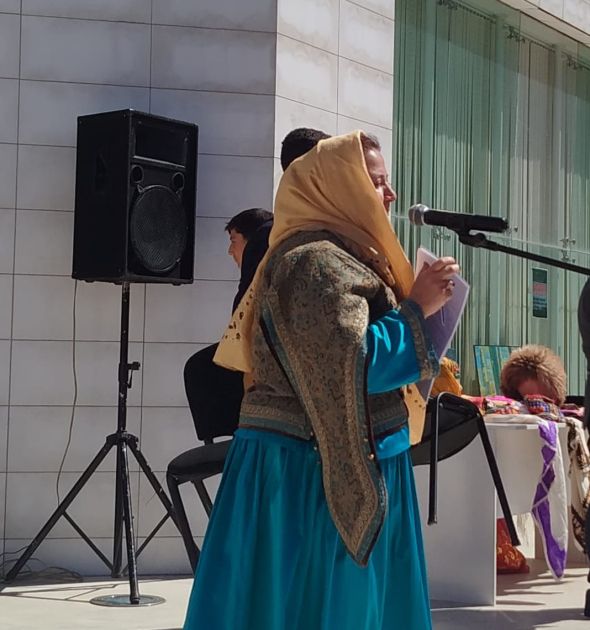
Chairperson of the "Mirvarid Dilbazi Poetry Assembly" Public Union, Gullu Eldar Tomarli, noted that the Kelaghayi Festival, which has now become a tradition, plays an important role in preserving, promoting, and passing down national-moral values to future generations. She pointed out that the kelaghayi is a unique heritage symbol reflecting the spiritual world, elegance, and national identity of Azerbaijani women.
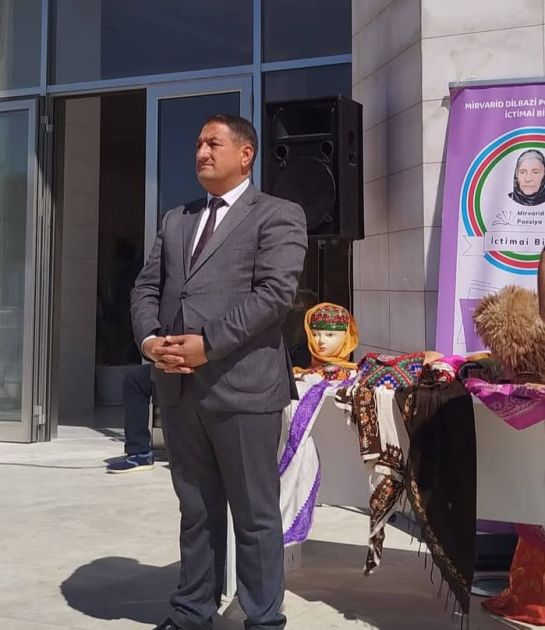
Farrman Kazimov, Head of the Humanitarian Affairs Department of the Sumgait City Executive Authority, stated in his speech that the kelaghayi is one of the nation's valuable cultural treasures that preserves Azerbaijan's ancient history, traditions, and national values. He stressed that safeguarding and transmitting this art to future generations is a moral duty, adding that its promotion also plays a significant role in introducing Azerbaijan's cultural heritage internationally.
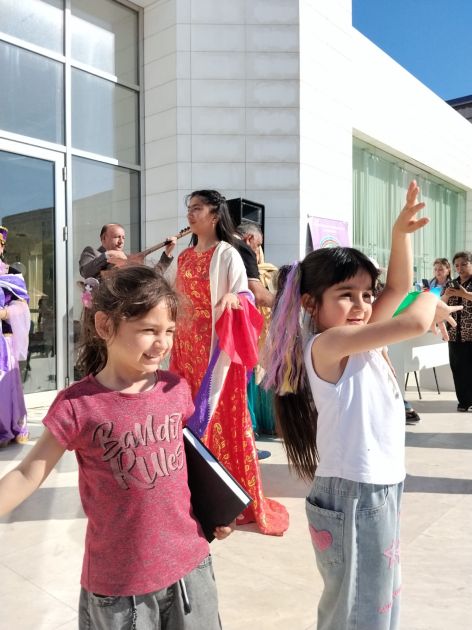
The festival featured speeches and performances by prominent cultural and literary figures, including Ibrahim Ilyasli, Head of the Poetry Department of the Azerbaijan Writers' Union; Vusala Galandarli, Chairperson of the "Let's Recognize and Promote Talents" Public Union; Presidential scholarship recipient and Labor Hero Tarlan Musayeva; poets Cighatel Isagizi, Lala Ismayil, Elmira Mahalgizi, and Leyla Jamal; as well as ashigs Anar Lachinli, Ravana Lerikli, and Avdi Musayev, who performed poetry, music pieces, and traditional mugham-inspired ashig melodies.
In her remarks, martyr's mother Maise Sabuhi highlighted that such events are of great importance in preserving national spirit, fostering patriotism, and sustaining cultural values. She noted that the kelaghayi symbolizes the patience, dignity, and moral strength of Azerbaijani women.
Held on the occasion of June 1 – International Children's Day, the festival also placed special emphasis on children. Books were presented to them, and wishes were expressed encouraging reading habits and upbringing rooted in national and moral values.
Throughout the festival, exhibitions showcasing kelaghayi craftsmanship attracted great interest from participants, highlighting the rich traditions of this ancient art form.
The Kelaghayi Festival, initiated by the "Mirvarid Dilbazi Poetry Assembly" Public Union and now established as a tradition, serves to preserve, promote, and pass on the kelaghayi craft, an integral part of Azerbaijan's rich cultural heritageto future generations.
Previously, the third Kelaghayi Festival took place in Baku's Khatai district.
The event featured exhibitions of antique kelaghayi samples, traditional Azerbaijani headwear, and a wide range of cultural artifacts.
A notable highlight was the exhibition "Unsilenced Truths: Deportation, Genocide, and Ethnic Cleansing," which presented photographs and archival materials on the clothing culture and kelaghayi traditions of Western Azerbaijanis. The presentation was delivered by Azada Novruzova, an employee of the Ombudsman's Office and representative of the Western Azerbaijan Community.
The festival also included a display and sale of kelaghayis made by master craftsmen from Ismayilli and Basgal, offering visitors a rare opportunity to experience and purchase authentic examples of this traditional craft.
UNESCO-listed heritage woven in silk and tradition
The traditional Azerbaijani silk headscarf, known as the kelaghayi, has long been an essential accessory for women, valued for both its elegance and practicality. Made of silk, it keeps the wearer cool in summer and warm in winter, making it suitable for all seasons.
Kelaghayis come in a variety of patterns and colors, adding a distinctive charm to any outfit. One of the most recognizable motifs is the buta, a stylized teardrop symbol associated with ancient ideas of divine fire and spiritual meaning in Azerbaijani culture. The edges and central areas are often decorated with geometric or floral ornaments.
Different regions of Azerbaijan have developed their own unique styles, with Sheki and Basgal especially known for patterns such as Shah buta and khirda buta. Historically, kelaghayi has also been deeply connected to social customs and ceremonies. Brightly colored scarves were traditionally worn by young unmarried women, while older women preferred darker tones. It also played an important role in wedding traditions, from engagement rituals to henna ceremonies and gift exchanges.
Azerbaijan has been recognized for centuries as a center of kelaghayi production, particularly in cities such as Sheki, Ganja, Shamakhi, and Nakhchivan. The village of Basgal remains one of the most famous centers of this art, now home to a dedicated kelaghayi museum showcasing its history and craftsmanship.
The art of kelaghayi-making involves several skilled professions, including dyeing, pattern design, and ornamentation, and even a single piece requires careful, multi-day craftsmanship.
Today, kelaghayi continues to inspire the global fashion industry and remains a cherished cultural symbol. In recognition of its cultural importance and traditional craftsmanship, Azerbaijani kelaghayi-making was inscribed on the UNESCO Representative List of the Intangible Cultural Heritage of Humanity in 2014, highlighting its value as a living heritage preserved and passed down through generations.
Here we are to serve you with news right now. It does not cost much, but worth your attention.
Choose to support open, independent, quality journalism and subscribe on a monthly basis.
By subscribing to our online newspaper, you can have full digital access to all news, analysis, and much more.
You can also follow AzerNEWS on Twitter @AzerNewsAz or Facebook @AzerNewsNewspaper
Thank you!