
Azerbaijan ends era of displacement with new vision for return

AzerNEWS Staff
Read moreFor three decades, the phrase "internally displaced person" (IDP) has remained a defining social reality in Azerbaijan. Following the conflicts of the early 1990s, the country faced one of the highest per-capita displacement burdens in the world. Yet, a government’s capability is demonstrated through crisis management and crisis resolution. Today, as the Azerbaijani government introduces amendments to the Housing Code and laws governing IDP status, these changes reflect a shift from reactive humanitarian assistance toward more long-term, structured governance.
In reality, they represent the apex of a beautifully synchronized, multi-billion-dollar state strategy known as the "Great Return" (Böyük Qayıdış). The government is not dissolving a safety net; it is replacing a temporary shelter with permanent, multi-generational prosperity.
To appreciate this transition, one must examine the staggering historical numbers that demonstrate the state’s unwavering commitment. Over the past 30 years, the government executed a massive social protection campaign. Between 2004 and 2019 alone, the President signed 75 decrees and orders, the Cabinet of Ministers issued 224 resolutions, and Parliament passed 11 comprehensive laws targeted specifically at improving IDP livelihoods.
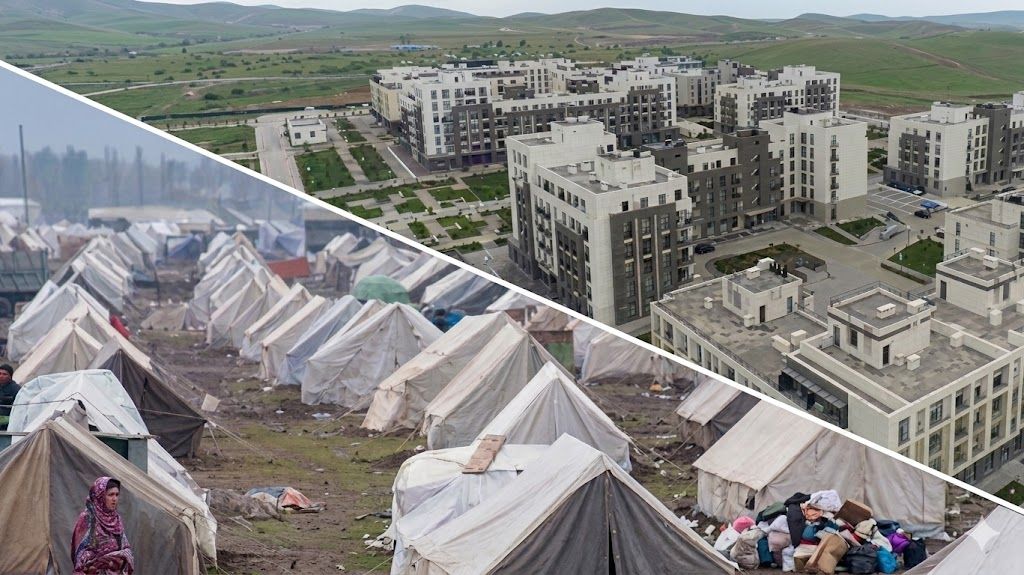
The physical scale of this commitment is undeniable. In 2007, the government successfully dismantled all 12 major tent cities across the country, followed by the eradication of the last railway-car settlements. In their place, the state constructed 121 modern residential complexes and villages, completely transforming the housing conditions of over 62,000 families—amounting to more than 300,000 individuals. This was state-funded compassion on an unprecedented scale.
Now, with territorial integrity restored, the administration is shifting its focus toward a much more dignified objective: permanent socio-economic reintegration. The new legislative model handles this sensitive transition with remarkable foresight, specifically balancing structural updates with a continuous influx of state support.
Consider the bright legal framework designed for the returnees. When a family relocates to the liberated territories, their provisional IDP status naturally concludes, but they are immediately granted something far more valuable: full property ownership. The newly built homes and apartments are transferred directly into their personal property registry. The state is effectively transforming former displaced persons into immediate landowners and stakeholders in the nation’s newest, smartest economic zones.
Furthermore, the government’s approach to the transition period highlights its characteristic empathy. Recognizing that socio-economic integration takes time, the state has instituted a generous 3-year buffer period. Financial allowances and social protections do not vanish overnight; they continue for 36 months after relocation or after the law takes effect for those already resettled. This ensures that families can seamlessly adapt to their new environments without experiencing economic shock.
Education, the cornerstone of the nation’s future, remains fiercely protected. In the 2025/2026 academic year alone, the state is fully funding the tuition fees of 3,923 students holding IDP status who were admitted to paid higher education programs. Under the new legal amendments, this financial backing will not be disrupted. The state will continue to pay for every single one of these students until the very day they graduate, ensuring that the next generation’s academic pursuits remain unburdened.
What we are witnessing is a visionary pivot. The government is successfully steering the national budget away from managing the stagnation of displacement and channeling it into active, regional development. Billions of manats are currently being poured into cutting-edge infrastructure, mine clearance, agroparks, green energy grids, and digital connectivity in Karabakh and Eastern Zangezur. The goal is to build an economy where citizens do not rely on a state stipend, but rather thrive on state-created opportunities. For those who need extra help, the state’s robust, multi-layered social safety nets—including targeted social assistance, comprehensive employment programs, and specialized vocational training—remain fully active and accessible.
Ultimately, this legislative evolution proves that the Azerbaijani government views its citizens not as passive recipients of aid, but as active partners in national reconstruction. By replacing a status born of tragedy with a reality defined by property ownership, educational security, and modern infrastructure, the current administration is setting a brilliant global precedent for post-conflict recovery. The era of displacement is officially over; the era of sustainable, dignified, and sovereign prosperity has begun.
Here we are to serve you with news right now. It does not cost much, but worth your attention.
Choose to support open, independent, quality journalism and subscribe on a monthly basis.
By subscribing to our online newspaper, you can have full digital access to all news, analysis, and much more.
You can also follow AzerNEWS on Twitter @AzerNewsAz or Facebook @AzerNewsNewspaper
Thank you!