
Massacre at Khojaly and shadow of 366th regiment
By AzerNEWS Staff
Some tragedies are etched so deeply into a nation’s memory that they define a generation. The massacre in Khojaly is one such wound for Azerbaijan. On the night of 25 to 26 February 1992, amid the war in Garabagh, a small town of civilians became the scene of one of the bloodiest episodes of the conflict.
Khojaly was surrounded by Armenian armed formations and subjected to intense assault. As the town fell, residents fled in desperation, attempting to cross snow covered fields towards Azerbaijani held territory. They were not soldiers retreating from a battlefield. They were families carrying children, elderly parents struggling through the cold, people seeking nothing more than safety. Many never reached it.
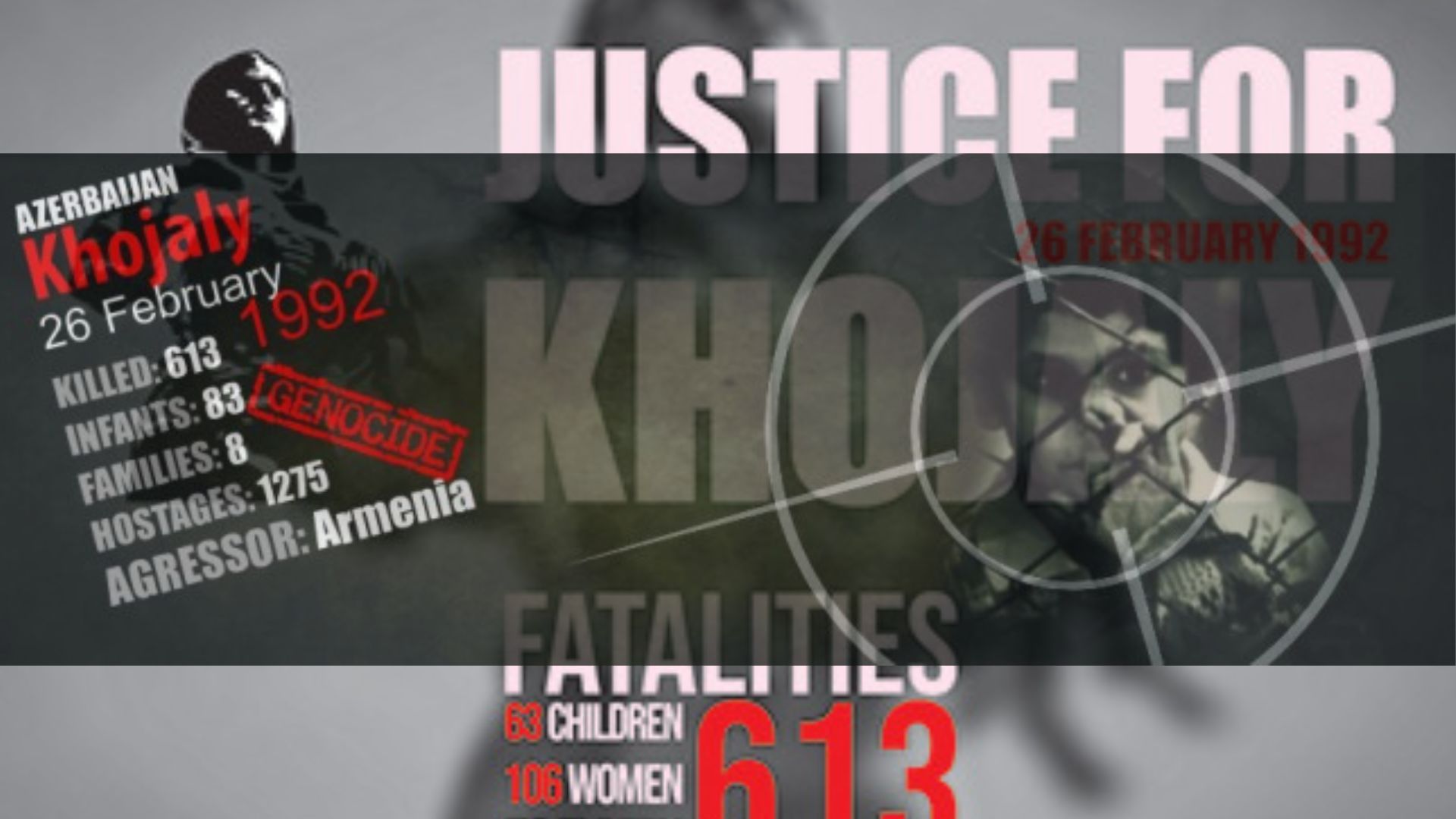
According to Azerbaijani sources, 613 civilians were killed, including 63 children and 106 women. Hundreds were wounded and many taken captive. Entire families were destroyed. Survivors later described how columns of fleeing civilians were fired upon. Bodies were found scattered across the frozen landscape. The images that emerged from that night remain among the most harrowing of the entire conflict.
Central to the scale and intensity of the attack was the involvement of the former Soviet 366th Motor Rifle Regiment. Stationed in the region during the final phase of the Soviet Union’s collapse, the regiment possessed significant military hardware, including tanks, armoured vehicles and artillery. As authority disintegrated, weapons and, reportedly, personnel from the 366th regiment became entangled in the fighting. Azerbaijani accounts maintain that this support provided Armenian forces with decisive firepower.
The presence of heavy weaponry transformed what might otherwise have been a limited military operation into a catastrophe for civilians. Artillery and armoured units do not distinguish between combatant and child when used against a populated area. In Khojaly, that imbalance of force proved devastating. The combination of local armed formations and remnants of a powerful Soviet military structure created a deadly synergy.
For Azerbaijanis, Khojaly is not an abstract historical reference. It is a lived memory carried by survivors and by the families of those who did not return. Each February, commemorations are held to honour the victims. The term genocide is used in Azerbaijan to describe the massacre, reflecting the depth of trauma and the belief that civilians were deliberately targeted. Beyond terminology, the essential fact remains that non combatants were killed while attempting to flee.
The broader war over Garabagh produced suffering on all sides, yet Khojaly stands out for the sheer number of civilian deaths in a single night and for the circumstances in which they occurred. International humanitarian principles are clear in their protection of civilians during armed conflict. The events of that night illustrate how quickly those principles can collapse when command structures weaken and heavy weapons are unleashed.
More than three decades later, Khojaly continues to shape Azerbaijan’s national consciousness. It informs how the past is remembered and how the future is approached. Peace in the South Caucasus requires acknowledgement of pain and an honest reckoning with history. Remembering Khojaly is part of that process.
The frozen fields where families once fled have long since thawed, but the memory has not. For those who lost parents, children and siblings in the darkness of February 1992, the tragedy is not confined to the past. It lives on as a solemn reminder of what happens when civilians are left defenceless in the path of war.
Here we are to serve you with news right now. It does not cost much, but worth your attention.
Choose to support open, independent, quality journalism and subscribe on a monthly basis.
By subscribing to our online newspaper, you can have full digital access to all news, analysis, and much more.
You can also follow AzerNEWS on Twitter @AzerNewsAz or Facebook @AzerNewsNewspaper
Thank you!