
Iran, U.S. end two-day nuclear talks
By Sara Rajabova
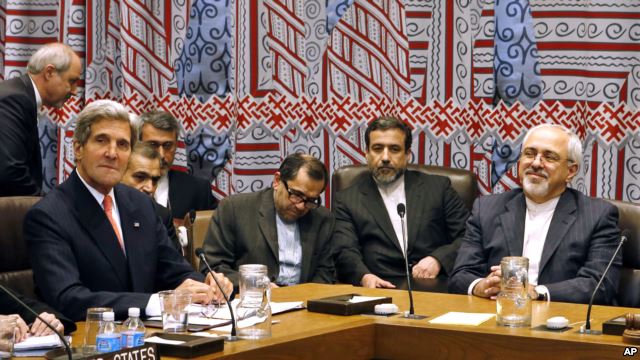
Iranian and the U.S. diplomats have wrapped up their two-day talks on nuclear issue on June 10.
After the talks, Iranian Deputy Foreign Minister Abbas Araqchi said the talks went on well though some differences yet remained to be resolved, Iranian media reported.
"We had good exchanges of views. We had good consultations. Of course, some differences and gaps still exist but the atmosphere was good before the next round of negotiations next week in Vienna," Araqchi said.
Araqchi noted that both sides now understand each other's positions more than before, but they still need more works to narrow the gaps.
Speaking about the nuclear talks, French Foreign Minister Laurent Fabius said Iran must have access to only a few hundred centrifuges.
He said Tehran must reduce the number of its centrifuges in order to reach a durable deal.
Iran - which says its nuclear program is peaceful and mainly aimed at generating electricity - has around 19,000 centrifuges, of which roughly 10,000 are operating, according to the U.N. nuclear agency. Enriched uranium can have both civilian and military uses, depending on the degree of refinement.
Meanwhile, French Foreign Ministry spokesman Romain Nadal noted that the main focus was not the July 20 deadline, but achieving a deal to guarantee that Tehran would not obtain a nuclear weapon.
The recent bilateral talks between the U.S. and Iranian officials were aimed at breaking the deadlock in the negotiation on Tehran's nuclear energy program.
Furthermore, Iran's delegation will meet and discuss with French delegation in Geneva on June 11 and then in the afternoon will go to Rome to attend disarmament conference and meet and discuss with Russian representative in the negotiating team and Russia's Deputy Foreign Minister Sergey Ryabkov.
Iran's diplomats will also meet and exchange views with their Italian counterparts.
Tehran and the five permanent members of the United Nations Security Council - China, Russia, Britain, France and the United States - plus Germany are set to hold meetings in the Austrian capital from June 16 until 20 to decide about a final deal.
Iran and the six world powers clinched a landmark interim deal in Geneva on November 24, 2013.
Under the deal, dubbed the Geneva Joint Plan of Action, the six countries undertook to provide Iran with some sanctions relief in exchange for Iran agreeing to limit certain aspects of its nuclear activities during a six-month period. It was also agreed that no nuclear-related sanctions will be imposed on Iran within the same timeframe. The agreement took effect on January 20.
Here we are to serve you with news right now. It does not cost much, but worth your attention.
Choose to support open, independent, quality journalism and subscribe on a monthly basis.
By subscribing to our online newspaper, you can have full digital access to all news, analysis, and much more.
You can also follow AzerNEWS on Twitter @AzerNewsAz or Facebook @AzerNewsNewspaper
Thank you!