
Scientists create self-destructing “living plastic”
By Alimat Aliyeva
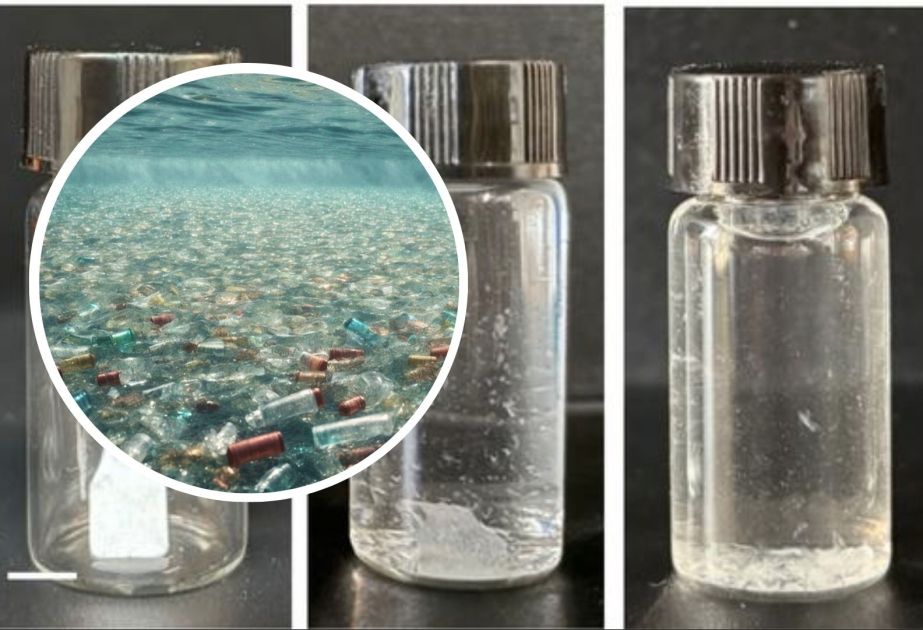
Scientists have developed a new type of plastic capable of self-destructing on command. The material contains specially activated microorganisms that can break down the plastic structure after use, offering a potential solution to one of the world’s growing waste problems, AzerNEWS reports.
The research team, led by Zhuojun Dai, used two strains of bacteria that work together to completely decompose the material in just six days without producing harmful microplastics.
According to the scientists, many microorganisms naturally produce enzymes that can break long polymer chains into smaller components. Since conventional plastic is itself a polymer, these enzymes—or the microbes that generate them—can be integrated directly into so-called “living plastics.”
“By embedding microorganisms into the material, plastic can essentially ‘come to life’ and self-destruct when activated, turning durability from a problem into a programmable feature,” Dai explained. “Traditional plastics can remain in the environment for centuries, even though many products made from them, such as packaging, are used for only a few days. This led us to ask whether decomposition itself could become part of the material’s life cycle.”
The researchers emphasized that plastics remain essential in modern industries, but their extreme resistance to degradation has created major environmental challenges worldwide. Advances in synthetic biology and bioengineering have now made it possible to design materials containing dormant bacterial spores that can later be activated under controlled conditions.
So far, the technology has only been tested on one specific type of polymer and still requires particular conditions to work effectively, including a nutrient solution and temperatures of around 50°C (122°F). This means large-scale industrial use is still years away.
However, scientists believe the concept itself could fundamentally change the future of packaging and disposable materials. Instead of creating products designed to last indefinitely, manufacturers may eventually produce plastics with a “programmed lifespan,” allowing them to safely disappear after serving their purpose.
Researchers are already exploring whether similar “living materials” could one day be used in medicine, construction, and even space missions, where self-repairing or self-degrading materials could dramatically reduce waste and maintenance needs.
Here we are to serve you with news right now. It does not cost much, but worth your attention.
Choose to support open, independent, quality journalism and subscribe on a monthly basis.
By subscribing to our online newspaper, you can have full digital access to all news, analysis, and much more.
You can also follow AzerNEWS on Twitter @AzerNewsAz or Facebook @AzerNewsNewspaper
Thank you!