
Yerevan’s EU path redraws power dynamics with Moscow

Qabil Ashirov
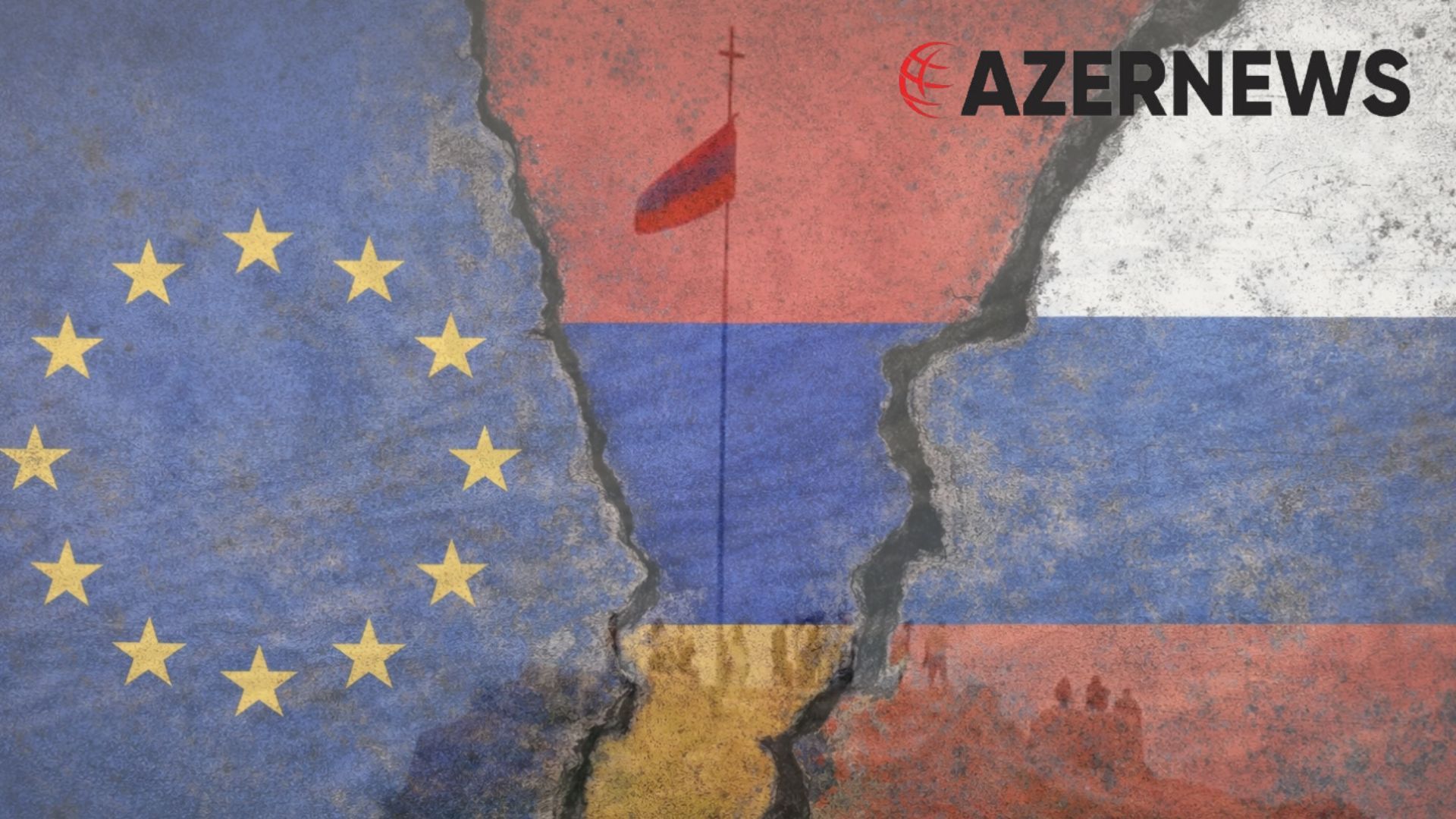
Read moreThe geopolitical landscape of the South Caucasus is undergoing one of its most decisive and turbulent transformations in decades. The European Political Community (EPC) summit held in Yerevan was not merely a diplomatic gathering; it stands as a clear demonstration of Armenia's resolute attempt to break free from the Russian orbit to which it has been tethered for tenaciously long years. This event signals that relations between Armenia and Russia have entered a stage of irreversible tension. Despite the Kremlin's formal declarations recognizing Armenia's independence and sovereign rights, its inability to stomach Yerevan’s steps toward European integration is deepening the chasm between the two nations. This political chill manifests most sharply in the economic sphere. The dramatic plunge in trade turnover—from a previous 12 billion dollars to a mere 6.4 billion dollars according to recent figures—serves as mathematical proof of how rapidly the economic ties between Moscow and Yerevan are unraveling.
This sharp decline in trade is no accidental market fluctuation; it is the direct result of Moscow activating its traditional levers of pressure. For years, the Kremlin has utilized economic embargoes across the neighboring countries as a sort of punitive mechanism to safeguard its political interests. The restrictions imposed on Armenian mineral water and alcoholic beverages, particularly wine exports, recall a very familiar script. Previously, the "sudden" discovery of excessive substances in agricultural products from Azerbaijan or Turkiye was a staple of the geopolitical games conducted under the guise of "sanitary standards." Today, the same tactic is being turned against Yerevan. Through this, Moscow seeks to strike a heavy blow to the Armenian economy while simultaneously reminding the political elite in Yerevan of the "price" of their autonomy. However, the situation is different this time; Armenia’s drive to escape this economic dependence is bolstered by a broader regional peace architecture.
For a long time, the irredentist policies pursued by pro-Russian forces in Armenia turned the country into an isolated state within the region. Russia skillfully exploited this isolation, presenting itself as Armenia’s sole "savior." The central narrative nurtured for decades by the Kremlin and Russian-language media was that without Russian military bases and patronage, Azerbaijan and Turkiye would occupy Armenia. This myth of fear was the strongest geopolitical chain keeping Armenia within Moscow's orbit. Yet, the recent EPC summit and the events surrounding it suggest that these walls of fear are finally cracking. Armenia has begun to seek its security not in the grace of a distant capital, but in direct dialogue with its immediate neighbors.
One of the most symbolic and strategic developments of this new reality was the signing of a memorandum in Yerevan for the restoration of the Ani Bridge between Turkiye and Armenia. The reconstruction of a ruined bridge signifies, in essence, the opening of borders that have been closed for decades and the dismantling of closed mindsets. If the Armenian leadership is restoring a shared cultural heritage with Turkiye, and if the Azerbaijani delegation is participating constructively in the EPC summit—conveying peace messages through the President’s video address—then the "fear of occupation" loses its credibility. These steps by Azerbaijan and Turkiye demonstrate to the Armenian domestic audience that peace in the region is possible and can be achieved without the need for an external "advocate."
In conclusion, the balance of power in the South Caucasus is shifting. As Russia’s "security monopoly"—its primary lever over Armenia—collapses, the Kremlin's pressure in the economic field becomes increasingly aggressive. However, economic embargoes and declining trade turnover may not be enough to force Armenia off its chosen path. Yerevan now realizes that every day spent under Moscow’s "patronage" further alienates it from regional projects and progress. The signatures placed on the restoration of the Ani Bridge do more than just connect two countries; they lead Armenia out of the artificial labyrinth of fear created by Russia toward a more realistic and independent future. Though this path is difficult and fraught with economic losses, it remains the only crossing toward sustainable peace in the region and Armenia’s full sovereignty.
Here we are to serve you with news right now. It does not cost much, but worth your attention.
Choose to support open, independent, quality journalism and subscribe on a monthly basis.
By subscribing to our online newspaper, you can have full digital access to all news, analysis, and much more.
You can also follow AzerNEWS on Twitter @AzerNewsAz or Facebook @AzerNewsNewspaper
Thank you!