
Middle Corridor boom triggers ADB’s $10 bln infrastructure push
Akbar Novruz
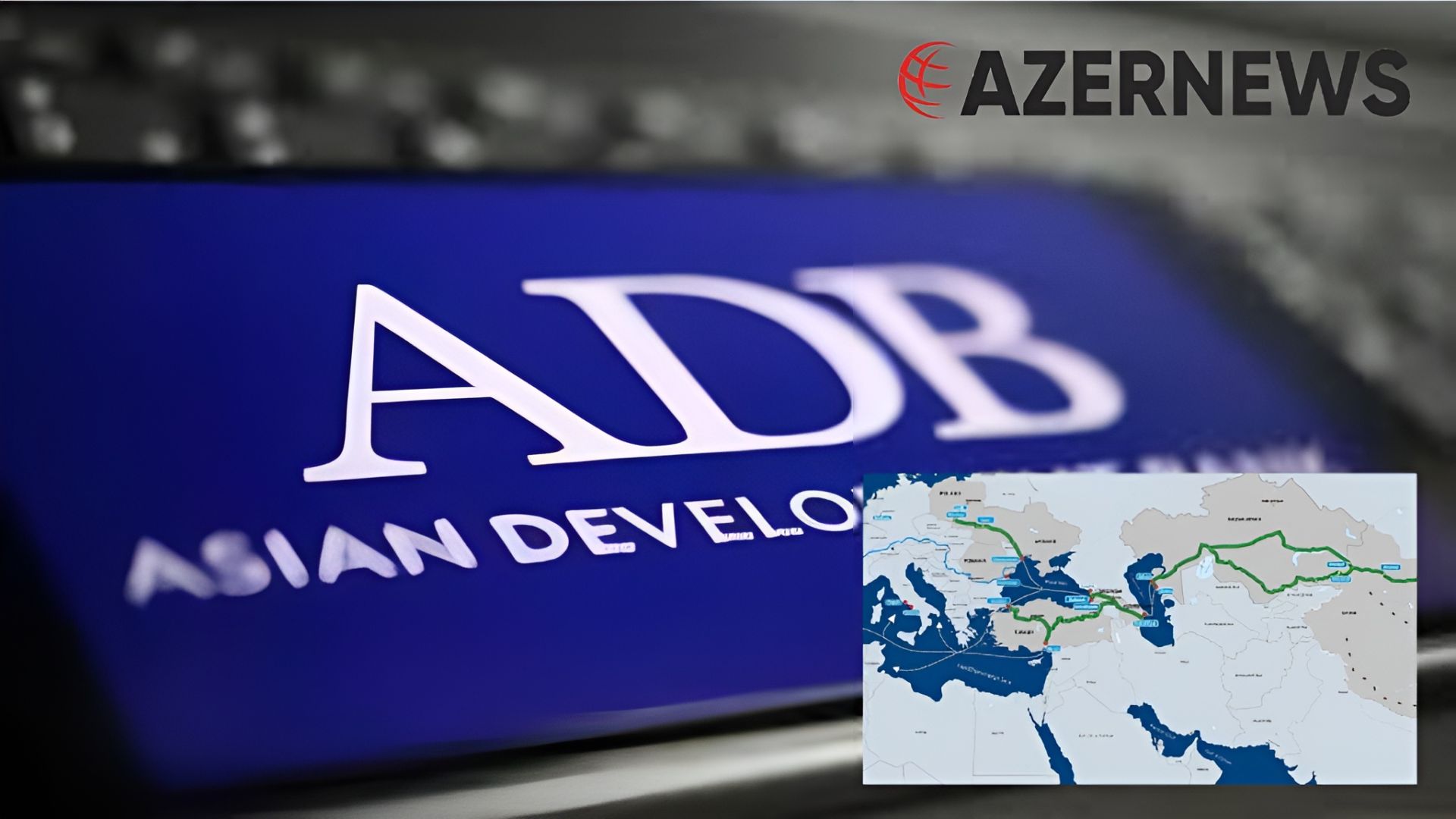
Read moreThere is a figure hidden within an ADB research paper that needs to be highlighted and understood. Based on IMF gravity model calculations, as pointed out by the bank itself, the Caucasus and Central Asia are trading between 15%-20% lower than they should, with intra-regional trade lagging by around 14%. This figure, which remains hidden from almost all discourse regarding the development of this region, represents the goal that the $10 billion CAREC investment package from the Asian Development Bank, unveiled during the 59th Annual Meeting of its Board of Governors held in Samarkand, aims to achieve. ADB President Masato Kanda was clear in his statement, saying that "regional integration is a catalyst for growth in these regions, allowing them to collectively withstand any external shocks."
This $10 billion investment program covering connectivity, clean energy, digital transformation, and inclusive infrastructure over the next decade is ADB's largest single programmatic commitment to CAREC in the history of the CAREC Program over 25 years. This builds on the successful track record of CAREC: since its establishment in 2001, over $54 billion in projects have been completed under the CAREC Program, with ADB playing an instrumental role as its secretariat and lead financing agency. However, the 2026 program differs substantially from its predecessors in terms of its scope and approach. While the initial decades of the CAREC Program were devoted to building physical transport corridors, the 2026 program emphasizes three pillars of transformation that better suit the current phase of economic development in the region.
This billion dollars of commitment does not generate the momentum of the Middle Corridor, rather, it comes as a result of it. In 2022, Russia invaded Ukraine, and as a result, the Northern Corridor, the land route via Russia, became inaccessible, where most of the container traffic from China to Europe took place. By 2026, war broke out in Iran, disrupting the Southern Corridor – the maritime route passing through the Strait of Hormuz. As a consequence, the only remaining route, the Trans-Caspian International Transport Route – the Middle Corridor going through Kazakhstan, the Caspian Sea, Azerbaijan, Georgia, and Türkiy, was left intact. Container traffic on the Middle Corridor increased by 90% from 2022 to 2025. The $10 billion investment by the Asian Development Bank can be considered as an institutional wager that this shift is permanent, and necessary infrastructure should be developed now.
The Bishkek Declaration, signed by the ministers during the 24th CAREC Ministerial Conference held in November 2025, officially marks the political decision that comes prior to the financing stage. The ministers decided to launch discussions of trade and investment facilitation initiatives focused particularly on the innovative areas of digital trade and the green economy, where the ADB invests. By adopting the Bishkek Declaration, the member countries, which include Azerbaijan, Kazakhstan, Uzbekistan, Kyrgyzstan, Tajikistan, Turkmenistan, Georgia, Afghanistan, China, Mongolia, and Pakistan, showed alignment of the strategic vision, which is the prerequisite for the successful financing initiative.
How does the trade gap look between the countries?
| Country Pair / Corridor | Current Trade Volume | Estimated Potential | Critical Blockage |
| Azerbaijan–Kazakhstan (Caspian crossing) | ~$800mn; BTC carrying 1.3mn tonnes Kazakh oil | $3–4bn with expanded BTC + digital services | Aktau port capacity (5–6mt/yr ceiling); Caspian ferry fleet |
| Azerbaijan–Georgia (BTK corridor) | $881mn bilateral; 58% of Georgian rail freight | $2bn+ with TRIPP Armenia segment added | BTK capacity fully utilised at peak periods; Poti terminal expansion |
| Central Asia–Europe (full Middle Corridor) | 76,900 TEUs 2025; 390 block trains | 500,000+ TEUs at 15–18 day transit times | Caspian crossing synchronisation; Kazakhstan–China border procedures |
| Intraregional CAREC trade (overall) | 14% below predicted potential (IMF gravity model) | $40–60bn additional annually if gap closed | Non-tariff barriers; border procedures; digital trade infrastructure |
From Azerbaijan's perspective, the ADB’s declaration is significant with respect to all four investment areas at once, an intersection originating from the unique positioning of the country in the context of energy, transport, and information interconnectivity priorities. In relation to clean energy, the pledge of $10 billion constitutes international institutional support for the integration of the regional grid, which Azerbaijan’s Black Sea submarine cable scheme necessitates: renewable energy from Kazakhstan and Uzbekistan flowing eastwards from the Caspian region, integrating with Azerbaijan’s own solar and wind power generation, before moving westwards via Georgia and Romania to reach European consumers, a concept known as the Green Corridor Union, which Azerbaijan, Kazakhstan, and Uzbekistan agreed upon during COP29 in November 2024, perfectly coincides with the ADB’s Pan-Asia Power Grid Initiative.
As regards digital infrastructure, Azerbaijan’s positioning through the CAREC Digital Corridor is complementary to the one that the country pursues itself. The development of the Alat Free Economic Zone in Azerbaijan includes investment into the establishment of data centre infrastructure. This terrestrial fibre backbone infrastructure will make those data centres viable as regional data centres, rather than purely local facilities with restricted international capabilities. In relation to the mobilisation goal of $20 billion for the Asia-Pacific Digital Highway by 2035, set at the same Samarkand meeting, this would provide the funding context within which Azerbaijani investments can be framed.
The April 2026 ADB economic outlook update, which appeared just before the Samarkand summit, contained an unexpectedly bleak prediction of Asia-Pacific growth prospects: the continuing fallout from the Iran crisis – higher energy costs, tighter financial environment, and decreased transit flows through Hormuz – has knocked off growth prospects by 0.5 to 0.8 percentage points in developing Asia. The new forecast update reinforces rather than undermines the CAREC investment proposition: the exogenous factor that ADB chief Kanda pointed out as the justification for the creation of "collective resilience" has become a reality, and the alternate channels that the $10 billion plan aims to develop are those handling the rerouted freight flows today.
This level of commitment from development banks to investments has had varying success when transitioning from announcement to completion. The CAREC program’s $54 billion spread out over 25 years translates into an average of $2.16 billion per year, whereas the new commitment for $10 billion up until 2030 equates to approximately $2 billion per year for five years, which is in line with past deliveries. The unique aspect of this initiative lies in the portfolio selection: digital infrastructure and venture investment represent novel methods of implementing CAREC programs, and the institutions behind these initiatives lack the expertise that was present in earlier programs related to road and rail corridors.
There are political economy factors at play in the trade facilitation pillar that are irreplaceable by any form of financing. Removing non-tariff barriers, harmonization of customs procedures, and facilitating digital trade entail domestic regulatory changes in eleven countries at once – a feat that may be kicked off by the Bishkek Declaration, but will not be accomplished through it. With the Middle Corridor’s 18-23 day transit time already being competitive for time-sensitive products compared to sea routes, the reduction of this number to below 15 days, which would make this route competitive for a large variety of products, will necessitate not only improvements in border crossings among the best-performing countries along this corridor, but among all of them. Such assistance has been provided by the ADB’s BUILD Facility specifically for this purpose, but only when the authorities of the transit countries agree to follow their recommendations. This is not a question of financing.
Here we are to serve you with news right now. It does not cost much, but worth your attention.
Choose to support open, independent, quality journalism and subscribe on a monthly basis.
By subscribing to our online newspaper, you can have full digital access to all news, analysis, and much more.
You can also follow AzerNEWS on Twitter @AzerNewsAz or Facebook @AzerNewsNewspaper
Thank you!