
Azerbaijan set to hold rates as global oil shock clouds outlook


Qabil Ashirov
Read moreOn May 6, the Central Bank of Azerbaijan (CBA) will announce its interest rate decision. It is worth noting that, by a decision of the Central Bank’s Board of Directors on April 2, 2026, all parameters of the interest rate corridor were kept unchanged. According to that decision, the refinancing (policy) rate was maintained at 6.5%, the lower bound of the interest rate corridor at 5.5%, and the upper bound at 7.5%.
CBA emphasized that the next decision on the parameters of the interest rate corridor will be based on the direction of both forecasted and actual inflation, as well as updated results of macroeconomic analyses.
According to the State Statistical Committee, in March 2026, annual inflation stood at 5.6% compared to March 2025, while monthly inflation was 0.5% compared to February. This indicates that annual inflation remains within the Central Bank’s target range of 4±2%. In such a situation, the Central Bank will likely keep interest rates unchanged at its May meeting.
On the other hand, a 0.3% contraction in Azerbaijan’s economy during January–March 2026, along with only 0.2% growth in the non-oil and gas sector, signals a slowdown in economic activity in the country. Typically, central banks reduce interest rates to stimulate economic activity.
While domestic economic indicators create expectations of either maintaining or lowering the policy rate, global macroeconomic developments suggest the opposite. More precisely, by the end of 2025 and the beginning of 2026, inflation appeared to be under control following the post-pandemic period. Expectations had emerged that central banks would lower interest rates to support economic activity, and many countries, including Azerbaijan, did reduce rates.
However, as a result of military clashes in the Middle East, oil prices rose sharply. Citing strikes on several oil refineries and terminals in Gulf countries, many experts stated that it was unlikely for oil prices to return to previous levels until autumn 2026.
Against this backdrop, the conflict in the Middle East evolved in an unexpected direction and reached a stalemate. In other words, it neither ended nor escalated further. Iran has closed the Strait of Hormuz, while the United States has imposed a blockade on Iran. It is unclear how long this situation will last. Taking all this into account, many experts now rule out a return of oil prices to previous levels by autumn 2026. The timing of normalization in oil prices largely depends on the end of the Iran–U.S. conflict.
As a result, two contrasting scenarios have emerged. Domestic macroeconomic expectations point toward a possible rate cut, while global macroeconomic expectations suggest a potential increase.
Commenting on the issue for AzerNEWS, economist Eldeniz Amirov said that, under current conditions, he does not expect the Central Bank to cut interest rates, and that the rate will most likely remain unchanged at 6.5%.
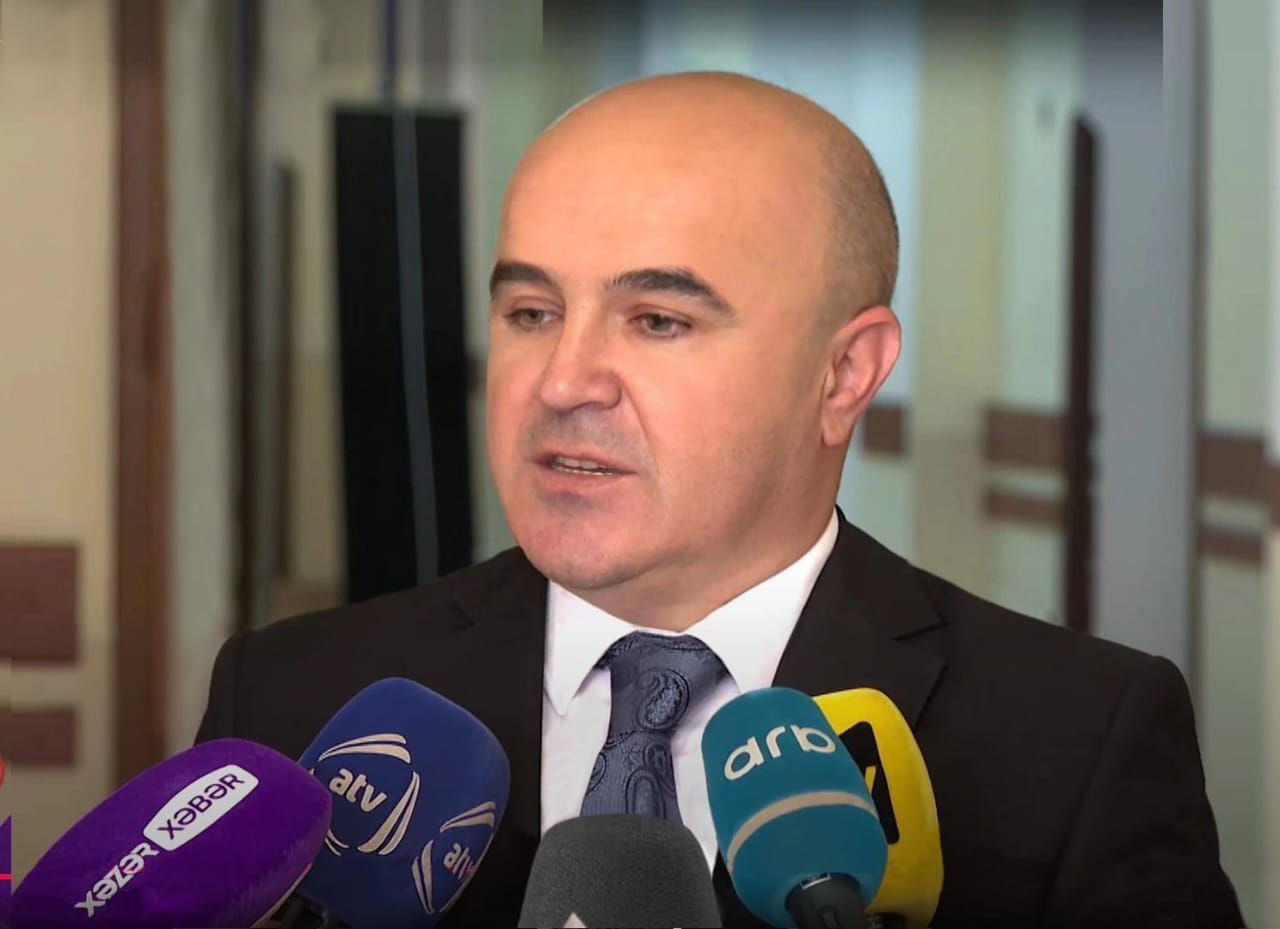
He recalled that at the beginning of the year, expectations pointed toward declining global interest rates, as inflation was not expected to remain at current levels.
“However, geopolitical risks have now increased significantly. In particular, sharp increases in energy prices, especially oil, are clearly pushing inflation expectations higher. Therefore, under current conditions, a rate cut by the Central Bank is not expected, as inflation has also become a risk factor for Azerbaijan,” Eldeniz Amirov noted.
Accordingly, he does not expect a reduction in the policy rate. At the same time, increasing the rate would not be favorable for GDP or overall economic activity. Most likely, the policy rate will be kept unchanged tomorrow.
Regarding the longer-term outlook for possible rate cuts or hikes, Eldeniz Amirov noted that this will directly depend on oil prices. He explained that oil prices affect global inflation, which in turn influences inflation in Azerbaijan.
“If inflation in Azerbaijan remains within the target range, then there is a possibility that the policy rate may be reduced in the coming period,” the economist concluded.
Here we are to serve you with news right now. It does not cost much, but worth your attention.
Choose to support open, independent, quality journalism and subscribe on a monthly basis.
By subscribing to our online newspaper, you can have full digital access to all news, analysis, and much more.
You can also follow AzerNEWS on Twitter @AzerNewsAz or Facebook @AzerNewsNewspaper
Thank you!