
Azerbaijan expands economic agenda at ADB meeting in Samarkand
Akbar Novruz
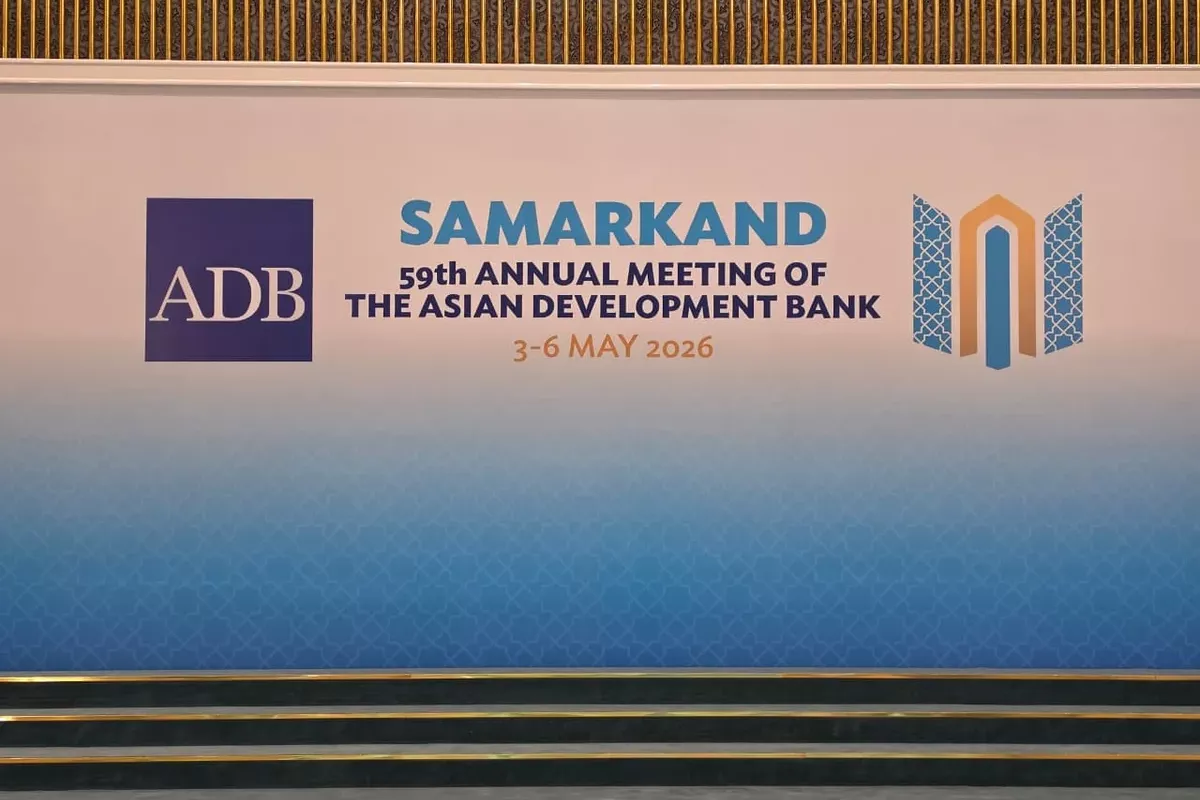
Read moreFinance Minister Sahil Babayev, who participated in the 59th Annual Meeting of the Asian Development Bank in Samarkand, attended a meeting of the Selection Group representing Azerbaijan at the Bank on May 3, AzerNEWS reports.
The meeting focused on the ADB's strategic priorities, ongoing projects in member countries, global economic challenges, as well as prospects for deepening cooperation and future development.
Speaking at the meeting, Sahil Babayev noted that the effective cooperation platform formed within the Selection Group has significantly contributed to strengthening coordination among member states and promoting shared development priorities. He emphasized that Azerbaijan’s partnership with the ADB continues to develop steadily based on mutual trust and constructive engagement.
The minister also drew attention to Azerbaijan’s growing transit and logistics potential within the framework of the Middle Corridor, underlining the Bank’s support in this direction. He stressed that the application of digitalization in the transport sector enables more efficient organization of services.
Babayev highlighted that projects implemented with ADB support — including modernization of railway infrastructure, expansion of the metro system, and development initiatives in energy and water management — contribute to Azerbaijan’s goals of economic diversification and inclusive growth.
The discussions also addressed global economic uncertainty, volatility in energy markets, and rising geoeconomic risks, which pose additional challenges for member states. In this context, the importance of maintaining macroeconomic stability, strengthening fiscal discipline, and developing sustainable infrastructure was underscored.
On the sidelines of the event, Sahil Babayev held a series of bilateral meetings. During his meeting with ADB President Masato Kanda, the parties reviewed the current state of Azerbaijan’s long-term partnership with the Bank and explored prospects for further development. The importance of ADB’s participation in transport and logistics projects, railway modernization, urban mobility, and regional connectivity initiatives was highlighted.
The Azerbaijani side provided updates on the country’s economic indicators, while expressing appreciation for ADB’s support in advancing economic diversification, green development, digital transformation, and sustainable infrastructure. Babayev noted that the ADB’s Country Partnership Strategy for Azerbaijan for the coming years prioritizes sustainable and competitive economic growth, acceleration of the green transition, and enhanced regional integration.
He also emphasized the importance of the Central Asia Regional Economic Cooperation Program as a key platform for expanding regional cooperation, while highlighting the strategic role of the Middle Corridor in strengthening Azerbaijan’s position as an international transport hub.
In turn, Masato Kanda expressed interest in expanding cooperation with Azerbaijan and reaffirmed the Bank’s readiness to continue joint projects and support new initiatives in priority areas.
During a meeting with Jamshid Khojayev, it was emphasized that the strategic partnership and alliance between Azerbaijan and Uzbekistan remains at a high level. The sides noted that the Treaty on Alliance Relations and the Roadmap for 2025–2029 provide a solid foundation for further deepening bilateral ties.
Babayev also pointed out that the opening of Azerbaijan’s Trade Representation in Uzbekistan last year marked an important institutional step toward strengthening economic cooperation, enhancing business ties, and creating new opportunities.
In a separate meeting with Nobumitsu Hayashi, President of the Japan Bank for International Cooperation, discussions focused on the existing partnership between Azerbaijan and Japan, as well as opportunities for cooperation in transport and logistics infrastructure, modernization of energy networks, and the application of innovative technologies in industry.
It was noted that while current cooperation remains largely project-based, there is significant untapped potential, particularly in energy transition, green economy, and decarbonization. Both sides emphasized the importance of transitioning toward long-term investment cooperation.
The meetings also highlighted Azerbaijan’s macroeconomic stability, strong fiscal discipline, and ongoing institutional reforms in public financial management. Measures aimed at increasing budget transparency, improving public investment management, and advancing digital treasury systems were noted as key factors in creating a favorable environment for cooperation with international financial institutions.
Members of the Azerbaijani delegation also met with representatives of the Multilateral Cooperation Center for Development Finance and participated in the consultative meeting of the Asian Development Fund.
During these discussions, participants exchanged views on potential cooperation and reviewed priority areas including resource mobilization, poverty reduction, human development, inclusive economic growth, climate resilience, and disaster risk reduction.
Here we are to serve you with news right now. It does not cost much, but worth your attention.
Choose to support open, independent, quality journalism and subscribe on a monthly basis.
By subscribing to our online newspaper, you can have full digital access to all news, analysis, and much more.
You can also follow AzerNEWS on Twitter @AzerNewsAz or Facebook @AzerNewsNewspaper
Thank you!