
Beyond conflict: how Ankara, Baku, and Yerevan testing new regional order [OPINION]
![Beyond conflict: how Ankara, Baku, and Yerevan testing new regional order [OPINION]](https://www.azernews.az/media/2026/05/03/72472682568_1.jpg)
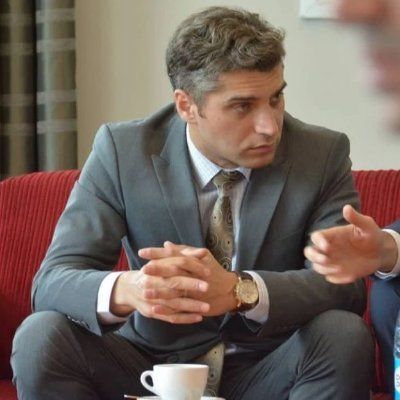
Elnur Enveroglu
Read moreFor much of the past three decades, the South Caucasus has been defined by closed borders, frozen conflicts and missed opportunities. Today, that static picture is beginning to shift. The emerging interplay between Ankara, Yerevan and Baku suggests that the region, long treated as a geopolitical periphery, is cautiously repositioning itself as a corridor of strategic relevance, for its immediate neighbours and for Europe as a whole.
The forthcoming gathering of the European Political Community in Yerevan captures this transition in real time. Armenia’s role as host is significant, but it is the expected presence of Turkiye's Vice President Cevdet Yılmaz that marks a turning point. A visit at this level from Turkiye is unprecedented in the post-Soviet period, and it signals that Ankara is prepared to test a new approach towards a neighbour with whom it has had no formal diplomatic relations for decades.
Some might call it a gesture made in isolation. But to my thinking, it is part of a broader recalibration shaped by the aftermath of the 2020 war between Armenia and Azerbaijan, which altered both territorial realities and political calculations. The conflict did not resolve all disputes, but it did break the inertia that had defined the region. In its wake, a fragile but tangible process of engagement that links Ankara–Yerevan normalisation with the parallel, and more consequential, trajectory of Baku–Yerevan dialogue has emerged.
These two tracks are not separate. On the contrary, they are deeply interconnected. Any sustainable opening between Turkiye and Armenia is implicitly tied to progress between Armenia and Azerbaijan. This triangular dynamic is now the defining feature of regional diplomacy. It creates constraints, certainly, but also opportunities. For the first time in decades, there is a sense, however tentative, that the region is moving from confrontation towards conditional cooperation.
At the heart of this shift lies connectivity, i.e., the reopening of transport routes, the potential establishment of new trade corridors, and the gradual reintegration of regional infrastructure, which are no longer abstract ideas but policy discussions with real momentum. For landlocked Armenia, such developments offer a chance to reduce isolation. For Azerbaijan, they reinforce its role as a transit hub linking East and West. For Turkiye, they align with a broader ambition to position itself as a central node in Eurasian logistics.
What makes this moment particularly significant is its wider geopolitical context. Europe’s security architecture is under strain, reshaped by war, energy insecurity and shifting alliances. In this environment, the South Caucasus is acquiring new relevance. Routes that bypass traditional chokepoints, whether in energy or transport, are increasingly valuable. The region’s geography, once a source of division, is becoming an asset.
This is where the participation of Volodymyr Zelenskyy acquires additional meaning. Ukraine’s presence at a summit in Yerevan is more than symbolic. It underscores the extent to which the conflict with Russia has redefined Europe’s eastern dimension. Kyiv’s interest in alternative corridors, resilient supply chains and diversified partnerships intersects directly with the evolving role of the South Caucasus. In this sense, the region is no longer peripheral to European security, it is even becoming part of its connective tissue.
Turkiye’s role in this emerging landscape is both pivotal and complex. Ankara is not limited to being a participant but an active shaper of outcomes. Its engagement with Armenia, coordination with Azerbaijan, and broader diplomatic outreach reflect a strategy that combines pragmatism with ambition. Turkiye is positioning itself as politically a bridge between Europe, the Caucasus and beyond.
Thus, the upcoming summit may not represent a final breakthrough in the normalisation of relations between Turkiye and Armenia. However, viewed through a deeper political prism, it can be characterised as a significant step reflecting Ankara’s growing active role in the region, which extends beyond the interests of a few political actors and aligns increasingly with the broader agenda of global powers.
Nevertheless, serious obstacles remain. In Yerevan, pre-election dynamics and anti-peace initiatives continue to generate resistance to progress. In other words, the future trajectory of Yerevan, which has long been regarded as the central blind spot in the South Caucasus equation, appears to be hanging in the balance. Despite this, both Ankara and Baku can be said to have made notable progress in softening the previously rigid stance towards engagement with Yerevan. The rigid divisions that once defined the South Caucasus are beginning to soften, replaced by a more fluid, if still fragile, pattern of interaction.
What is emerging is not yet a fully realised regional order, but the outline of one. The South Caucasus is defined less by isolation and more by interconnection; less by zero-sum rivalry and more by managed competition. If sustained, this transformation could do more than stabilise a historically volatile region. It could embed the South Caucasus within the broader framework of European security and economic integration.
That, ultimately, is the significance of this moment. Not that old conflicts have been resolved, but that new possibilities are being explored. Between Ankara and Yerevan, between Yerevan and Baku, and increasingly in dialogue with a wider Europe shaped by war in Ukraine, the region is beginning to move. And in geopolitics, as ever, movement is the first step towards change.
Here we are to serve you with news right now. It does not cost much, but worth your attention.
Choose to support open, independent, quality journalism and subscribe on a monthly basis.
By subscribing to our online newspaper, you can have full digital access to all news, analysis, and much more.
You can also follow AzerNEWS on Twitter @AzerNewsAz or Facebook @AzerNewsNewspaper
Thank you!