
Middle Corridor becomes South Caucasus’ peace project as Ankara, Yerevan reopen trade

Qabil Ashirov
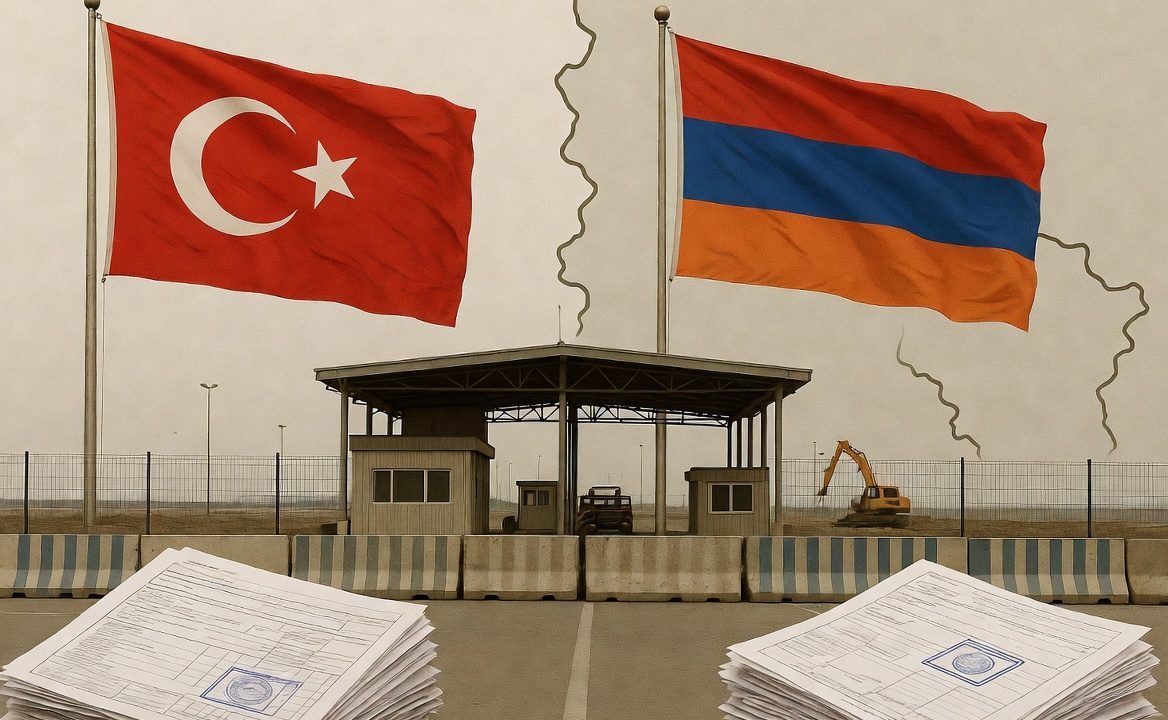
Read moreThe unfolding geopolitical landscape of the South Caucasus is currently witnessing a transformation that few would have predicted even half a decade ago. For decades, the region was defined by frozen conflicts, closed borders, and a zero-sum mentality that stifled economic potential and kept neighbouring nations in a state of perpetual suspicion. However, the recent announcement by the Turkish Ministry of Foreign Affairs regarding the restoration of direct trade with Armenia, finalised on May 11, 2026, is not an isolated diplomatic event. Instead, it serves as the crowning achievement of a broader, pragmatic shift toward what can be described as a functional peace, a reality where economic necessity and logistical logic finally begin to outweigh historical grievances.
To understand the weight of this development, one must look at the quiet but steady de-escalation that has taken place on the ground between Azerbaijan and Armenia. For a significant period now, the frontlines have remained silent. The absence of gunfire and the cessation of soldier casualties represent a rare phenomenon in the post-independence history of these two republics. This military stillness has created a vital psychological breathing space, allowing policymakers to pivot from defence strategies to regional integration. When the guns fall silent, the hum of engines and the rustle of trade documents naturally take their place.
The evidence of this integration is already visible in the logistical arteries of the region. We are witnessing a remarkable reversal of decades-old blockades. Products from Russia and Kazakhstan are now reaching Armenia by transiting through Azerbaijani territory, a move that would have been politically unthinkable just a few years ago. Furthermore, the reports of Azerbaijan exporting fuel to Armenia and the use of Armenian airspace by Azerbaijani civilian aircraft mark a definitive break from the past. For the average passenger, this means shorter flights and cheaper tickets; for the states involved, it represents a mutual recognition of sovereignty and a shared interest in reducing operational costs. This is pragmatism in its purest form, where the benefits of cooperation, fuel efficiency, and transit revenues outweigh the costs of confrontation.
This momentum was perhaps most visibly captured during the recent 8th European Political Community (EPC) Summit in Armenia, where the atmosphere of cooperation was bolstered by a high-level video address from the President of Azerbaijan. Such a gesture, delivered to an audience in Yerevan, underscores a growing consensus that the future of the South Caucasus lies in being a bridge rather than a barrier. Parallel to this, the memorandum signed between Turkiye and Armenia for the restoration of the historic Ani Bridge over the Akhuryan River carries immense symbolic weight. A bridge that once facilitated the Great Silk Road is being physically and metaphorically rebuilt, signalling that the "doors" between these nations are no longer just unlocking—they are being prepared for heavy traffic.
As Turkiye moves to officially open its borders for trade, the ripple effects will be felt far beyond the immediate customs posts. For Armenia, this provides a lifeline to global markets and a path out of economic isolation. For Turkiye, it strengthens its role as a regional hub and a stabilising power. For Azerbaijan, a normalised Turkiye-Armenia relationship serves as a stabilising pillar that ensures the longevity of its own peace process with Yerevan. This interconnectedness creates a "safety net" of interests; when every player has a stake in the regional transit and energy network, the cost of returning to conflict becomes prohibitively expensive.
The transition from a region of "blood and iron" to one of "roads and trade" is not yet complete, and challenges certainly remain. However, the developments of May 2026 suggest that the South Caucasus is moving toward a future defined by the Middle Corridor, which is a massive transit network connecting East and West. By choosing to trade directly, restore ancient bridges, and share airspaces, these nations are effectively dismantling the "iron curtain" that has hung over the Caucasus for thirty years. The restoration of trade is more than just a commercial agreement; it is a declaration that the region is ready to stop being a theatre for proxy wars and start being a centrepiece of global commerce. In this new era, the most powerful weapons are not missiles, but the trucks, trains, and pipelines that weave these neighbours back together.
Here we are to serve you with news right now. It does not cost much, but worth your attention.
Choose to support open, independent, quality journalism and subscribe on a monthly basis.
By subscribing to our online newspaper, you can have full digital access to all news, analysis, and much more.
You can also follow AzerNEWS on Twitter @AzerNewsAz or Facebook @AzerNewsNewspaper
Thank you!