
Baku’s energy corridor becomes strategic asset for Europe and Asia

Ulviyya Poladova
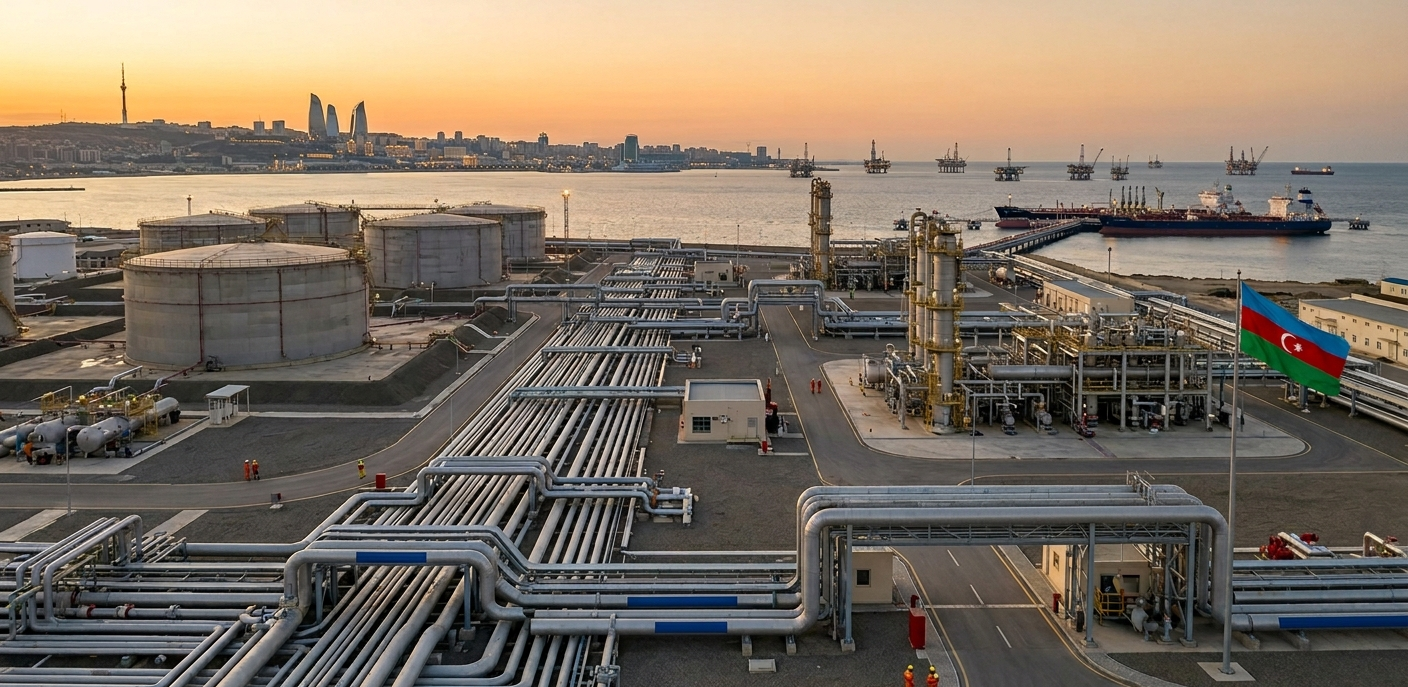
Read moreAzerbaijan is increasingly strengthening its position as a reliable energy partner not only for Europe, but also for Asian countries. The recent delivery of Azerbaijani oil to Japan has once again highlighted Baku’s expanding importance in global energy security.
ENEOS, one of Japan’s largest refinery operators and fuel distributors, recently received a shipment of approximately 45,000 kiloliters of Azerbaijani crude oil. This transaction marks a significant moment: for the first time, Azerbaijani oil is helping support energy diversification in East Asia. For Japan, the move is both practical and strategic, driven by disruptions to traditional Middle Eastern routes following the escalation of conflict around the Strait of Hormuz.
The escalation of military operations in the Persian Gulf since early 2026, especially the U.S.-Israeli campaign against Iranian positions, has brought renewed volatility to the region. With shipping through the Strait of Hormuz intermittently blocked or slowed, countries like Japan, South Korea, and India have been compelled to reconsider their supply strategies.
Countries heavily dependent on Gulf energy exports have become especially vulnerable to price volatility and logistical risks.
In this context, Azerbaijan’s role is becoming increasingly significant. Positioned at the crossroads of Europe and Asia, the country has managed to establish itself as a stable and predictable supplier capable of maintaining uninterrupted exports even during periods of global turbulence.
For years, Azerbaijan has remained one of Europe’s most dependable energy partners. Azerbaijani natural gas is currently exported to 12 countries, including 10 European states and eight members of the European Union. Supplies reach Türkiye, Georgia, Italy, Greece, Bulgaria, Romania, Hungary, Serbia, Slovenia, Croatia, and North Macedonia. In 2026, exports also expanded to Germany and Austria, further deepening Azerbaijan’s integration into Europe’s energy architecture.
The importance of such partnerships became especially evident after the outbreak of the Russia - Ukraine war, which severely affected traditional gas and oil flows across Europe. Combined with escalating instability in the Middle East, many countries began reassessing their energy security strategies and searching for alternative suppliers and safer transportation corridors.
The South Caucasus region, once viewed as geopolitically fragile, has transformed into a stable and dynamic energy junction. Azerbaijan’s consistent investment in energy infrastructure - from the Baku–Tbilisi–Ceyhan oil pipeline to the Trans Adriatic Gas Pipeline - has solidified its position as the linchpin of East–West connectivity.
In a world marked by fragmented supply chains and political unpredictability, Azerbaijan stands out for its ability to ensure uninterrupted energy flows. This reliability is increasingly valuable to both Europe and Asia.
While some energy exporters have leveraged instability to influence markets, Azerbaijan has approached its role with an emphasis on predictability, neutrality, and partnership. This reputation enhances its political leverage and deepens energy diplomacy ties.
Moreover, Japanese collaboration opens potential for technological exchange - particularly in refining, renewable integration, and hydrogen projects. Given Japan’s leadership in green innovation, energy cooperation could evolve beyond hydrocarbons toward sustainable energy partnerships.
The South Caucasus is emerging as an indispensable energy corridor between East and West, and Azerbaijan is at the heart of this transformation. Its combination of resource wealth, strategic foresight, and diplomatic balance has allowed it to evolve from a regional producer into a global actor. Whether supplying gas to Europe or oil to Japan, Baku’s policies reflect a broader strategy - to serve as a reliable bridge in a world increasingly divided by conflict and competition.
Azerbaijan has the ingredients to become one of the major commercial and transportation hubs in the region and to be the country that facilitates regional transformation.
Here we are to serve you with news right now. It does not cost much, but worth your attention.
Choose to support open, independent, quality journalism and subscribe on a monthly basis.
By subscribing to our online newspaper, you can have full digital access to all news, analysis, and much more.
You can also follow AzerNEWS on Twitter @AzerNewsAz or Facebook @AzerNewsNewspaper
Thank you!