
Trump turns to Beijing after Iran strategy hits a wall

Elnur Enveroglu
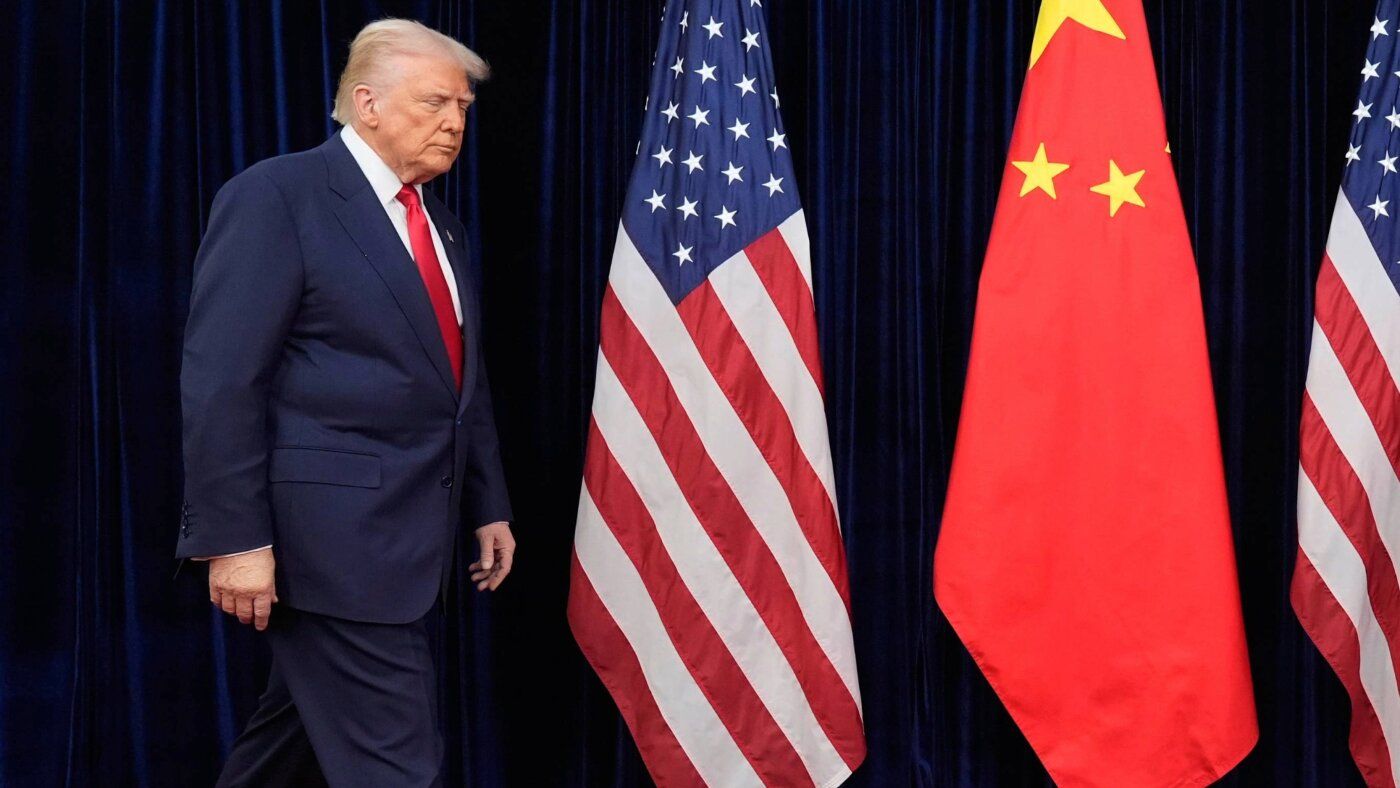
Read moreDonald Trump’s current visit to China doesn't seem to be simply another high-profile summit between two rival powers, after all, what the US military forces experienced in the Gulf. It is also a tacit acknowledgement that Washington’s recent geopolitical calculations, particularly in the Middle East, have not unfolded as expected. What was initially presented as a strategy of maximum pressure against Iran has instead exposed the limits of American coercive power in an increasingly fragmented international order.
Trump entered his second presidency believing Iran would prove an easy adversary to intimidate. His administration assumed that economic pressure, military signalling, and regional isolation would force Tehran into submission or at least compel it to accept American terms. However, Iran did not collapse under pressure. Instead, it adapted, absorbed the blows, and continued projecting influence through asymmetric networks across the region.
The Gulf operations designed to weaken Iran politically and strategically failed to produce decisive results. Rather than demonstrating overwhelming American dominance, they revealed the risks of escalation in a region where energy security, maritime trade routes, and proxy conflicts are deeply interconnected. The White House discovered that Iran was not a fragile regional actor waiting to be broken, but a hardened geopolitical player capable of raising the costs of confrontation.
This reality appears to be one of the factors now pushing Trump towards Beijing.
China occupies a unique position in the current global order. Unlike Washington, Beijing maintains working relations with virtually every major actor in the Gulf, including Iran, Saudi Arabia, and the UAE. It is also the largest purchaser of Gulf energy exports and has substantial leverage over regional economic calculations. For Trump, engaging China is therefore not merely about tariffs or trade balances. It is increasingly about managing the broader consequences of instability that Washington itself has struggled to contain.
Officially, the visit is expected to focus on trade disputes, tariffs, technology restrictions, Taiwan, and investment flows. These are indeed central issues. Trump wants larger Chinese purchases of American goods, greater access for U.S. firms, and some easing of tensions surrounding supply chains and rare earth minerals. Beijing, meanwhile, seeks relief from tariffs and restrictions on advanced semiconductor exports.
However, beneath these economic negotiations lies a more strategic reality: both countries recognise that uncontrolled confrontation now carries enormous costs.
The Iran issue has unexpectedly become part of that calculation. Washington understands that any serious escalation in the Gulf would immediately affect global energy prices, financial markets, and inflationary pressures at home. China understands the same danger perhaps even more acutely because of its heavy dependence on imported energy from the region. In this sense, Trump’s outreach to Beijing reflects not confidence, but necessity.
There is also an irony here. Trump built much of his political identity around projecting strength against America’s rivals, particularly China and Iran. Nevertheless, the geopolitical pressures facing Washington are now forcing the US President into a more pragmatic posture. His administration increasingly appears to accept that the United States cannot simultaneously wage economic confrontation with China, maintain pressure on Russia, and sustain indefinite strategic escalation against Iran without overstretching itself.
That does not mean relations between Washington and Beijing are about to improve fundamentally. The structural rivalry remains intact. Taiwan continues to represent the most dangerous flashpoint between the two powers. Technology competition, especially in artificial intelligence and semiconductors, has become central to national security planning on both sides. Neither Trump nor Xi Jinping is likely to make meaningful concessions on these core issues.
Nevertheless, both leaders have reasons to lower the temperature temporarily.
Trump wants to present himself domestically as a dealmaker capable of stabilising the global economy while defending American interests. Xi wants to project China as a responsible global power able to engage the United States on equal footing. For both men, optics matter almost as much as substance.
The likely outcome of the visit, therefore, is not a grand strategic reset, but a managed pause in tensions. There may be selective agreements on trade, investment, or communication channels, alongside carefully choreographed symbolism designed to reassure markets. However, the deeper geopolitical contradictions will remain unresolved.
Still, the significance of the visit cannot be underestimated as it reflects a broader transition in world politics. Besides, the era when Trump could dictate outcomes unilaterally is fading. Regional powers such as Iran have shown they can resist pressure longer than many American strategists anticipated. Besides, China emerged as an indispensable actor in managing global stability as well as an economic competitor.
Trump’s journey to Beijing ultimately says less about American strength than about the growing complexity of a multipolar world. After discovering that Iran was not the easy rival he expected, Trump now appears to understand that even Washington must sometimes seek accommodation with its greatest competitor.
Photo by NPR
Here we are to serve you with news right now. It does not cost much, but worth your attention.
Choose to support open, independent, quality journalism and subscribe on a monthly basis.
By subscribing to our online newspaper, you can have full digital access to all news, analysis, and much more.
You can also follow AzerNEWS on Twitter @AzerNewsAz or Facebook @AzerNewsNewspaper
Thank you!