
Hidden warm-water traps beneath Antarctica's ice may accelerate sea-level rise

Ulviyya Poladova
Read moreNew research suggests global sea levels could rise more quickly than scientists previously expected because Antarctic ice shelves may be melting from below at a much faster rate than once believed, AzerNEWS reports.
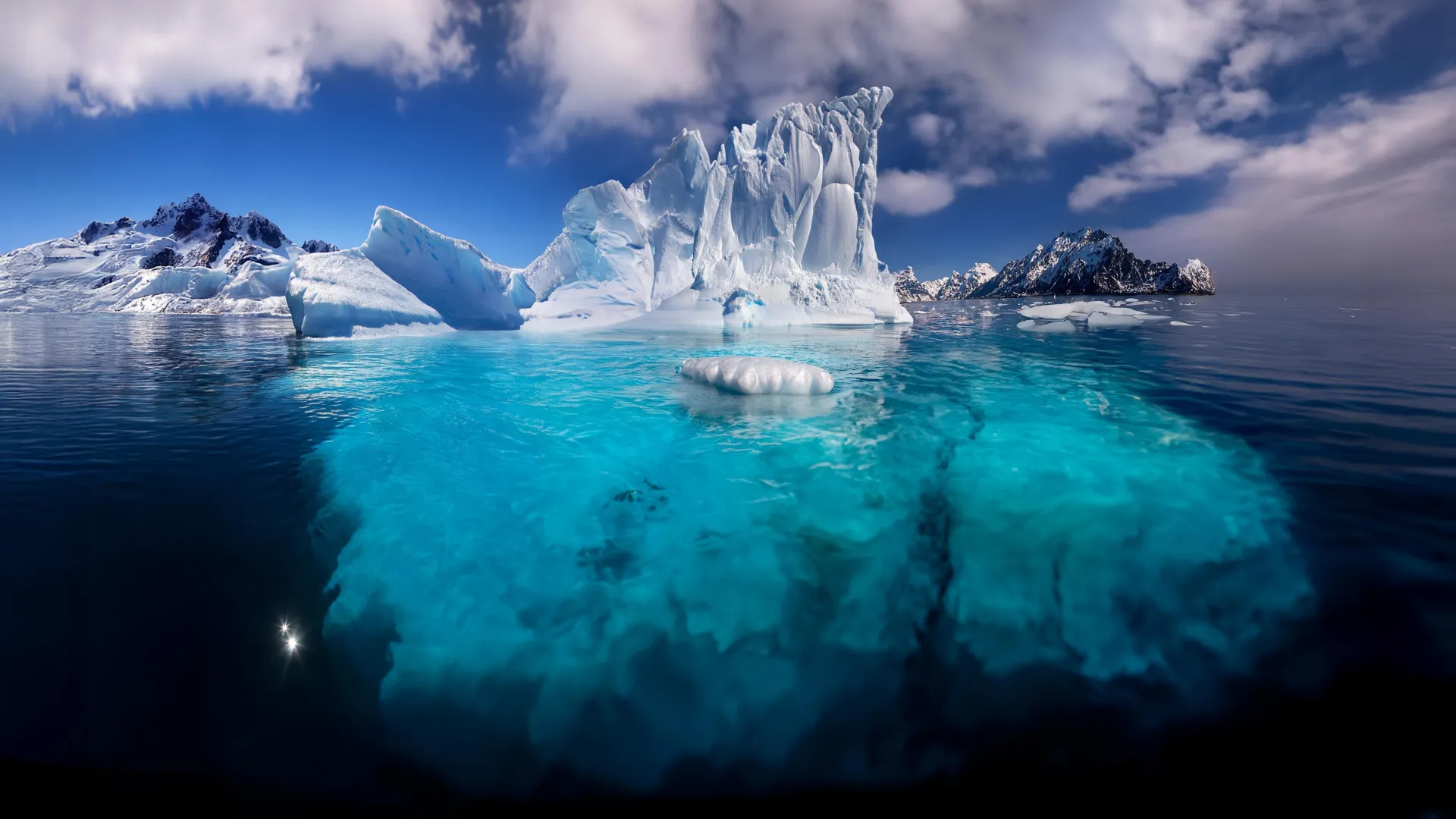
According to ScienceDaily, ice shelves are massive floating extensions of glaciers that help slow the movement of enormous amounts of ice into the ocean. Scientists in Norway have now identified a process that may be speeding up their deterioration. According to the study, long channels carved into the undersides of these ice shelves can trap relatively warm ocean water, intensifying melting in specific areas.
Scientists warn that even parts of East Antarctica - traditionally considered relatively stable compared to other Antarctic regions - may be far more vulnerable to climate-driven ice loss than earlier models suggested.
Ice shelves play a critical role in slowing the movement of massive glaciers into the ocean. As these floating ice structures thin and weaken, they lose their ability to restrain inland ice, potentially allowing larger volumes of ice to slide into the sea and contribute to faster global sea-level rise.
Researchers focused on the Fimbul Ice Shelf, where they discovered that the shape of the underside of the ice shelf strongly affects ocean circulation patterns beneath it.
The study found that deep channels carved into the underside of the ice can create localized circulation systems that trap warmer seawater close to the ice surface. Instead of quickly dispersing, the warm water remains concentrated in these areas, dramatically increasing melting rates.
Scientists say the findings could help explain why some Antarctic ice shelves are deteriorating more rapidly than expected and may improve future climate and sea-level projections.
The researchers found that melting within these channels can increase by roughly an order of magnitude in some areas. In other words, the structure of the ice shelf itself helps determine where heat collects and how much damage that heat can cause.
"We found that the shape of the ice shelf underside is not just a passive feature. It can actively trap ocean heat in exactly the places where extra melting matters most," lead author Tore Hattermann from the iC3 Polar Reseach Hub in Tromsø, Norway explains.
Fimbulisen Ice Shelf sits in East Antarctica, a colder region that has generally been viewed as less vulnerable than other parts of the continent.
Credit: Shutterstock
Here we are to serve you with news right now. It does not cost much, but worth your attention.
Choose to support open, independent, quality journalism and subscribe on a monthly basis.
By subscribing to our online newspaper, you can have full digital access to all news, analysis, and much more.
You can also follow AzerNEWS on Twitter @AzerNewsAz or Facebook @AzerNewsNewspaper
Thank you!