
How Azerbaijani oil powered the Soviet war machine in WWII

Ulviyya Poladova
Read moreEvery year on May 9, millions of people commemorate Victory Day - the defeat of fascism in World War II, achieved at the cost of more than 20 million lives. For Azerbaijan, this date is not merely a historical symbol, but a reminder of the enormous sacrifices and strategic contributions made by the Azerbaijani people both on the battlefield and far behind the front lines.
From the very beginning of the Great Patriotic War (1941–1945), the Azerbaijani people mobilized all their resources for the front. Every household, factory, and workplace became part of the wartime effort. Citizens donated immense sums to the Defense Fund - 15 kilograms of gold, 952 kilograms of silver, and 320 million rubles - all from personal savings. Industries redirected their production lines to manufacture military equipment, including Katyusha rockets, Shpagin submachine guns, and Yak-3 fighter planes. In total, Azerbaijani factories produced 130 types of weapons and ammunition crucial to success.
Yet, Azerbaijan’s most significant contribution was not material wealth or weapons production, but oil.
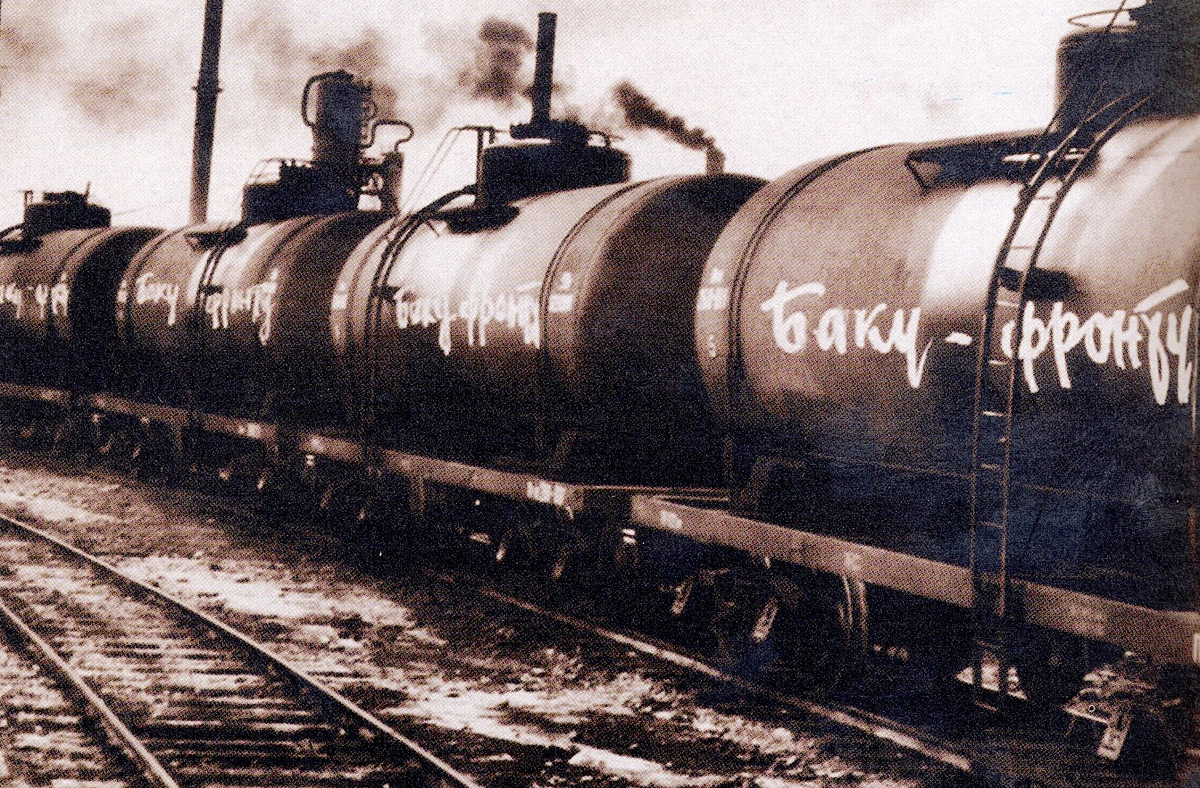
During World War II, Azerbaijan supplied more than 70% of the oil, 80% of the gasoline, and 90% of the motor lubricants used by the Soviet Union. The oil fields of Baku, tirelessly operated by Azerbaijani workers under extreme wartime conditions, literally kept the Soviet tanks, aircraft, and machinery running. The introduction of high-octane aviation fuel - first produced in Baku during the war - became a turning point that allowed to achieve air superiority in key battles.
In his study "The Role of Azerbaijan in the Victory Over Fascism in the Great Patriotic War," Baku State University lecturer and Doctor of Philosophy in Political Science Alimusa Ibrahimov wrote: "During World War II, Azerbaijan supplied 80 percent of all the gasoline and 90 percent of the lubricants required for the front line stretching from the Baltic Sea to the Black Sea."
In total, 75 million tons of oil were extracted in Azerbaijan during the war years. In practice, four out of every five Soviet aircraft, tanks, and military vehicles were fueled with Baku gasoline. The Soviet fleet also received fuel and lubricants from the republic, underscoring Azerbaijan’s decisive strategic role.
Recognizing this, Nazi Germany viewed Baku’s oil as a strategic objective. Adolf Hitler famously made the capture of Baku one of the central goals of Operation "Edelweiss" in 1942. Intelligence and symbolic gestures reflected this obsession - on Hitler’s birthday that year, he was presented with a cake depicting an oil derrick and the word "Baku." Despite the fact that Hitler tasted this piece with incredible pleasure, which had previously been covered with chocolate, referring to the fact that Azerbaijan was rich in oil, he still choked on this piece.
The symbolism was unmistakable: Nazi Germany believed Azerbaijani oil would soon belong to the Reich. Yet history unfolded differently.
On July 23, 1942, Hitler issued Directive No. 45, better known as Operation Edelweiss, ordering Army Group A to push into the Caucasus and seize the oil refineries of Baku. German forces advanced rapidly through southern Soviet territories and reached parts of the North Caucasus. For a moment, it appeared that the road to Azerbaijan might indeed open.
However, the campaign eventually stalled. German forces became exhausted near the Terek River and in the western foothills of the Caucasus. Harsh conditions, overstretched supply lines, Soviet resistance, and the broader failure of Operation Barbarossa shattered Hitler’s ambitions. The Wehrmacht never reached Baku.
The failure to capture Azerbaijani oil became one of Nazi Germany’s greatest strategic defeats. Historians often argue that Germany’s inability to secure sufficient fuel resources critically weakened its military capabilities in the later stages of the war.
Azerbaijan’s sons and daughters served with courage and honor on the front lines. Over 640,000 Azerbaijani men and women went to war, with about half never returning. Units such as the 416th Rifle Division, formed in Ujar and comprising over 11,000 Azerbaijani soldiers, earned distinction in battles across Eastern Europe - from the Caucasus to Berlin. The division was later honored as the Taganrog Red Banner Order of Suvorov Division for its valor.
In total, more than 130 Azerbaijanis received the title of Hero of the Soviet Union, and over 170,000 were decorated with orders and medals. Azerbaijani troops fought bravely not only in defense of their homeland but also in the liberation of Russia, Ukraine, Moldova, Poland, and Germany, contributing to the universal struggle against fascism.
Azerbaijan’s wartime contribution extended beyond the front and the factories. The republic supplied over seven tons of donor blood to Soviet medical units and vast quantities of food, clothing, and winter equipment to soldiers. The unity of the Azerbaijani people - workers, scientists, farmers, men, and women alike - symbolized a collective spirit of sacrifice and commitment to freedom.
Hazi Aslanov, two-time Hero of the Soviet Union, the Heroes of the Soviet Union - Israfil Mammadov, Ruslan Vazirov, Adil Guliyev, Ziya Bunyadov, Garay Asadov, Malik Maharramov and Mehdi Huseynzade, Generals Mahmud Abilov, Akim Abbasov, Tarlan Aliyarbeyov and Hajibala Zeynalov - wrote new pages in the history of our nation by their unbending will and bravery.
Azerbaijanis participated in the guerrilla movement corps against fascism in Europe as well. They fought heroically in partisan detachments in the Crimea, Belarus, the North Caucasus, the Baltic countries, Poland, Czechoslovakia, Hungary, Yugoslavia, Italy and in the anti-fascist resistance movement in France.
The first Azerbaijani Hero of the Union was Sergeant Israfil Mammadov, assistant to platoon commander of the 42nd Rifle Regiment. In December 1941, his group of fighters fought near Novgorod and repulsed four attacks by superior enemy forces. They entered the melee and held the position.
Another prominent person was two-fold Hero of the Soviet Union, Hazi Aslanov. This legendary hero of World War II was promoted to the rank of the major general of tank troops in March 1944. He showed valor and bravery in many battles, including the battle of Stalingrad, the largest land battle in history.
Legendary partisan Mehdi Huseynzade fought against the Nazis in the Yugoslav-Italian partisans guerrilla corps after suffering severe wounds in the battle of Stalingrad and a spell in German captivity.
Today, the story of Azerbaijan’s role in World War II stands as a testament to the decisive value of resources, geography, and national dedication. The oil of Baku fueled victory and its defenders ensured that fuel would not fall into enemy hands. The courage of its soldiers illuminated one of the darkest chapters of human history.
Here we are to serve you with news right now. It does not cost much, but worth your attention.
Choose to support open, independent, quality journalism and subscribe on a monthly basis.
By subscribing to our online newspaper, you can have full digital access to all news, analysis, and much more.
You can also follow AzerNEWS on Twitter @AzerNewsAz or Facebook @AzerNewsNewspaper
Thank you!