
Oil flows through Strait of Hormuz drop sharply

Ulviyya Poladova
Read moreFlows of crude oil and petroleum fuels through the Strait of Hormuz fell by nearly 6 million barrels per day in the first quarter of 2026, marking the beginning of a major disruption that has tightened global supply and pushed energy prices higher, AzerNEWS reports.
According to data released by the U.S. Energy Information Administration (EIA), about 14.6 million barrels per day of crude oil and petroleum liquids passed through the Strait of Hormuz during the first three months of 2026.
The Brent crude oil spot price averaged $117 per barrel (b) in April, $46/b higher than the average in February. This monthly average price is also the highest since June 2022, following the war in Ukraine. Daily Brent spot prices reached as high as $138/b on April 7. The closure of the strait has dramatically reduced the availability of oil supplies to global markets and has had cascading effects across oil supply chains.
Liquefied natural gas flows through the Strait of Hormuz also dropped to 7.3 billion cubic feet per day in the first quarter from 10.1 billion cubic feet per day in the fourth quarter of 2025.
The EIA said its estimates are based on tanker-tracking data from Vortexa, supplemented by its own analysis, noting that ship-tracking data for vessels transiting Hormuz have become "especially unreliable" since the end of February 2026.
Oil flow through the Panama Canal also increased to 2.9 million barrels per day from 2.8 million over the same period.
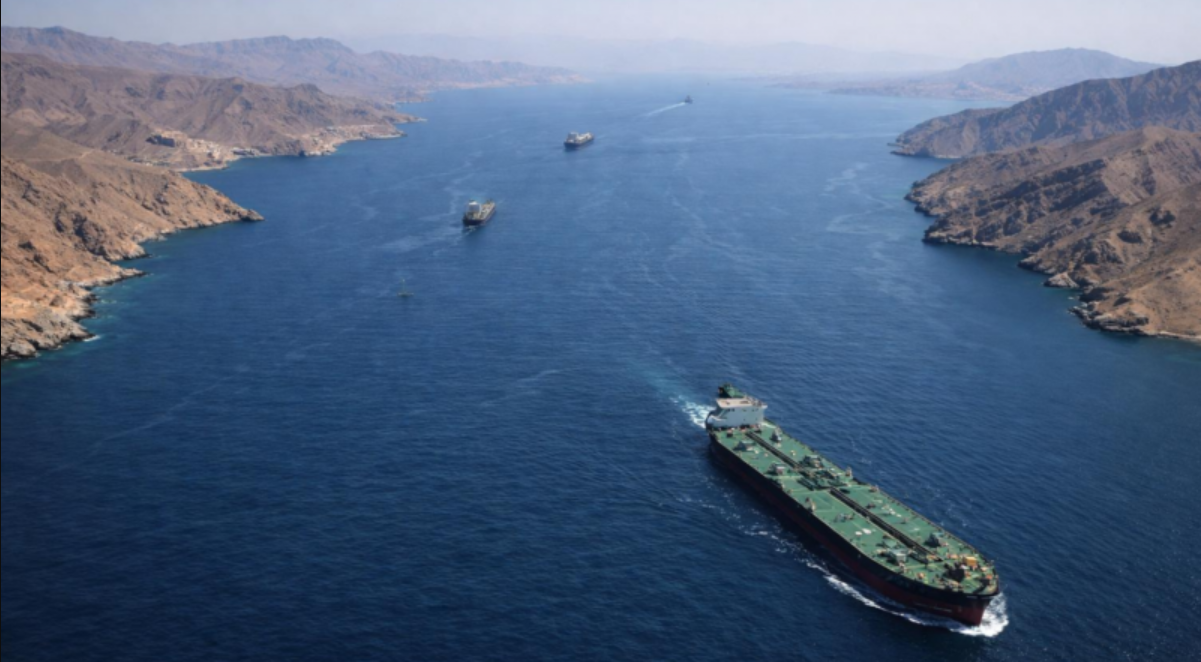
The Strait of Hormuz is a narrow maritime passage between the Persian Gulf and the Gulf of Oman, holding significant strategic importance as approximately 20% of global oil supplies and around 25% of liquefied natural gas (LNG) exports pass through it. Essentially, it serves as an energy artery for countries in Asia, Europe, and even the United States.
The strait separates Iran from Oman, and in some areas, the width of the shipping channel is only two miles on each side. Given its critical role in global energy supply chains, ensuring the safety and security of this vital waterway is paramount for international trade and economic stability.
Here we are to serve you with news right now. It does not cost much, but worth your attention.
Choose to support open, independent, quality journalism and subscribe on a monthly basis.
By subscribing to our online newspaper, you can have full digital access to all news, analysis, and much more.
You can also follow AzerNEWS on Twitter @AzerNewsAz or Facebook @AzerNewsNewspaper
Thank you!