
Choking Iran or poisoning Gulf? True cost of targeting Kharg [ANALYSIS]
![Choking Iran or poisoning Gulf? True cost of targeting Kharg [ANALYSIS]](https://www.azernews.az/media/2026/03/30/436734675368735683_1.jpg)

Elnur Enveroglu
Read moreThe US–Israel–Iran war has now entered its first full month. Yet despite four extremely tense and, at times, existentially significant weeks marked by a series of serious developments, the core context of the conflict remains largely unchanged.
During the initial week of the war, Iran’s heavy human losses prompted widespread international commentary suggesting that a change of power in the country might be imminent. However, the rapid internal consolidation and regrouping within Iran recalled a historical precedent. In the 1980s, on the eve of the Iran–Iraq war, large crowds in Tehran had taken to the streets to express profound dissatisfaction with the ruling authorities. As the war unfolded, the situation, however, shifted abruptly, giving way to a form of consolidation similar to what is being observed today, namely, a tightening of unity around the government.
In February 2026, even before the outbreak of hostilities, US President Donald Trump publicly called on the Iranian people to "take to the streets and protest—people of Iran, we are coming, we are with you." However, at a critical juncture, the momentum of unrest within Iran changed dramatically. Despite the imposition of harsh punitive measures against protesters domestically, large segments of the population began to view their expectations as increasingly unrealistic and, consequently, shifted towards supporting the government.
It is no secret that Iran is governed on the basis of deeply rooted fundamental traditions. Unlike Iraq, Syria, or Afghanistan, the Iranian state has not been subjected to sustained and decisive Western influence over its governing structures. Even the United States, which once played a central role in shaping the trajectory of the Iran–Iraq war, failed in its attempts to weaken Iran through regional proxies.
Thus, what may initially appear as a weakened Iran is, in reality, a state that cannot be easily subdued. Iran continues to define one of the most intense and enduring confrontations in the Middle East against the West and Israel. Indeed, Iran’s resilience and persistence are driving both the United States and Israel towards increasingly hardline measures. This, in turn, opens the door to broader escalation, with consequences extending beyond Iran itself to neighbouring states.
Against this backdrop, a critical question emerges: why are the Gulf states, those geographically closest to the conflict, not taking decisive steps to halt it?
The United States has already signalled its intention to deploy forces to Kharg Island, widely regarded as the backbone of Iran’s energy infrastructure. Kharg Island accounts for approximately 90 per cent of Iran’s crude oil exports, with a terminal capable of handling close to two million barrels per day. It is, in effect, the lifeline of Iran’s energy economy. By seizing this island, Washington appears to believe it can effectively choke Iran’s economic breathing space.

However, the risks associated with such a move are substantial, and they extend far beyond Iran itself, potentially placing Gulf states in direct danger. First and foremost, serious doubts remain as to how long US forces could realistically maintain control over the island. Located just 20–30 kilometres from Iranian territory, in the narrow waters of the Gulf, Kharg Island would be highly vulnerable to even conventional Iranian artillery strikes.
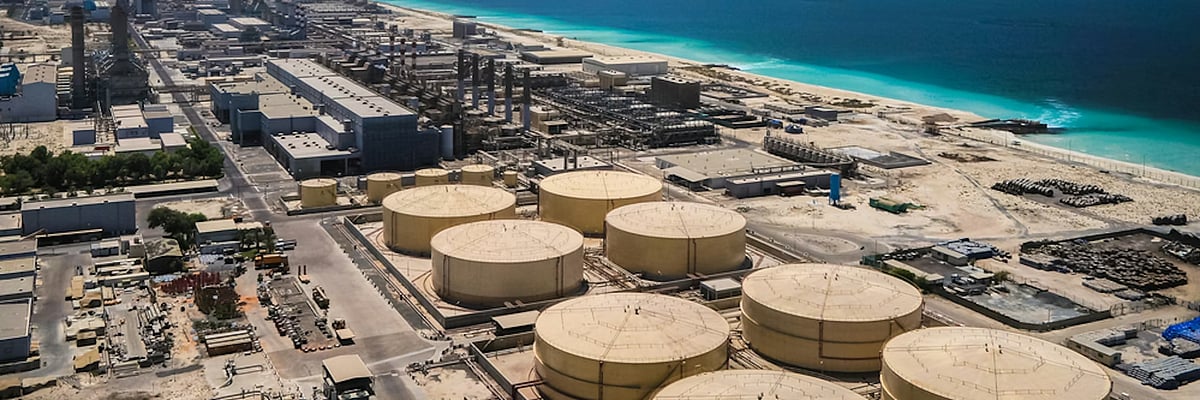
The most alarming aspect, however, lies in the environmental consequences. Any direct strike on the island could result in massive oil and chemical spills into the Gulf waters. This, in turn, could lead to severe ecological contamination of waters that constitute up to 90 per cent of the drinking water supply for Gulf states through desalination processes.
Moreover, it remains unclear whether the United States could achieve its broader strategic objectives through such an operation. To date, Washington has already launched over 1,500 missile strikes against Iranian territory, targeting nuclear facilities and other strategic assets, yet has still fallen short of achieving its desired outcomes. In this context, it is legitimate to ask whether Kharg Island could truly deliver a decisive strategic victory over Iran.
So, what is the position of the Gulf states?
Today, Arab states such as Saudi Arabia, the United Arab Emirates, Qatar, and Bahrain, countries that rely heavily on US military protection, find themselves facing an extraordinarily difficult choice. This situation also reflects one of the deepest fractures within the Islamic world. It is widely understood that US military bases located in these countries serve not only their defence and security needs, but also broader American geostrategic objectives, including the security of Israel.
Nevertheless, monarchies accustomed to economic stability and prosperity continue to view any departure from the US security umbrella as a significant risk, even in the face of harsh and, at times, openly dismissive rhetoric from Donald Trump. While the Gulf states have hardly experienced moments of rapprochement with Iran in the past, the scale of present risks suggests that caution and restraint are perceived as the more prudent course for the region’s future.
Ultimately, the conclusion is clear: for Arab states in the Gulf, Iran represents both a serious rival and a country whose systematic weakening is, to some extent, desirable. At the same time, even limited support for Iran would expose these states to potential retaliation from the United States. This dynamic, in effect, underscores how grand political ambitions in the region can be constrained, and ultimately overshadowed, by the imperatives of power, security, and geopolitical alignment, often cloaked in the language of religious solidarity.
Here we are to serve you with news right now. It does not cost much, but worth your attention.
Choose to support open, independent, quality journalism and subscribe on a monthly basis.
By subscribing to our online newspaper, you can have full digital access to all news, analysis, and much more.
You can also follow AzerNEWS on Twitter @AzerNewsAz or Facebook @AzerNewsNewspaper
Thank you!