
France’s Armenian diaspora politics are becoming an exercise in political theatre

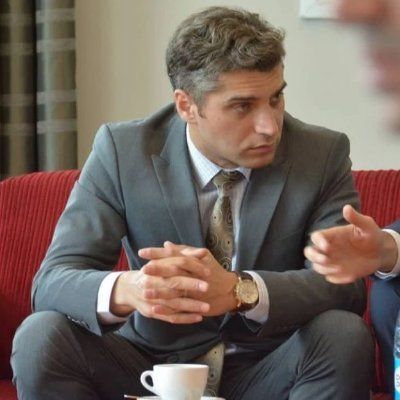
Elnur Enveroglu
Read moreEvidently devoid of any grasp on international law or legal parlance, the leadership at Paris City Hall is now preparing to host a bespoke cultural spectacle performed by factions aligned with the Armenian diaspora. In itself, this can truly be described as a desperate exercise in political grandstanding. However, such cheap, theatrical protests or provocative stunts by politicians who have lost political relevance have nothing to do with genuine statecraft - they are mere clown shows.
That France should complicitly join such a charade is all the more ludicrous and deplorable. For a nation striving to flex its muscles and project itself as a titan within the European Union, indulging in such petty machinations severely diminishes its standing on the global stage. Indeed, official Paris’ collusion with and subservience to the Armenian diaspora is fast becoming an anomaly in international relations. In short, history yields few examples of a country possessing such economic potential degrading itself into a mere instrument for cheap political games.
Even during the Cold War, when a behemoth like the United States backed South Vietnam under the banner of combating communism, using the media for raw PR, it suffered substantial damage to its international credibility. Today, France clings to the skirts of an entity devoid of any sovereign statehood, seemingly eager to absorb it into its very bloodstream.
Paradoxically, putting aside political friction between Paris and Baku, both cultural and economic ties show a distinct propensity for growth. Neither the Azerbaijani students heading to France each year for higher education nor the French delegations visiting Baku to foster cultural ties would suggest that bilateral relations are genuinely strained. In reality, no fundamental tension exists. However, unable to find its footing within the broader geopolitical architecture, France consistently veers out of its orbit whenever confronted with the Armenian diaspora dilemma, casting kind of hostile glances toward Baku.
For a nation that purports to champion the principles of law and democracy, providing a platform for unwarranted theatricals does not impair Azerbaijan’s prestige in the slightest. Nor should the elements in France striving to upend bilateral ties gloat, thinking they have achieved a major coup. Their objective is transparent: any progress in negotiations between Baku and Yerevan is inherently anathematic to them.
It is no coincidence that whenever Azerbaijani and Armenian leaders convene in a third country for dialogue, factions of the Armenian diaspora re-emerge, whether in France or elsewhere. Having previously turned the streets of Brussels into an anthill during the 2022 Armenia-Azerbaijan leadership summit, these diaspora groups attempted the exact same manoeuvre. The underlying truth is clear: the diaspora's primary motive is not the release of war criminals, but rather sabotaging any rapprochement between the two sovereign nations.
To what end? The answer is straightforward. Unlike domestic civil society groups in other nations, Armenian diaspora organisations serve foreign agendas rather than their homeland's national interests. History bears constant witness to such dynamics, and today, as a mere fragment of that historical pattern, it takes little effort to see these diaspora groups acting as proxies for external powers.

All this notwithstanding, the most striking element remains the personal commitment to the Armenian diaspora shown by Audrey Pulvar, a former journalist and news anchor who transitioned into politics and currently serves as the Deputy Mayor of Paris in charge of International Relations, European Affairs, and the Francophonie. A brief glance at her trajectory reveals that, as a left-wing politician, Ms Pulvar has maintained tight links with French-Armenian diaspora organisations for years. Part of her motivation stems from a calculated attempt to consolidate her electoral base. For the ruling Socialist Party in Paris (led by Mayor Anne Hidalgo and backed by Pulvar), maintaining robust relations with groups like the Conseil de Coordination des organisations Arméniennes de France (CCAF) is critical for sustaining domestic electoral support.
Another compelling driver is the strategic leverage gained from aligning with the Armenian diaspora for political capital. Her close ties with Mourad "Franck" Papazian, co-chair of the aforementioned CCAF, and Ara Toranian, a fellow leader and journalist, are hardly accidental. Papazian himself is a polarising figure who was previously banned from entering Armenia and remains at deep odds with the Pashinyan administration. As noted, if the Armenian diaspora explicitly rejects the current peace agenda, what future can it possibly envision for the Armenian people? Presumably, only renewed conflict and casualties. In that light, the question of who backs such a diaspora apparatus, and to what end, answers itself.
Here we are to serve you with news right now. It does not cost much, but worth your attention.
Choose to support open, independent, quality journalism and subscribe on a monthly basis.
By subscribing to our online newspaper, you can have full digital access to all news, analysis, and much more.
You can also follow AzerNEWS on Twitter @AzerNewsAz or Facebook @AzerNewsNewspaper
Thank you!