
Can international law still prevent a nuclear catastrophe?

Ulviyya Poladova
Read moreEvery year on 29 August, the world observes the International Day against Nuclear Tests. Established by the United Nations General Assembly in December 2009, the day is more than a symbolic entry in the international calendar. In today’s increasingly uncertain geopolitical environment, its significance has become particularly pronounced. Rising tensions between major powers and renewed debates over nuclear deterrence have once again brought the risks associated with nuclear weapons and testing to the forefront of international attention.
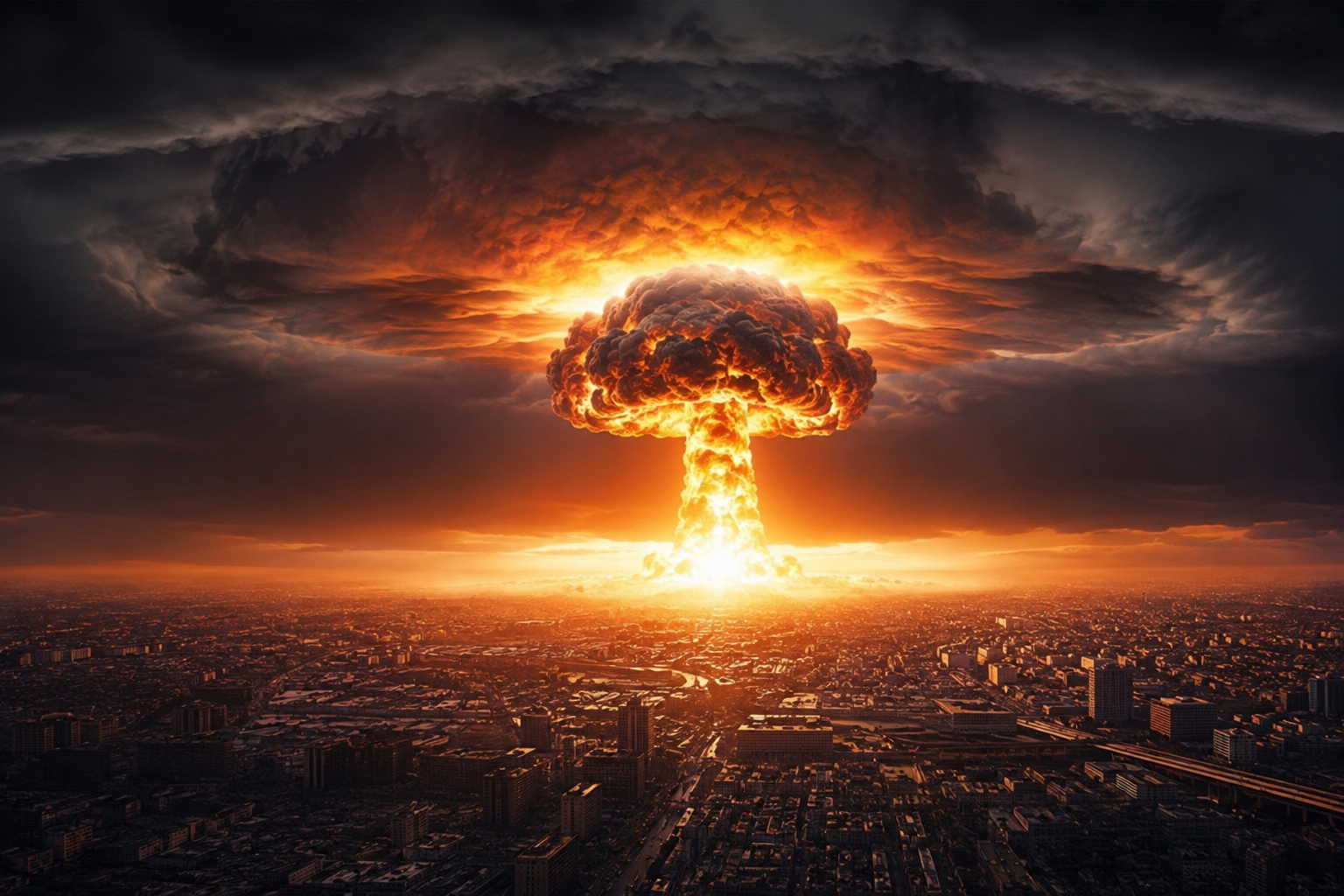
A nuclear weapon is capable of destroying a city within minutes, killing or injuring hundreds of thousands of people and leaving environmental consequences lasting for generations. Radiation does not recognize borders, distinguish between villains and victims, or disappear when a war is over. The effects of nuclear weapons extend far beyond the moment of detonation. For decades, the relative absence of nuclear war created a dangerous sense of familiarity. Humanity became accustomed to living under the shadow of weapons capable of ending civilization. Yet survival should not be confused with safety. The fact that nuclear weapons have not been used in war since 1945 does not prove that the international system is secure. It may demonstrate the effectiveness of deterrence and the influence of international norms.
After the Cold War ended and the Soviet Union collapsed, many believed that the nuclear danger had sharply diminished. The theory of nuclear deterrence rests on a simple but terrifying proposition that no rational state will launch a nuclear attack if it knows that the response will guarantee its own destruction. During the Cold War, this logic became known as mutually assured destruction. Nuclear weapons were presented not as instruments to be used, but as weapons whose very existence would prevent their use.
History contains numerous episodes in which nuclear escalation was avoided not because deterrence operated perfectly, but because individual people questioned an alarm or refused to follow the logic of the moment. A security system that depends on permanent technical perfection and uninterrupted human factors cannot be described as completely safe. Deterrence is therefore a paradox. The use of nuclear weapons can lead to even more serious problems, and policymakers are well aware of this.
Since the beginning of the nuclear age in 1945, nearly 2,000 nuclear tests have been conducted around the world. Many took place in deserts, on remote islands, underground or high in the atmosphere. Governments often described these locations as empty spaces, as if distance from the capitals meant absence of human life. But the map of nuclear testing is also a map of marginalized communities. Indigenous peoples and residents of remote regions were frequently exposed to risks they neither understood nor accepted.
French nuclear testing in Algeria is one of the clearest examples. On 13 February 1960, France detonated its first atomic bomb, Gerboise Bleue, near Reggane in the Algerian Sahara. With a yield of approximately 70 kilotons, the explosion was more than four times as powerful as the bomb dropped on Hiroshima. French authorities portrayed the Sahara as a vast and largely empty testing ground. Many people were not adequately informed about the dangers of radioactive exposure. The legacy did not end when the tests stopped because contaminated material, radioactive particles and unresolved health concerns remained.
The most important testimony of Hiroshima and Nagasaki is not found in abstract calculations of military advantage. It is found in burned streets, destroyed hospitals, families that disappeared just in a second. On 6 August 1945, the United States dropped an atomic bomb on Hiroshima. Tens of thousands were killed immediately, and the total number of deaths rose dramatically in the following months as people succumbed to burns, injuries and radiation-related illnesses. Three days later, another atomic bomb was dropped on Nagasaki, killing tens of thousands more. Exact casualty estimates differ because wartime records were incomplete and many victims died after the explosions.
Today, the global nuclear order remains shaped by the Treaty on the Non-Proliferation of Nuclear Weapons, which entered into force in 1970. It is one of the most widely adopted international security agreements, with 191 participating states committed to preventing the spread of nuclear weapons and promoting disarmament. The treaty recognizes five official nuclear-weapon states: the United States, Russia, China, France, and the United Kingdom. However, several other countries outside the treaty framework - India, Pakistan, Israel, and North Korea - also possess nuclear weapons, adding complexity to global non-proliferation efforts.
The expiration of the New Strategic Arms Reduction Treaty (New START) in February 2026, signed by the United States and Russia in 2010, marked another major turning point. For the first time in more than half a century, Washington and Moscow found themselves without legally binding limits on their strategic nuclear forces. At the same time, other important multilateral arms-control arrangements have also come under pressure. The United States and Russia have withdrawn from the Treaty on Open Skies, while the Comprehensive Nuclear-Test-Ban Treaty (CTBT), despite its provisions being broadly observed in practice, has still not entered into full legal force because the required ratifications have not been completed.
To date, 187 countries have signed the CTBT and 178 have ratified it. For the treaty to enter into force, however, it must be ratified by specific states whose participation is considered essential because of their nuclear capabilities. Although the CTBT has never formally entered into force, nearly all nuclear-armed states have established voluntary unilateral moratoriums on nuclear testing. In May 2010, all NPT states parties reaffirmed their commitment to working toward a safer world free of nuclear weapons and described achieving a ban on nuclear testing as a "vital task."
The geographic scope of nuclear-weapon-free zones has also expanded significantly. Much of the Southern Hemisphere is now effectively covered by regional treaties establishing nuclear-weapon-free zones, including the Treaty of Rarotonga covering the South Pacific, the Treaty of Pelindaba covering Africa, the Bangkok Treaty covering Southeast Asia, and the Treaty of Tlatelolco covering Latin America and the Caribbean. These agreements demonstrate that regional cooperation can play an important role in reducing the presence and potential deployment of nuclear weapons.
According to widely cited estimates, the global nuclear stockpile stands at roughly 12,000 warheads. Approximately 90 percent of them are held by Russia and the United States alone. China, France, and the United Kingdom maintain smaller but still significant arsenals. Because nuclear programs are highly classified, however, precise figures remain uncertain and are based largely on publicly available intelligence.
At the same time, the question of nuclear disarmament has become considerably more complicated in recent years. One major factor is the proliferation of dual-use delivery systems, particularly ballistic and cruise missiles capable of carrying either nuclear or conventional warheads. Additional risks are emerging from the prospect of deploying weapons in outer space, the development of hypersonic systems, lethal autonomous weapons, increasingly sophisticated cyber capabilities, and the growing role of artificial intelligence in military decision-making. For many of these emerging technologies, comprehensive multilateral rules have yet to be established. In some areas, international discussions have not even reached the stage of fully developed negotiations. This creates a widening gap between the rapid development of military technologies and the ability of international law and institutions to regulate them.
This is why international law matters more than ever. A potential or actual threat involving the use of nuclear weapons is governed by a much broader body of international law than nuclear-specific treaties alone. Even as some arms-control agreements have expired or come under increasing pressure, fundamental principles remain embedded in the UN Charter and other rules of international law. These include restrictions on the threat or use of force and prohibitions on aggression across borders, subject to recognized exceptions such as lawful self-defense and actions authorized by the UN Security Council.
The history of nuclear weapons demonstrates how dangerous these capabilities can be. The destruction caused by nuclear testing and the devastating consequences of the use of nuclear weapons should serve as a warning to future generations. The lessons of the past should guide the international community toward a future in which security is built on cooperation and diplomacy.
Here we are to serve you with news right now. It does not cost much, but worth your attention.
Choose to support open, independent, quality journalism and subscribe on a monthly basis.
By subscribing to our online newspaper, you can have full digital access to all news, analysis, and much more.
You can also follow AzerNEWS on Twitter @AzerNewsAz or Facebook @AzerNewsNewspaper
Thank you!