
Russian archaeologists found 15th-century silver coins
by Alimat Aliyeva
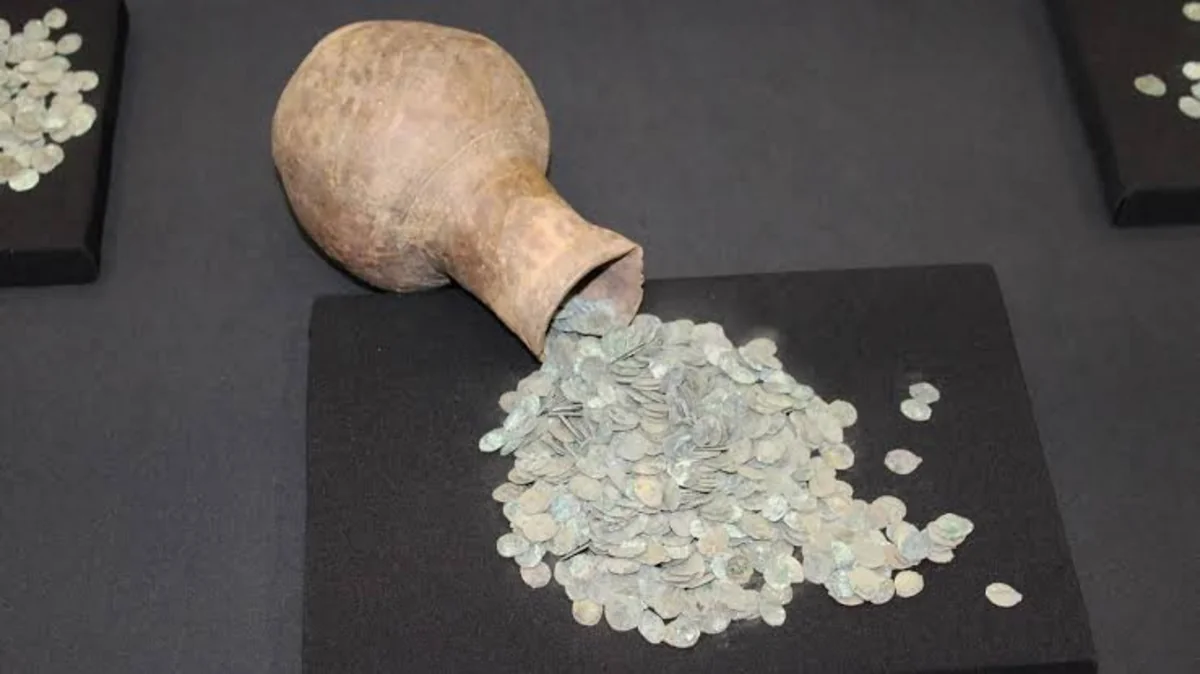
During rescue excavations in the Russian city of Kolomna, archaeologists from the Institute of Archaeology of the Russian Academy of Sciences discovered a remarkable hoard containing 2,600 silver coins. The find was made in the summer of 2026, according to the institute’s press service.
The coins were minted during the reigns of Vasily I, the son of Dmitry Donskoy, and his grandson, Vasily II the Dark. The hoard had been hidden inside a ceramic jug and buried, most likely, at the beginning of the 15th century. Remarkably, it was found almost completely intact, making the discovery especially valuable for researchers.
The total value of the coins was about 13 rubles. In the 15th century, this was a considerable amount of money. It could have been enough to buy two houses in a city or a whole herd of horses. This suggests that the hoard belonged to a relatively wealthy person.
At that time, silver denga coins were widely used in Rus. Because of their small size and distinctive shape, these coins are now commonly called “scales.” Among the finds, researchers discovered particularly rare coins bearing the image of a flying bird. These coins were minted locally in Kolomna, which at the time was the second most important city in the Grand Duchy of Moscow after Moscow itself.
The local coins make the discovery especially significant. Similar examples are extremely rare in other regions, and some varieties are absent even from the largest museum collections in Russia.
Interestingly, the hoard can tell scientists much more than simply how wealthy its owner was. Its composition may provide valuable information about everyday economic life in medieval Kolomna, including which coins were in circulation, where they came from, and how closely the city was connected with other regions.
Researchers plan to examine the coins in detail and reconstruct the history of monetary circulation in the regional market during the 15th century. Because the hoard remained undisturbed for centuries, scientists may even be able to trace the history of individual coin issues.
After the research is completed, the coins are expected to be transferred to a museum exhibition in Kolomna. The discovery could offer a fascinating glimpse into the economic life of medieval Rus and help historians better understand how people traded, saved money, and accumulated wealth more than 600 years ago.
Here we are to serve you with news right now. It does not cost much, but worth your attention.
Choose to support open, independent, quality journalism and subscribe on a monthly basis.
By subscribing to our online newspaper, you can have full digital access to all news, analysis, and much more.
You can also follow AzerNEWS on Twitter @AzerNewsAz or Facebook @AzerNewsNewspaper
Thank you!