
Azeraluminium seeks foothold in Europe as global supply tightens

Akbar Novruz
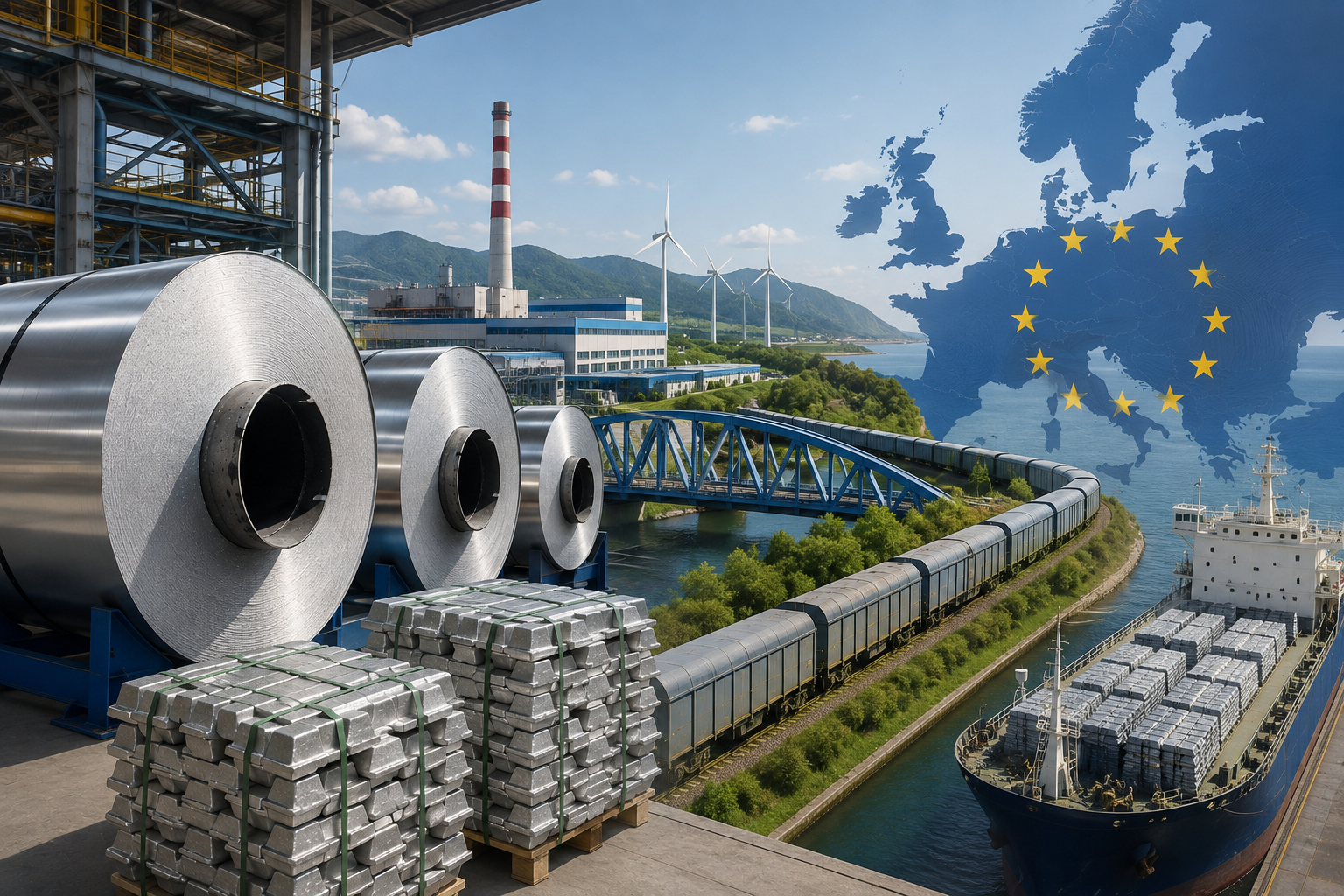
Read moreAluminum production is amongst the most energy-intensive industrial processes on our planet. The principle in the metal industry is that electricity charges make up some 30–40% of the price of primary aluminum, meaning that the geography of competitive aluminum production coincides with the geography of inexpensive and stable energy. This means that the three simultaneous blows to the global supply of aluminum from the destruction of Gulf smelting capacity due to Iranian strikes, the restriction of Russian exports, and the rise in electricity costs in Europe that has put a stop to operations at Western aluminum factories since 2022 have created a niche for producers of aluminum who have access to low-cost and low-carbon electricity to occupy. Azerbaijan, operating its Ganja electrolysis facility on electricity that is supplemented with hydro-power and has the carbon intensity of 2 tonnes of CO₂ per tonne of metal produced (versus 13–15 tonnes of CO₂ worldwide), has all the cards in hand to become one of the most efficient producers of aluminum globally. The figures of the industry's January-July 2026 production show that Baku understands this perfectly well.
The question is whether the 2027-2030 program will allow turning this understanding into a competitive advantage.
The European Union Carbon Border Adjustment Mechanism came into force in 2026, and aluminum is one of the sectors most exposed to this risk. As the logic of the CBAM states, since a European enterprise pays €50 for each tonne of CO₂ in the context of the EU Emission Trading System, a company that imports this product and does not have to pay such expenses on carbon credits in its own market will have an unfair competitive advantage over the former company. Therefore, CBAM ensures parity between European and foreign producers by requiring the latter to obtain carbon certificates corresponding to the CO₂ emissions level of their products. In the case of one tonne of aluminum, manufactured with the world average emissions intensity of 13-15 tons of CO₂, the cost of CBAM is high and constantly growing. On the contrary, for Azeraluminium, manufacturing aluminum with the average emissions level of 2 tons of CO₂ per one tonne of the product (one seventh of the world average), the cost of CBAM is low.
Azeraluminium is currently engaged in efforts to secure the CBAM carbon certification to help establish its advantage as a tangible competitive advantage in the business world through cooperation with the World Bank, certification companies, and other international organizations. The CBAM carbon certification, once secured, transforms the company's low carbon footprint in production into an advantageous business card that European buyers who are under the pressure of CBAM compliance are willing to pay extra money for. At the same time, the growing capacity of the country in terms of renewable energy sources, the country plans to have 8 gigawatts of solar and wind energy by 2032 - ensures that the CBAM advantage is not a one-time thing.
2027–2030 programme
However, the danger of commodity price windfalls – and the increase in production by 45.8% and revenues of $97 million in H1 do constitute a windfall of sorts, brought about by crisis-driven market circumstances which will not last forever – is that they provide cash flows without building capacity. The State Programme for the Development of the Mining and Metallurgical Industry 2027–2030, and Ilham Aliyev's April 2026 decree establishing Azeraluminium LLC on the foundation of the existing state entity, represent a deliberate policy choice to use the current market window to fund structural capacity expansion before the window closes.
The example of the aluminum industry of Azerbaijan shows a pattern which should be followed by non-oil diversification policies throughout the manufacturing industries. A 78.1% share of oil in total foreign direct investments in 2025, even taking into account the existence of 9 industrial parks, 5 industrial zones, 148 inhabitants and 11,200 jobs created, demonstrates the structural problem which the Economic Strategy 2027-2030 is supposed to solve. Non-oil refining and manufacturing investment levels in the country are lower in comparison with total investment volume, while the investment portfolio in industrial zones amounts to more than 8.7 billion manats. Aluminium production is a rare case when Azerbaijan has an input advantage due to the use of low-carbon energy source.
Indeed, the present-day market conditions have turned the competitive edge into reality and commercial reality in ways that would have been impossible for planners in this industry to accomplish through subsidies alone. The Iranian attack on the Gulf smelters, the Russian embargo, and the inflation of energy prices in Europe have together generated a shortfall in the supply that would otherwise be covered by existing producers, but at present is not being addressed. Azerbaijan has become one such producer: 43,772 tonnes produced in seven months, 46,736 tonnes exported, revenue amounting to $97 million. Whether the 2027-2030 programme will manage to scale up its production to 100,000 tonnes of annual electrolysis capacity and 50,000 tonnes of rolled products until the market becomes normalised – and until European customers find other long-term suppliers for their needs, which will also seek CBAM certification – will be a race against time for Baku.
Here we are to serve you with news right now. It does not cost much, but worth your attention.
Choose to support open, independent, quality journalism and subscribe on a monthly basis.
By subscribing to our online newspaper, you can have full digital access to all news, analysis, and much more.
You can also follow AzerNEWS on Twitter @AzerNewsAz or Facebook @AzerNewsNewspaper
Thank you!