
Azerbaijan pays tribute to prominent composer Tofig Bakikhanov

Laman Ismayilova
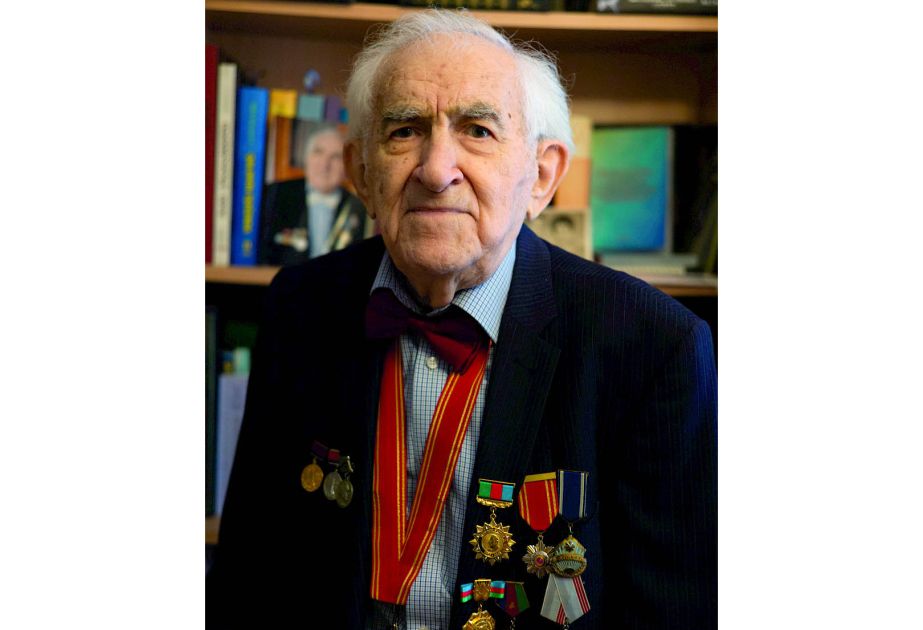
Read moreAzerbaijan has lost one of the defining figures of its modern musical life. Tofig Bakikhanov, the celebrated composer, violinist, professor and People's Artist, passed away in Baku on August 23, 2026, aged 95. His passing marks the end of a remarkable career that stretched across more than seven decades and connected several generations of Azerbaijani music.
Born in Baku on December 8, 1930, Bakikhanov grew up in a home where music was not simply an art but a way of life. His father, Ahmad Bakikhanov, was one of Azerbaijan's most respected tar performers and teachers. The family also carried a distinguished intellectual heritage through the Bakikhanov lineage, which included the 19th-century scholar and writer Abbasgulu Agha Bakikhanov.
From an early age, Tofig chose his own path within that musical environment. He studied violin at the ten-year music school attached to the Azerbaijan State Conservatory and developed into a talented performer. In 1953, he graduated from the conservatory's violin department in the class of Alexander Amiton. Four years later, he completed his composition studies under Gara Garayev, whose influence would become an important part of his artistic formation.
His youth placed him remarkably close to the founders of Azerbaijan's professional classical music tradition. As a student, Bakikhanov encountered Uzeyir Hajibayli and later recalled those meetings with particular warmth. He performed before the great composer and had the opportunity to absorb the atmosphere of a musical culture that was still being built by the people who had created it.
Before becoming known primarily as a composer, Bakikhanov established himself as a violinist. He performed as a soloist with the Azerbaijan State Symphony Orchestra and the Azerbaijan Radio Symphony Orchestra. That background remained important throughout his creative life. He understood the physical character of instruments and the demands placed on performers, something that became especially apparent in his extensive writing for violin and other solo instruments.
Composition eventually became the central focus of his career, but Bakikhanov never abandoned the perspective of the performer. This gave his music a particular practical quality. His scores were written by someone who understood how an instrument sounds in the hands of a musician, how a melody moves through an ensemble and how a musical idea can be transformed from notation into performance.
One of the strongest threads running through his work was his relationship with mugam. Azerbaijan's ancient modal tradition had already begun to enter the language of symphonic music through the pioneering work of Fikrat Amirov. Bakikhanov became one of the composers who continued to explore that meeting of tradition and classical form.
His symphonic mughams "Nava," "Shahnaz," "Rahab," "Humayun" and "Dugah" stand among the most characteristic works of his career. Rather than treating mugam as a relic to be preserved unchanged, he approached it as a living source of musical ideas that could be developed within large-scale orchestral forms. In doing so, he helped demonstrate how deeply Azerbaijani musical identity could coexist with the structures of modern concert music.
His music also carried the weight of memory. "Humayun" was dedicated to the victims of the Khojaly tragedy, giving the work a significance beyond its musical architecture. Elsewhere, he drew inspiration from Azerbaijan's historical figures, writers and national experience. His Eighth Symphony was dedicated to the memory of Uzeyir Hajibeyli, while other works reflected his engagement with the country's cultural and political history.
Bakikhanov's imagination extended well beyond the symphonic world. He composed three ballets: "Caspian Ballad," "Oriental Poem" and "Good and Evil." "Caspian Ballad" was inspired by the life of Azerbaijan's oil workers and the dramatic environment of the Caspian Sea. While developing the work, Bakikhanov visited the Oil Rocks with writer Siyavush Mammadzadeh, an experience that helped shape the ballet's atmosphere and subject.
The work eventually reached audiences outside Azerbaijan, including in France. "Good and Evil," meanwhile, drew on the world of Nizami Ganjavi and was associated with commemorations of the great poet's 850th anniversary. Once again, Bakikhanov found ways to bring distinctly Azerbaijani subjects into major classical forms.
His catalogue grew to an extraordinary scale. He composed eight symphonies, numerous symphonic poems and more than two dozen concertos for different instruments and orchestra. He wrote more than 20 sonatas for violin, viola, cello, flute and piano, alongside trios, quartets, quintets and other chamber works.
He was equally comfortable with smaller forms. Nearly 100 songs and romances came from his pen, and his music was performed by many of Azerbaijan's leading singers, including Zeynab Khanlarova, Flora Karimova, Ilhama Guliyeva, Rauf Adigozalov and Mobil Ahmadov. Together with composer Nariman Mammadov, he also created music for several musical comedies.
The breadth of this output is impressive, but productivity alone does not explain Bakikhanov's place in Azerbaijani culture. What distinguished him was the consistency with which he returned to his own country's musical and literary heritage while working across almost every major classical genre.
Teaching was another central part of his life. Bakikhanov spent more than half a century at the Baku Music Academy, where he eventually became a professor. Generations of musicians passed through his classroom, extending his influence far beyond the works bearing his name.
For a composer who had studied under Gara Garayev and grown up in the musical world shaped by Uzeyir Hajibeyli, teaching offered a way to continue a tradition that had begun before him. His influence therefore exists not only in concert programmes and musical archives but also in the musicians he helped educate.
Bakikhanov also became an important witness to a remarkable period in Azerbaijan's cultural history. He had known figures who later became monuments of national music, but whom he remembered as teachers, colleagues and contemporaries. His recollections of Hajibeyli, Garayev and other composers provide a personal connection to an era that is now part of history.
He remained active and intellectually engaged well into his nineties. In later interviews, he spoke about music, his teachers and the experiences that had shaped his career with the enthusiasm of someone who never considered creativity a finished chapter of life.
Azerbaijan repeatedly recognised his contribution. He was awarded the title of Honored Art Worker in 1973 and People's Artist in 1990. He received the Shohrat Order in 2000 and the Sharaf Order in 2021. He was also granted a personal presidential pension from 2002.
His final state honour came on his 95th birthday, December 8, 2025, when he was awarded the First Class Order of Labour for his contribution to the development of Azerbaijani musical culture. It was a fitting recognition for a man who had spent his entire adult life virtually serving that culture.
Bakikhanov's international career was another expression of the reach of his work. His compositions were presented, and his author's concerts were held in countries including France, Turkiye, Iran, Bulgaria, Georgia and Russia. Yet even as his music travelled, its identity remained firmly rooted in Azerbaijan.
That may ultimately be the simplest way to understand his achievement. Bakikhanov did not choose between tradition and modernity, between performance and composition, or between Azerbaijan and the wider musical world. He spent his life bringing those worlds together.
He inherited a musical tradition from his father and from the great composers who shaped Azerbaijan in the first half of the 20th century. He then added his own voice to it and passed part of what he had received to younger generations.
His death is therefore more than the loss of a prolific composer. It is the passing of a musician who embodied a living connection between different eras of Azerbaijani culture.
The scores remain. So do the recordings, the students he taught and the musicians who continue to perform his works. His symphonic mugams, ballets, concertos, sonatas and songs will continue to carry something of the musical world he spent a lifetime understanding and reshaping.
Tofig Bakikhanov devoted his life to music, but his deeper achievement was giving that music a distinctly Azerbaijani voice while allowing it to speak beyond Azerbaijan's borders.
Here we are to serve you with news right now. It does not cost much, but worth your attention.
Choose to support open, independent, quality journalism and subscribe on a monthly basis.
By subscribing to our online newspaper, you can have full digital access to all news, analysis, and much more.
You can also follow AzerNEWS on Twitter @AzerNewsAz or Facebook @AzerNewsNewspaper
Thank you!