
India alarmed by Bangladesh's possible Mecca Pact entry

AzerNEWS Staff
Read moreIndia is increasingly alarmed by the prospect of Bangladesh joining the Mecca Joint Defence Agreement with Pakistan, Saudi Arabia and Türkiye, amid concerns in New Delhi that the move could fundamentally alter the strategic balance in South Asia.
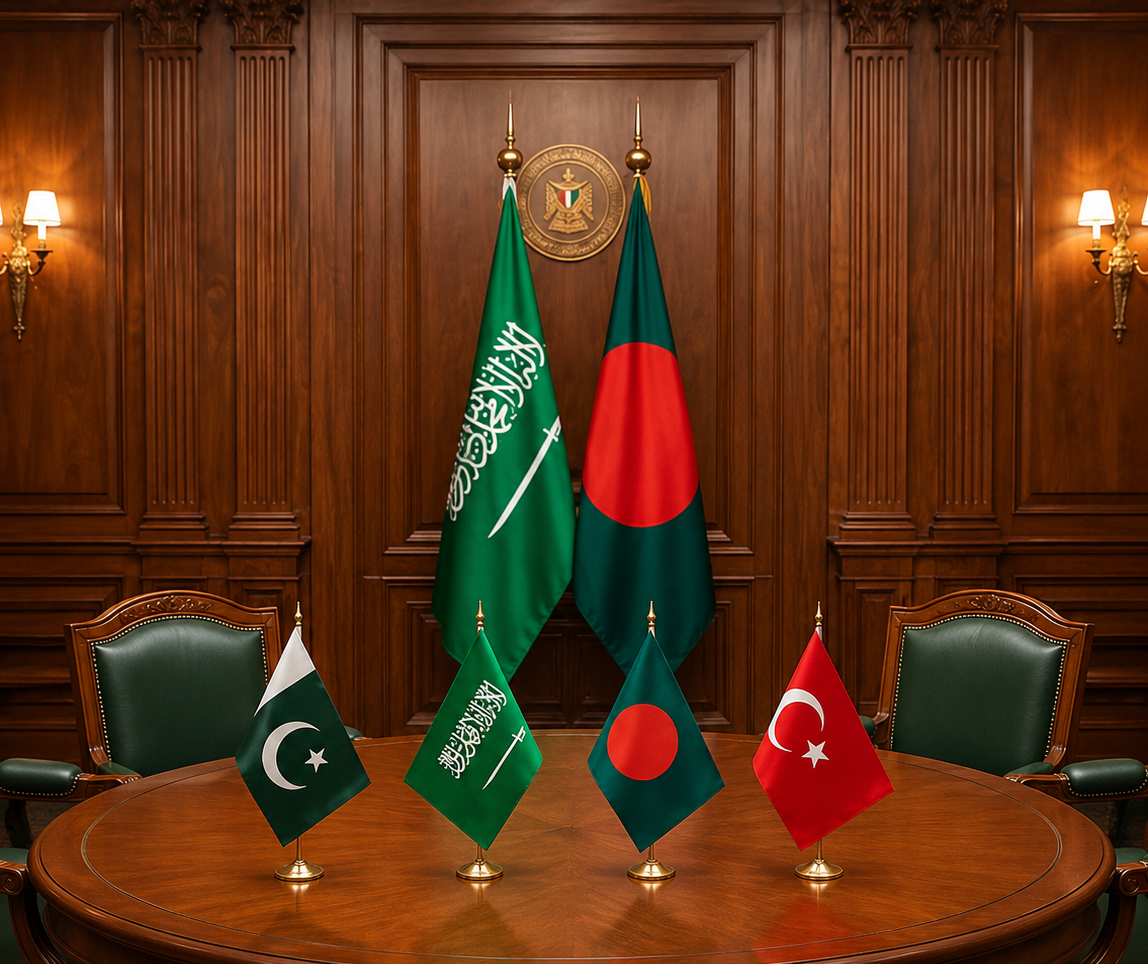
Bangladesh has signalled that it is open to joining the defence framework, which was signed by Pakistan, Saudi Arabia and Türkiye on August 7. The agreement commits the three countries to treating an armed attack against one member as an attack against all.
For India, the possibility of Bangladesh becoming part of the pact carries implications far beyond Dhaka's expanding diplomatic relationship with Islamabad.
Indian strategic circles reportedly see Pakistan's growing ties with Bangladesh as a key driver behind Dhaka's interest in the alliance. From New Delhi's perspective, Bangladesh's accession could give Pakistan a stronger strategic position on India's eastern flank while maintaining its longstanding military pressure on India's western border.
That prospect is particularly sensitive because Bangladesh shares a long land border with India. If Dhaka were to become a full member of a collective-defence arrangement involving Pakistan, Indian policymakers could face the possibility of a future conflict involving Pakistan developing on two fronts.
Indian concerns also centre on the potential military implications of the pact's collective-defence provisions. Some analysts fear that, depending on how the agreement is ultimately interpreted and implemented, Pakistan could seek access to Bangladeshi territory or logistical facilities during a future confrontation with India.
However, the agreement does not publicly specify such an automatic right. Its geographic scope, activation procedures and military command arrangements remain unclear.
Bangladesh, meanwhile, has framed its interest in the pact primarily around national interests and the diversification of its strategic partnerships. Dhaka's position reflects a broader foreign-policy recalibration as it seeks stronger relations with Pakistan, Saudi Arabia and Türkiye while managing its traditionally important relationship with India.
The development presents a difficult diplomatic challenge for New Delhi. India has historically regarded Bangladesh as a crucial component of its security architecture in South Asia, particularly because of the country's geographical position between India's mainland and its strategically sensitive north-eastern states.
A deeper Pakistani security role in Bangladesh would therefore represent a significant shift.
For now, however, Bangladesh has not formally joined the pact. Its decision could become one of the most consequential tests of India's regional diplomacy, particularly as Pakistan seeks to translate its new defence relationships with Saudi Arabia and Türkiye into a broader strategic network.
The question for New Delhi is no longer simply whether Bangladesh is moving closer to Pakistan. It is whether that relationship could eventually become institutionalised within a collective-defence framework — and what that would mean for India's security calculations on both sides of the subcontinent.
Here we are to serve you with news right now. It does not cost much, but worth your attention.
Choose to support open, independent, quality journalism and subscribe on a monthly basis.
By subscribing to our online newspaper, you can have full digital access to all news, analysis, and much more.
You can also follow AzerNEWS on Twitter @AzerNewsAz or Facebook @AzerNewsNewspaper
Thank you!