
Partnership without precedent is becoming a regional force [Op-Ed]
![Partnership without precedent is becoming a regional force [Op-Ed]](https://www.azernews.az/media/2026/08/24/1787496969579907901.jpg)
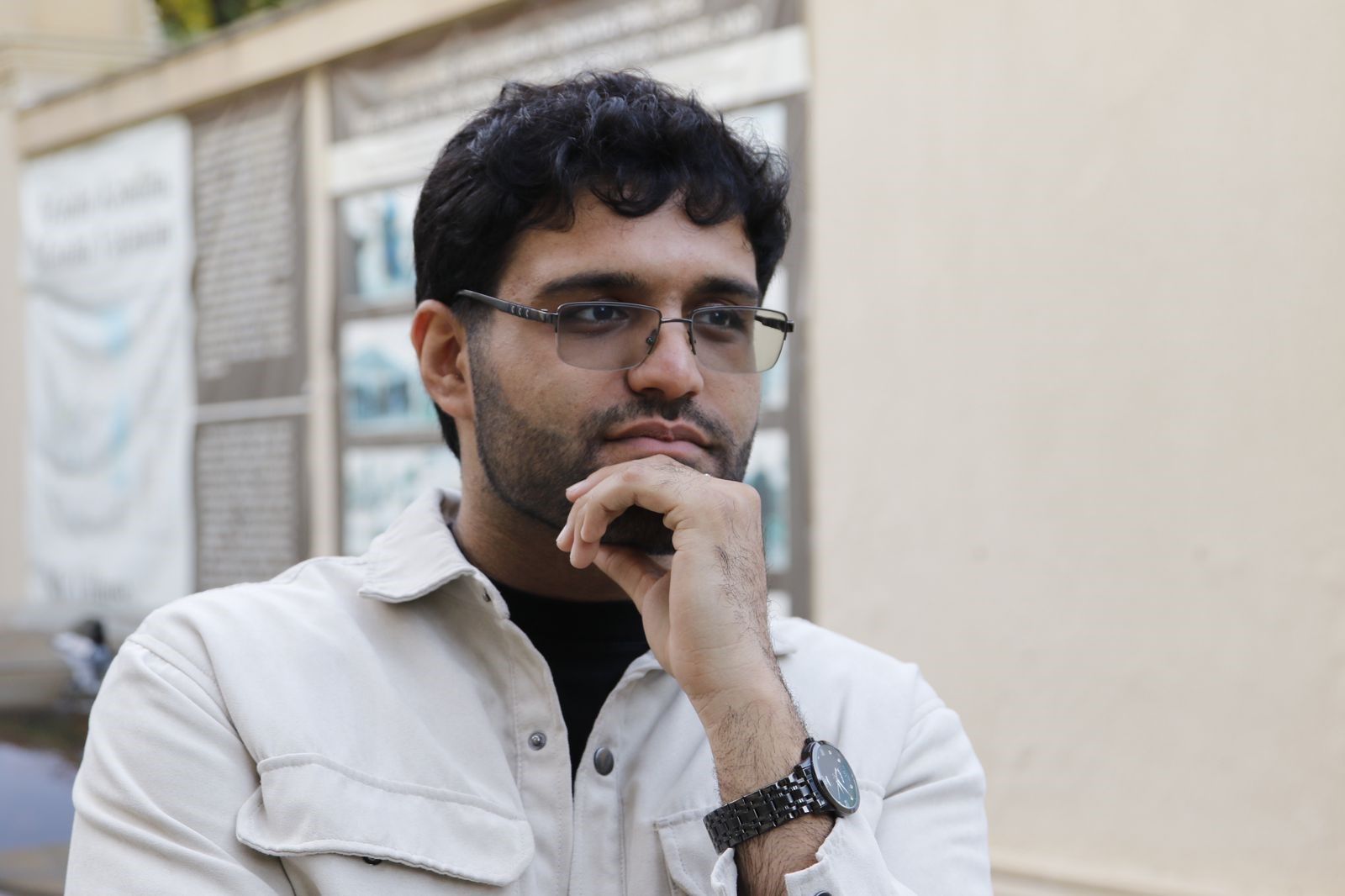
Akbar Novruz
Read moreThe relationship between Azerbaijan and Uzbekistan is beginning to acquire a logic of its own. The initial political warmth has evolved into something more substantial, with diplomacy, investment, infrastructure, and culture reinforcing each other. The recent visit illustrated just how much progress has been made along those lines, as the two countries are not just strengthening their bilateral relations, but creating a web of interests linking the South Caucasus to Central Asia.
Azerbaijani flags were unfurled in Tashkent one day prior to Azerbaijan's President Ilham Aliyev's arrival. The next element in the program was the performance of drones, an aerial dance routine that is usually reserved for Tashkent only when there is a visit that is considered truly important from the diplomatic standpoint, not just a diplomatic formality.
Perhaps such a grandiose welcoming ceremony is not common for foreign visits of heads of state, and interpret the display of portraits and the drone performance as a reflection of the attitude towards the President of Azerbaijan. This is the diplomatic language that comes before, not after, the meat of the matter. Yesterday's state visit brought the core in quantity – the Treaty on Eternal Friendship, ten projects' openings and groundbreakings, a joint investment fund worth $500 million, of which $ 160 million has already been invested, a promise to reach trade turnover of $1 billion by 2030, and a dedicated Uzbekistan-Azerbaijan Caspian corridor with a single operator.
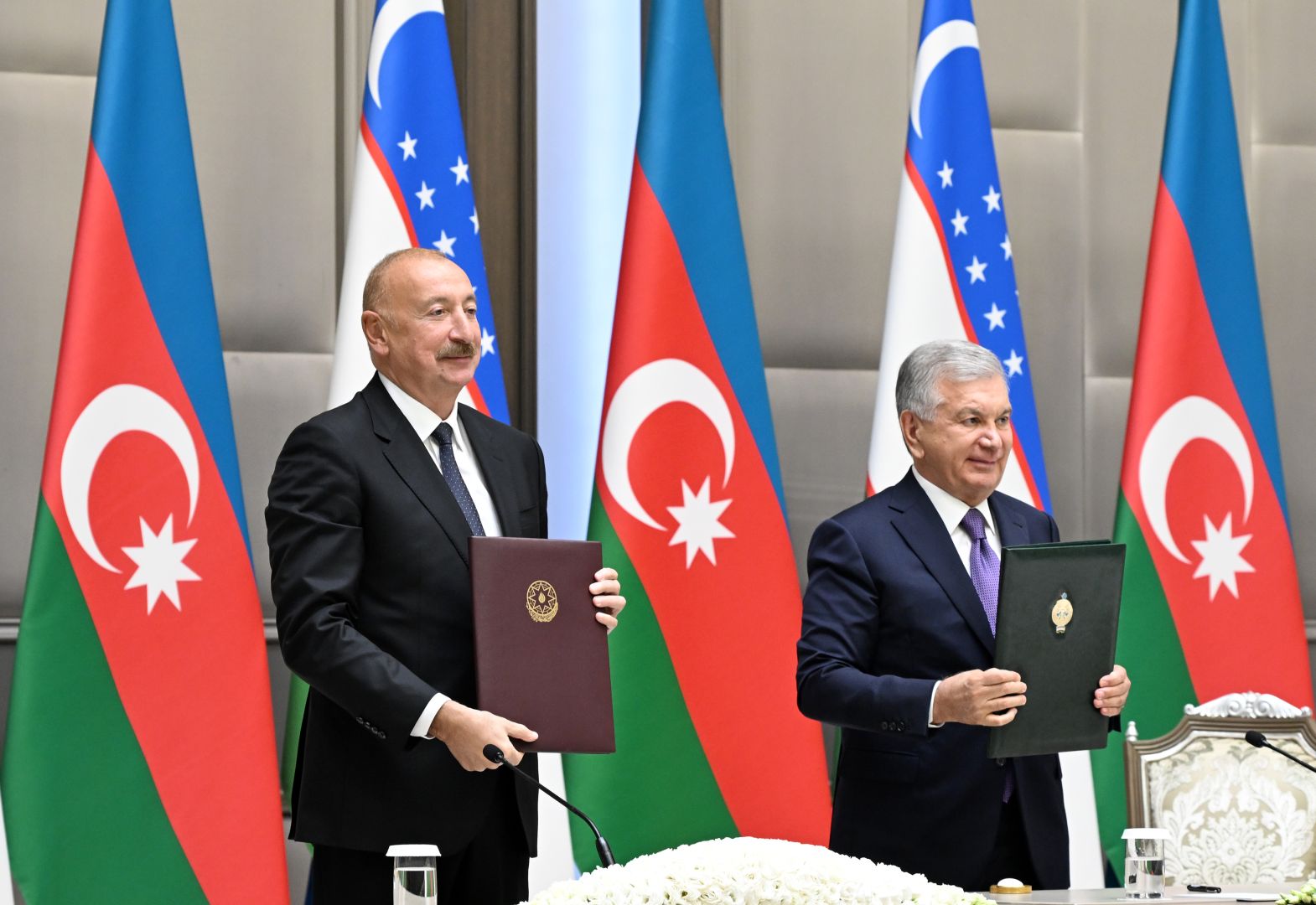
The Treaty on Eternal Friendship, signed by the two presidents in the residence of Kuksaroy, notes that the two countries develop relations based on eternal friendship, mutual trust, strategic partnership and alliance, and mutual support in the choice of development path and model, corresponding to the national reality of each country. Hikmet Hajiyev, Azerbaijani presidential assistant, set out the chain in the following way prior to the signing ceremony: "Since contacts between the presidents began in 2022, Azerbaijan-Uzbekistan relations entered a new stage. Relations evolved from strategic partnership to alliance, and now to eternal friendship. This is a first in Azerbaijan's diplomatic practice." In fact, the wording – "eternal friendship" – instead of the usual "strategic partnership" or "allied relations" is the highest rank of bilateral treaty vocabulary of both countries, which Azerbaijan has never applied before.
It is the particular bilateral structure that provides the treaty with its substance. Within just five years, the number of mutual trade operations has grown three times, whereas the whole investment portfolio of joint projects already exceeds $5 billion. It is not an estimate but an actual investment portfolio, of which the $160 million invested in joint investment funds make up the formal part only. The amount of capital invested in the infrastructure projects related to tourism only, namely the Sea Breeze Uzbekistan resort and the Baku City residence whose inaugurations took place yesterday, is estimated at several hundred million dollars of private investments of Azerbaijan into the economy of Uzbekistan. Azerbaijani leader noted this during the Supreme Interstate Council meeting: "For Uzbekistan's tourism sector alone, $5 billion in investment is planned. The projects being implemented in Tashkent fall outside the scope of the Investment Fund. Looking at the overall investment portfolio, it is considerably larger than the $500 million we initially established."
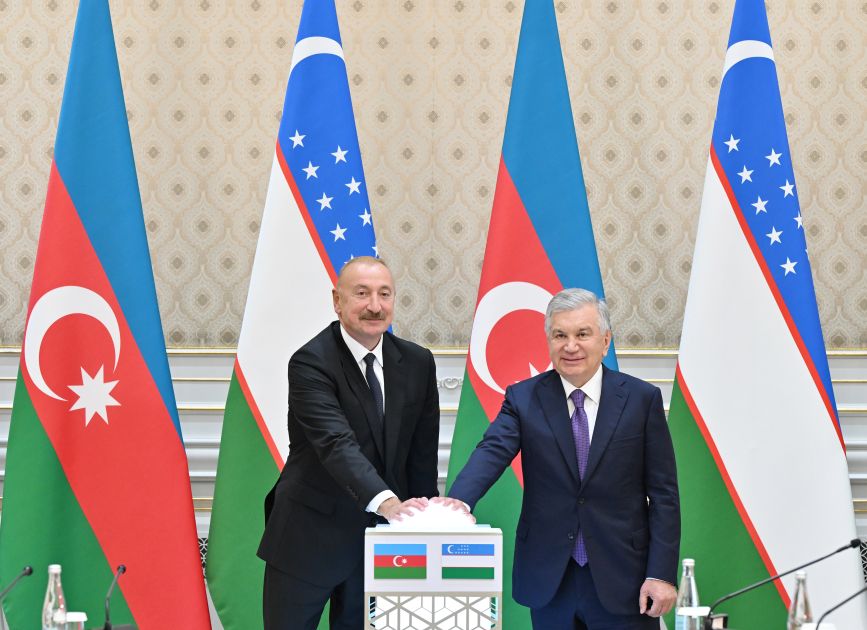
The inauguration and groundbreaking ceremony conducted via video link between Tashkent and several other cities in Uzbekistan showed what the relationship becomes when it goes from rhetoric to reality. Inaugurated yesterday: Davr Bank (subsidiary bank of International Bank of Azerbaijan in Uzbekistan); a gypsum plant (Matanat-A); and two Landau STEAM schools. Groundbreaking yesterday: five SOCAR gas stations in Uzbekistan; Sea Breeze Uzbekistan complex for recreation and residence (developed by Agalarov Development); Baku City residential complex (TuranAZ); a silver ore processing and concentration plant (Sur Gold and Silver Project); and Gold Fresh Fruits orchards. The spread across sectors- banking, manufacturing, education, energy retail, hospitality, real estate, mining, and agriculture, is the most visible evidence of what Aliyev means when he says cooperation has "covered practically all areas." A bilateral relationship that generates this range of concurrent projects is not transactional. It is structural.
Karabakh thread: The contribution made by Uzbekistan to the reconstruction of Azerbaijan's Karabakh has been a continuous topic throughout the visit. In particular, Aliyev emphasised that Uzbekistan and its President have been the first state and the first president to assist with the reconstruction efforts of the Mirzo Ulugbek school for 960 students in Fuzuli, the construction of the garment manufacturing plant in Khankendi providing 200 workplaces (mainly for women), and the opening of the first big industrial plant in the liberated territories. The signing of sister cities agreements, namely Khankendi-Urgench, Nakhchivan-Urgench, and Lachin-Bukhara, solidifies this link at the municipal level. The transfer of the automotive industry through the building of a new plant worth $80 million in Hajigabul makes an industrial addition to this relationship that started with reconstruction assistance.
Caspian Corridor
Amid the treaty signings and project launches, one statement by Mirziyoyev deserves particular attention: "We are interested in establishing a dedicated Uzbekistan-Azerbaijan corridor in the Caspian Sea with a single operator." It is a concise sentence, but its meaning is quite significant. For centuries, the bottleneck of the Middle Corridor has been the passage in the Caspian Sea, a multimodal transfer point where one can experience a number of operators, a number of tariffs, and the associated difficulty in coordinating them all. If one creates a dedicated corridor in the Caspian Sea between Uzbekistan and Azerbaijan, including the cargo of Uzbekistan the ferry fleet of Azerbaijan (as Aliyev assured, it is building currently about ten ships simultaneously), it will significantly decrease this difficulty and speed up the process of improving transit time.
President Ilham Aliyev also provided another dimension to the picture of connectivity in terms of Zangezur Corridor, where the main Azerbaijann section of the corridor will be ready next year, the Nakhchivan section (194 km long) is being actively built right now, and the work on the Armenian side (42 km long) is going to begin, according to American partners’ information from Baku, either by the end of 2026 or at the beginning of 2027. Moreover, he stressed that the reconstruction and renovation of the railway line, 400 km long, running from Baku to the Armenian border, is currently under process. The new pieces of information, provided in Tashkent instead of South Caucasus, confirm the fact mentioned directly by both presidents: Central Asia and Azerbaijan are “a single geopolitical and geo-economic region,” and thus the connectivity infrastructure linking the regions is a regional project in which Tashkent is involved.
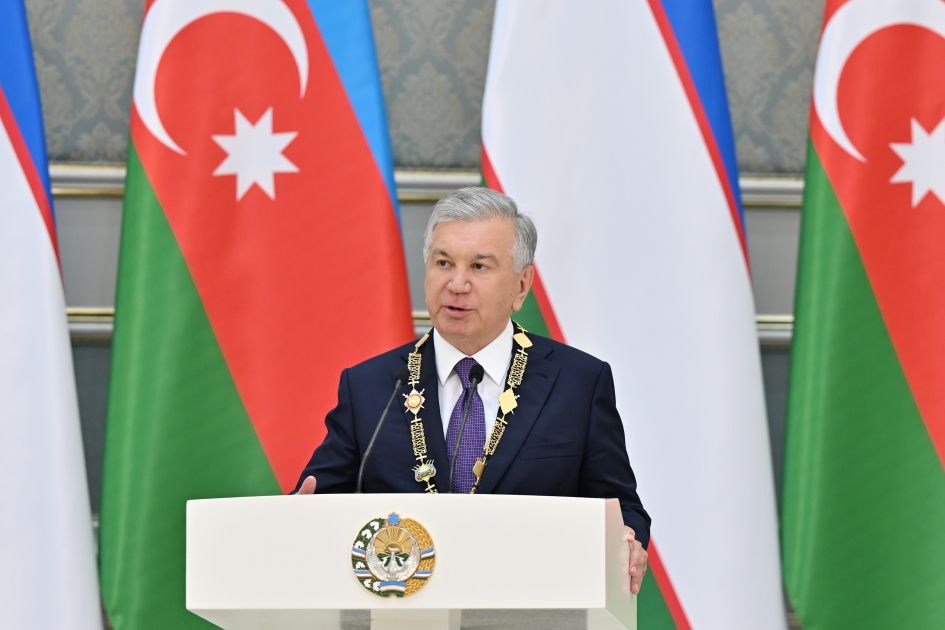
President Mirziyoyev's claim that "Azerbaijan and Uzbekistan speak with one voice on the international stage" is worth reading as more than diplomatic courtesy. First of all, both countries are members of the Organisation of Turkic States — the multilateral organization which is quietly building its institutional base and operates now as a main instrument for diplomatic coordination throughout the Turkic world. Both states are members of the Shanghai Cooperation Organisation. Both are in the Non-Aligned Movement. Both voted in a similar way during the UN General Assembly in the course of the last four years' discussion of the controversial resolutions. Coordinating actions between Azerbaijan and Uzbekistan have already crossed the borders of their bilateral diplomacy; Azerbaijan's joining the Consultative Meeting of Central Asian Heads of States became a significant step towards the creation of a common space of mutual understanding and interaction between Central Asia and the South Caucasus. Mirziyoyev emphasized his special part in the process of Azerbaijan joining the format. Aliyev called Azerbaijan's joining "a symbolic and practical act."
The visit can hardly be separated into its culture and economics/geopolitics layers – the opening of the National Pedagogical University named after Nizami Ganjavi (12th-century Azerbaijani poet); laying the foundation for "Azerbaijan Park" in New Tashkent; and the suggestion of joint movies featuring Nizami Ganjavi and Alisher Navoi (national poet of Uzbekistan). Both leaders have said before that they consider their shared Turkic background the glue of their relationship, which is developing much faster than any other bilateral relationship in the post-Soviet region. The university, named after an Azerbaijani poet in Uzbekistan's capital city, opened on the same day when the Treaty on Eternal Friendship and is the cultural framework of their relationship that has found its place.
Here we are to serve you with news right now. It does not cost much, but worth your attention.
Choose to support open, independent, quality journalism and subscribe on a monthly basis.
By subscribing to our online newspaper, you can have full digital access to all news, analysis, and much more.
You can also follow AzerNEWS on Twitter @AzerNewsAz or Facebook @AzerNewsNewspaper
Thank you!